Siem Reap - 3/4/1999
 |
 |
 |
Today we're walking around the markets in Siem Reap, Cambodia. We told our guide David (who has been absolutely wonderful) that we wanted to spend a few hours just walking around town rather than seeing the temples today. I'll tell you a little more about what we've been doing the last few days ... this is the first I'm having time to go into any detail.
I'm typing this on a Win95 PC at the business of a guy named Dominique, who had the first (and maybe still only, I don't know) internet connection in Siem Reap. He has a few PC's connected to a UPS and an e-mail server, and he uploads e-mail to Phnom Penh six times per day. While I'm typing this e-mail, Mom is showing off pictures of her grandchildren to a group of Cambodian women, including Dominique's wife.
We've seen most of the major temples, and it's all awesome. Angkor Wat was huge and impressive, of course, but the ones that have most surprised me were Banteay Srei (about 40KM to the north) and Banteay Samre (just east of the eastern Baray). They're very ornately carved, and Banteay Samre was the least crowded of any temple we've visited (perhaps because it was at noon in the mid-day sun).
Yesterday we took a boat tour of the Vietnamese fishing village on Tonle Sap ("great lake") a few miles south of here. We saw so many cool things there ... a guy herding hundreds of tame ducks (we asked why they don't fly away, but the answer wasn't very clear – clipped wings?) ... a fish farm with a feeding frenzy of big fish ... two monkeys at a little tourist shop out on the lake, one of whom was drinking a Coke and the other was eating a cigarette ... two big Burmese pythons and the little girl who would take them out and show them to us (I told her about the big Burmese pythons I used to have) ... kids rowing around in strange little boats, sun setting over the bamboo fish traps, etc, etc, etc.
We took a very tiny boat, just us and our guide (David) and the driver. The boat was a little shaky (I almost turned it over getting in, but later got my sea legs back), but we blew right past the larger safer tourist boats that were stuck in the mud trying to get out of the little canal where they pick up the tourists – our driver simply waded in front, pulling the boat past all the shallow stuff, and we were out on the lake before any of the other tourists and we started back in when they all caught up with us out on the lake.
We went to the crocodile farm in Siem Reap yesterday, and heard about how the bottom has really fallen out of the crocodile market with the recent international agreements to protect them. Good news for crocodiles, I imagine though. On a more macabre note, we've read that Pol Pot and his cronies fed local teachers to the crocodiles at that same farm, which made it have a disturbing atmosphere, but it was still interesting.
After walking around in the stifling heat for a few hours, we nearly crawled into a little restaurant in the front of a guesthouse and had lunch. They took our order down the street and brought the food back in the front door, so I guess it came from someplace else, and it was great -- vegetable soup and fried rice with many colorful and unidentifiable things in it.
Then I misunderstood the lunch bill and – thinking it was $17 instead of $7 – I gave the kid a $20 and said "keep the change." He literally skipped away, he was so happy, and word must have got around ... now I have guys bringing me Cokes and waiting for big tips, and we've decided we can't go back to that area any more. Other than that, things are going good. Mom has a slight cold and I pulled a muscle in my leg when I temporarily forgot that I'm in lousy shape and tried something I shouldn't have, but life is good.
At sunset, we went the the temple of Phnom Bakheng to watch the view of Angkor from up there. It's a very steep climb up to the top, but Mom was a sport and made it. There are also elephants there to take you to the top -- we'll probably do that next time.
We'll next be in touch from Kathmandu ... we go there tomorrow (Friday), then Saturday morning to the animal sacrifices at Dakshinkali.
- ### -
That email was sent the day after we arrived in Siem Reap. Our travel from SeaTac airport had gone through Narita (Tokyo) and Don Muang (Bangkok) airports. We had a 10-hour layover at Don Muang, so we rented one of their "day rooms" inside the airport for 8 hours before our flight to Siem Reap. The day room had two single beds, a tiny bathroom with a shower, a small refrigerator with two Thai pops (green & red) and two bottles of water, a TV, and two wicker chairs. There was no AC, but it cooled off pretty well after a while. Overall, that was a much nicer experience than 10 hours in seats at the gate.
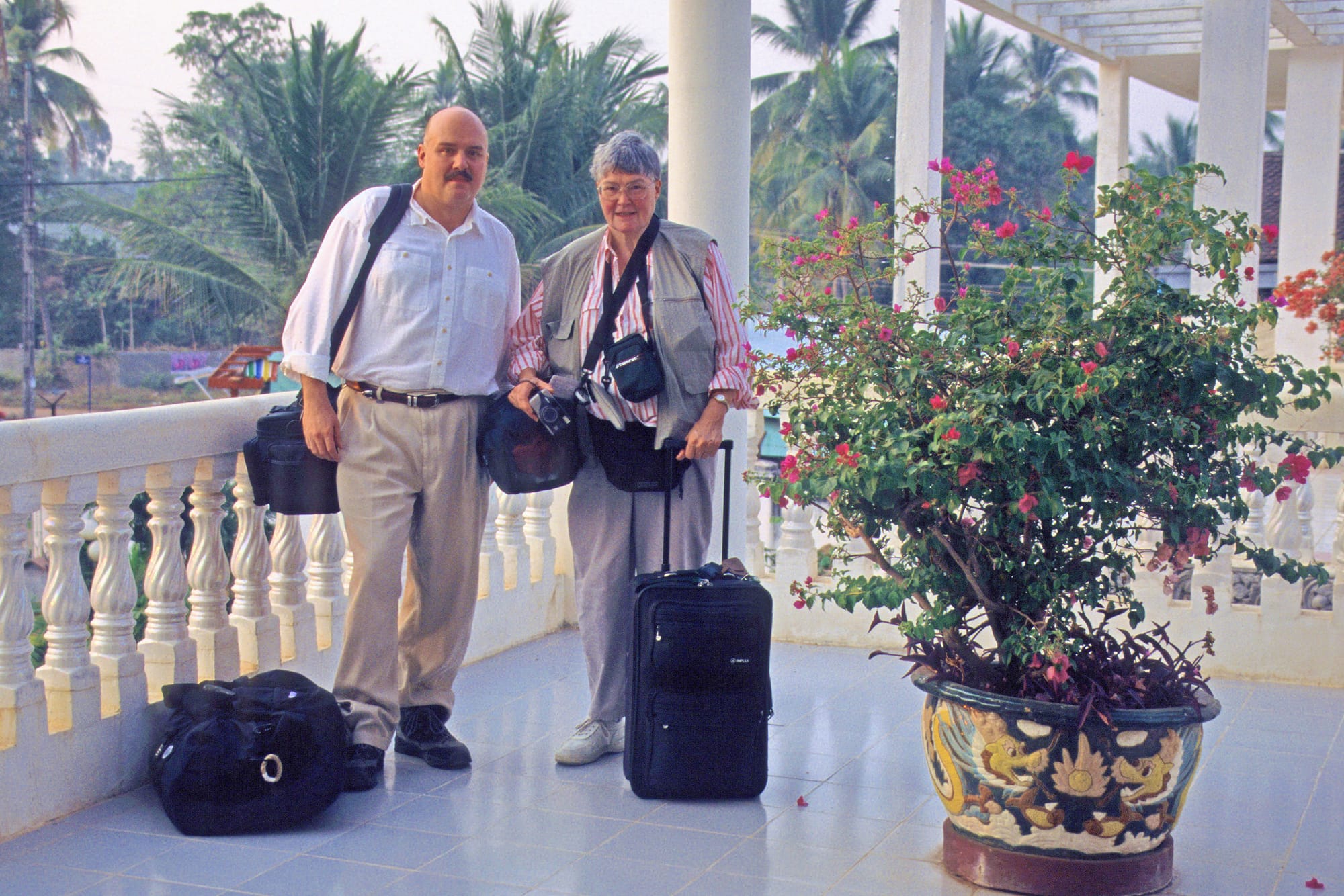
We met our guide David the day we arrived, and made arrangements for him to pick us up at 5AM each of the next two days, to allow time to get to the temples outside town for sunrise. We had many early mornings on this trip, and many sunrise experiences in Cambodia, Nepal, and India.
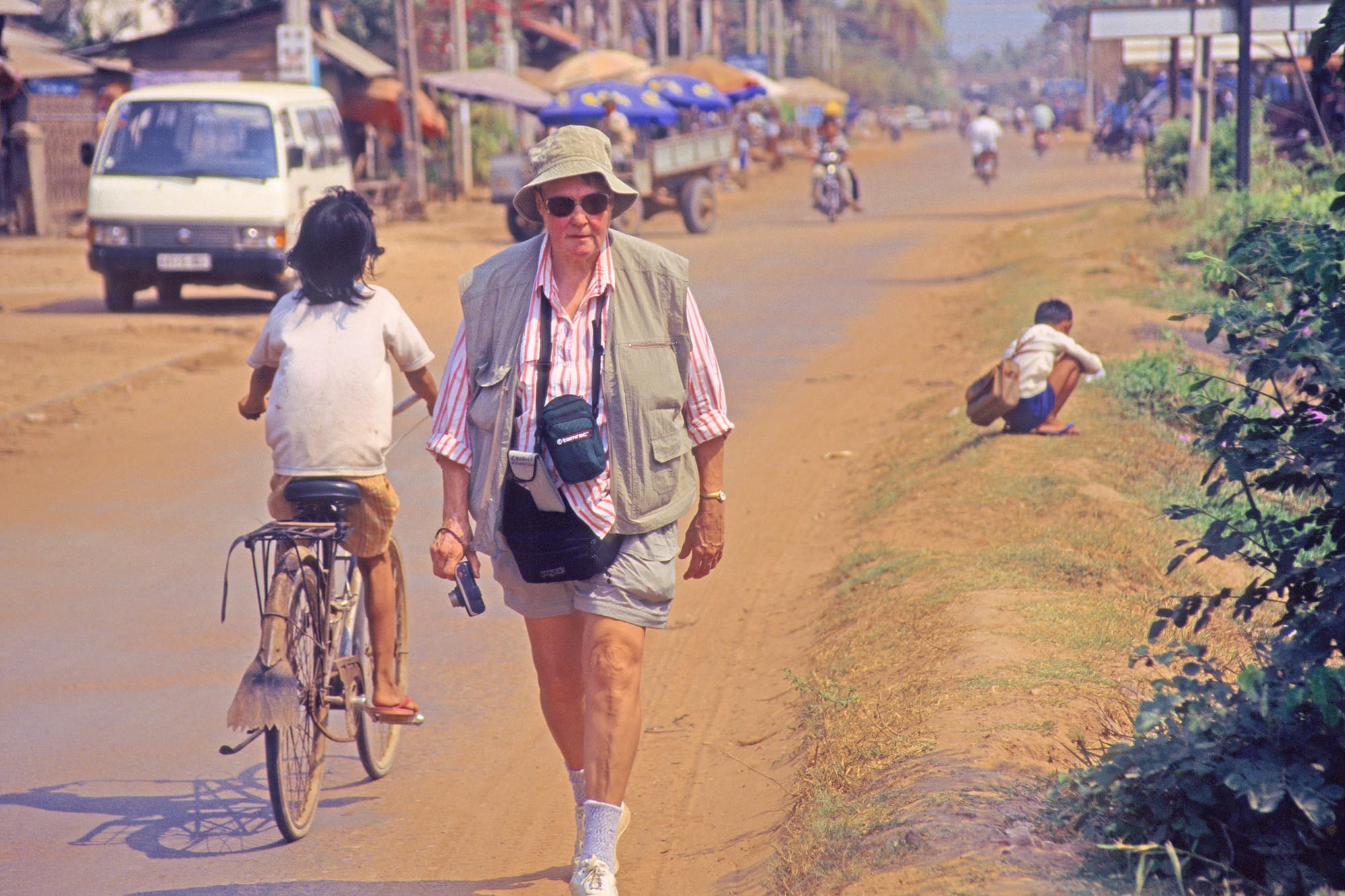
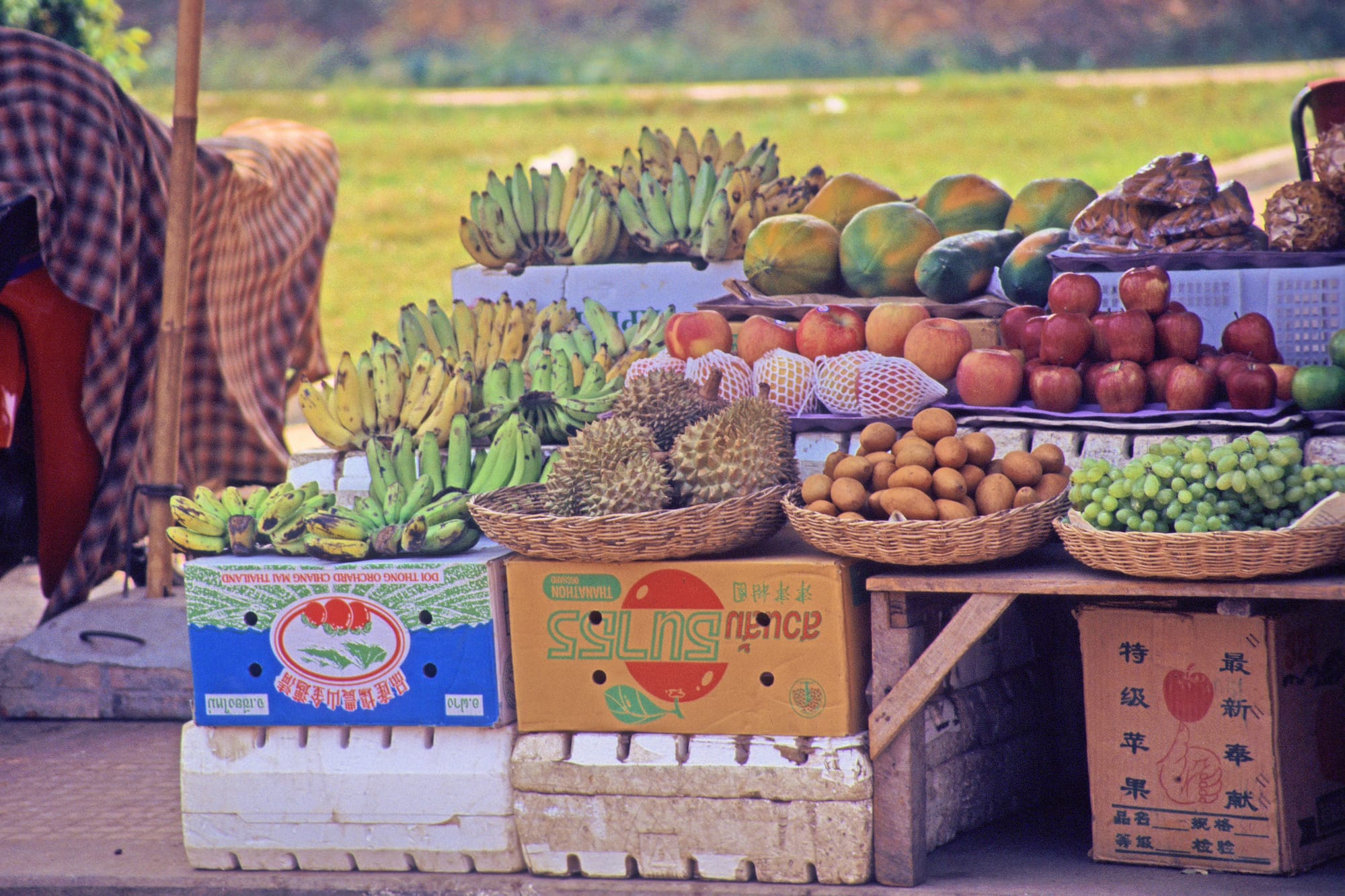
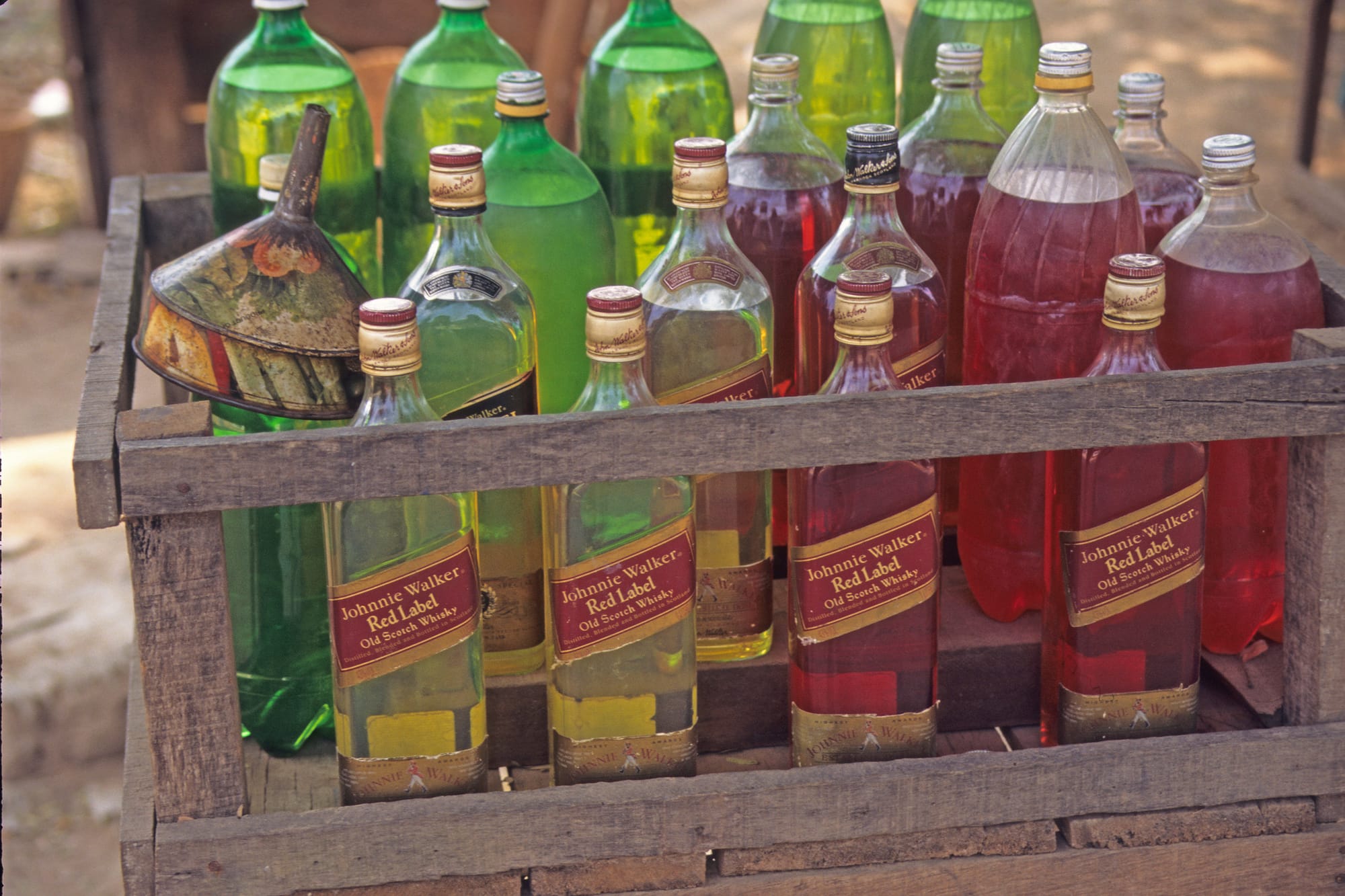
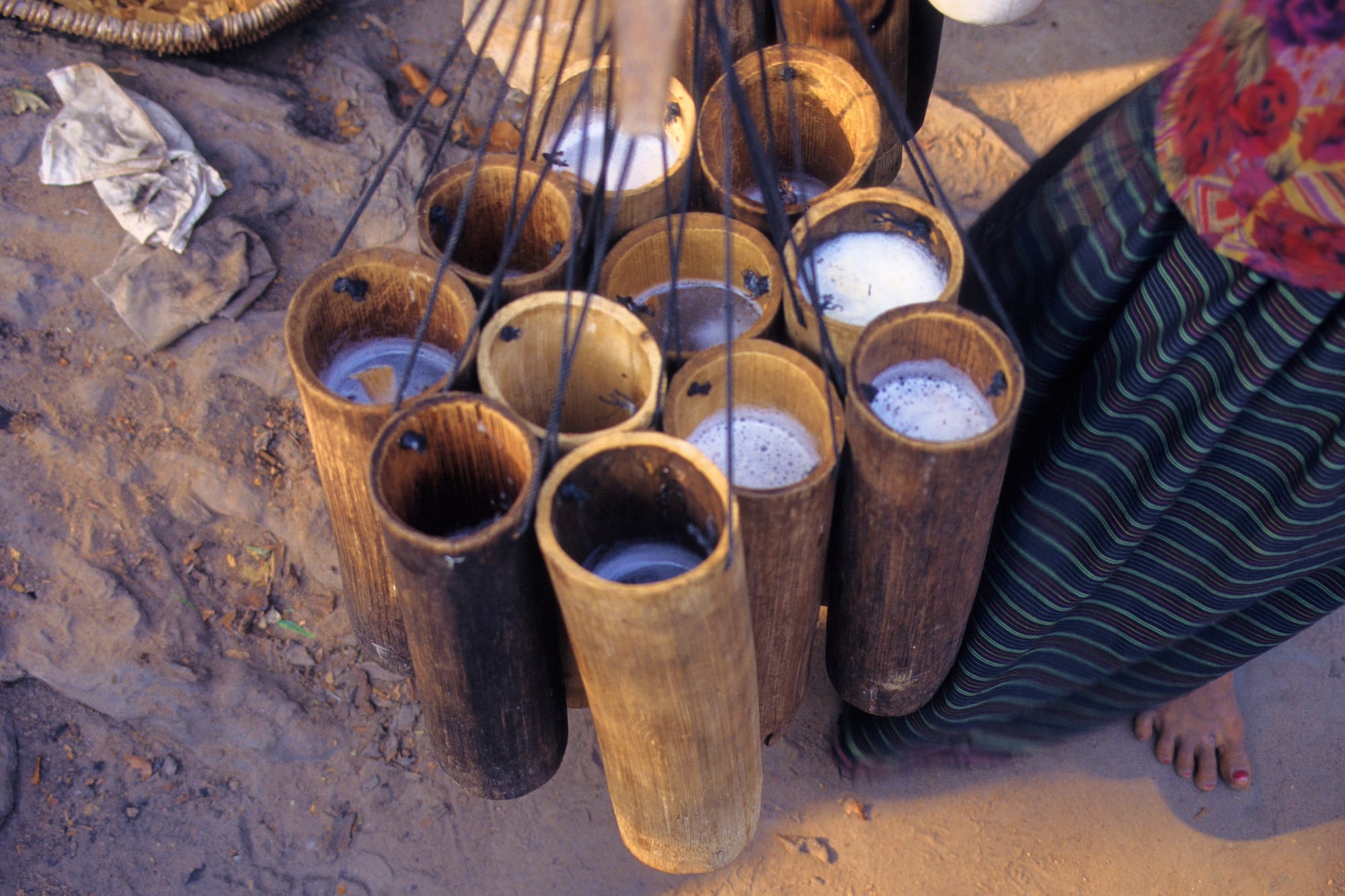
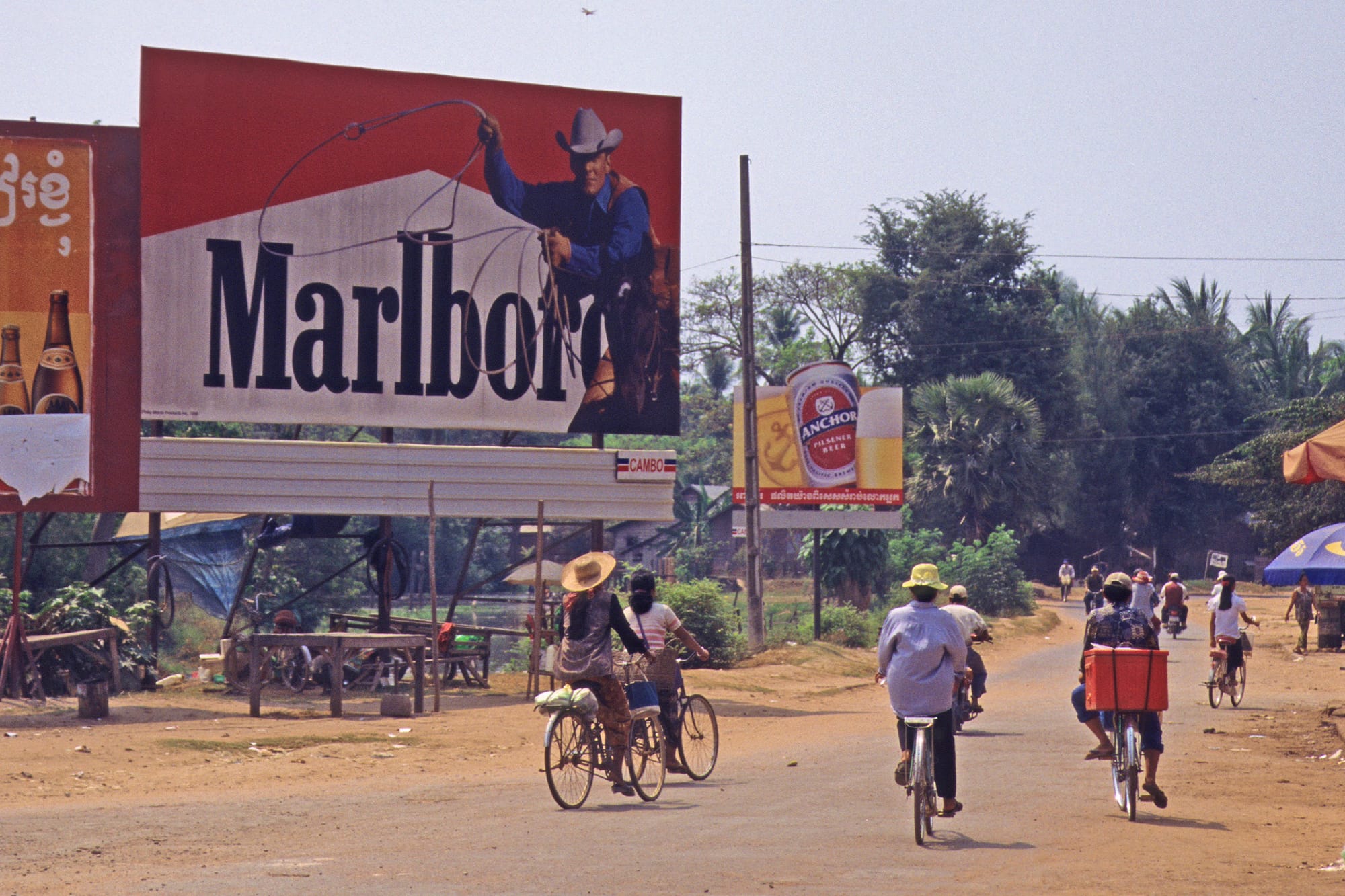
Wandering the markets of Siem Reap. The liquid in the scotch bottles is gasoline, and the drinks in bamboo cups are coconut juice.
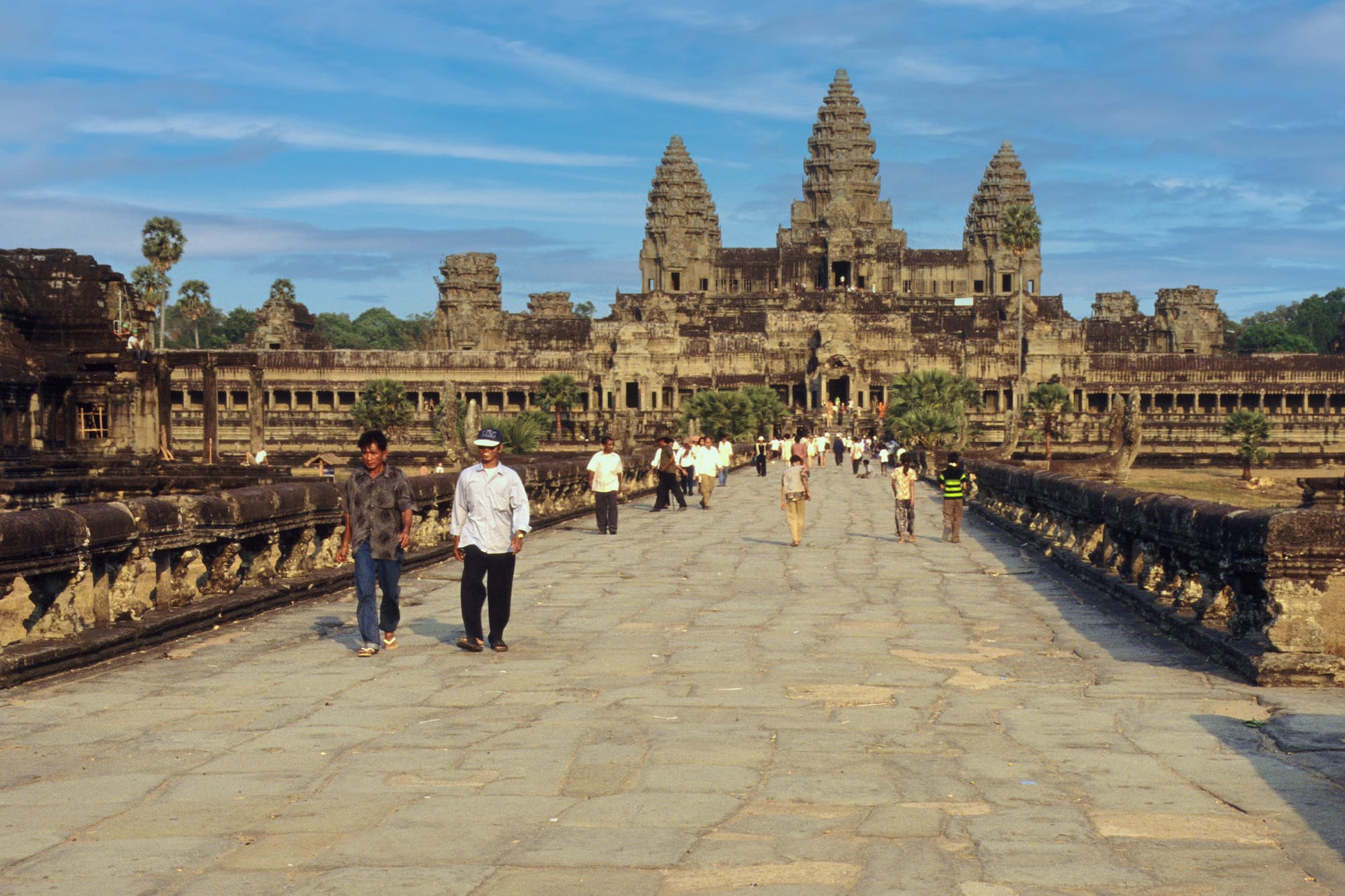
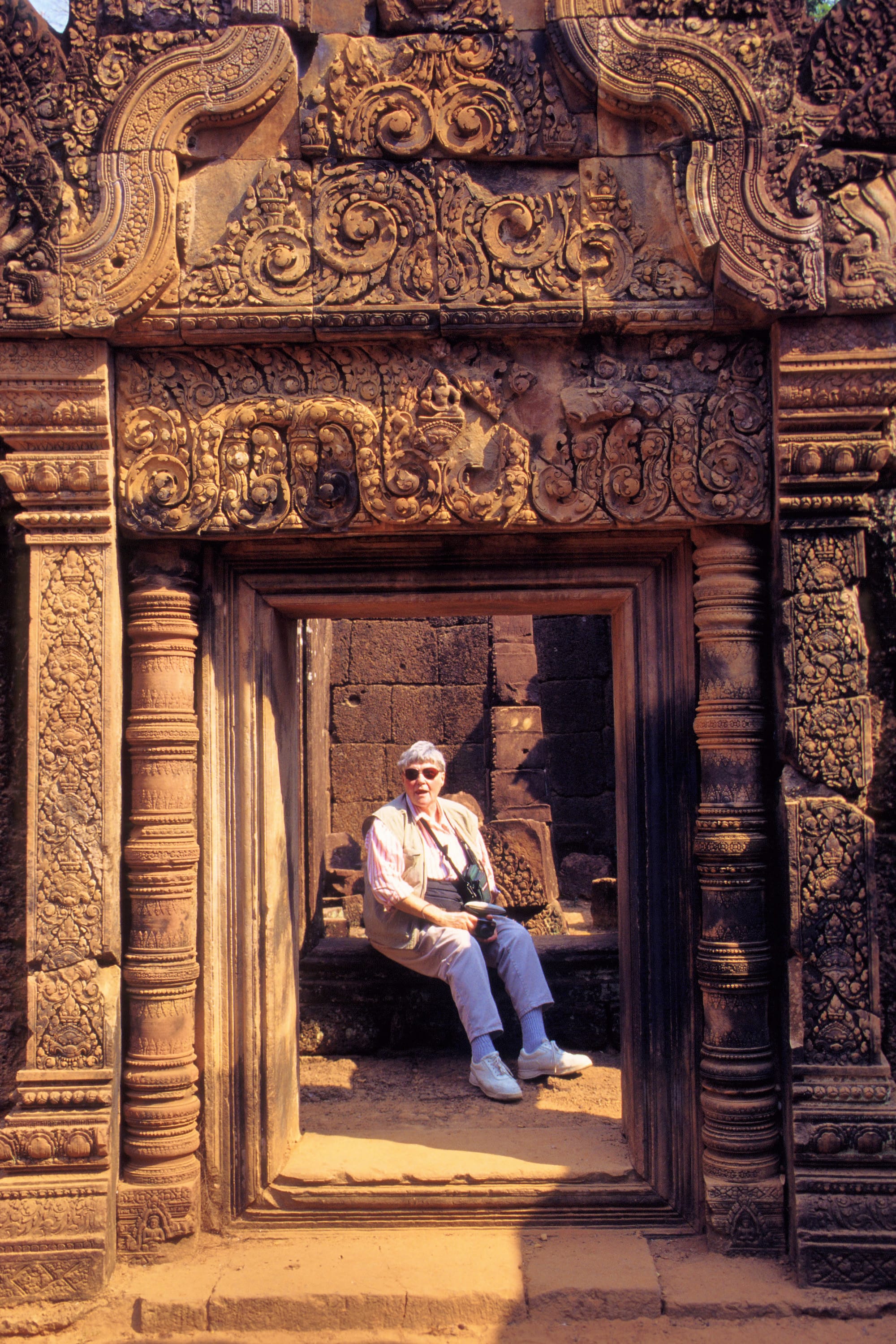
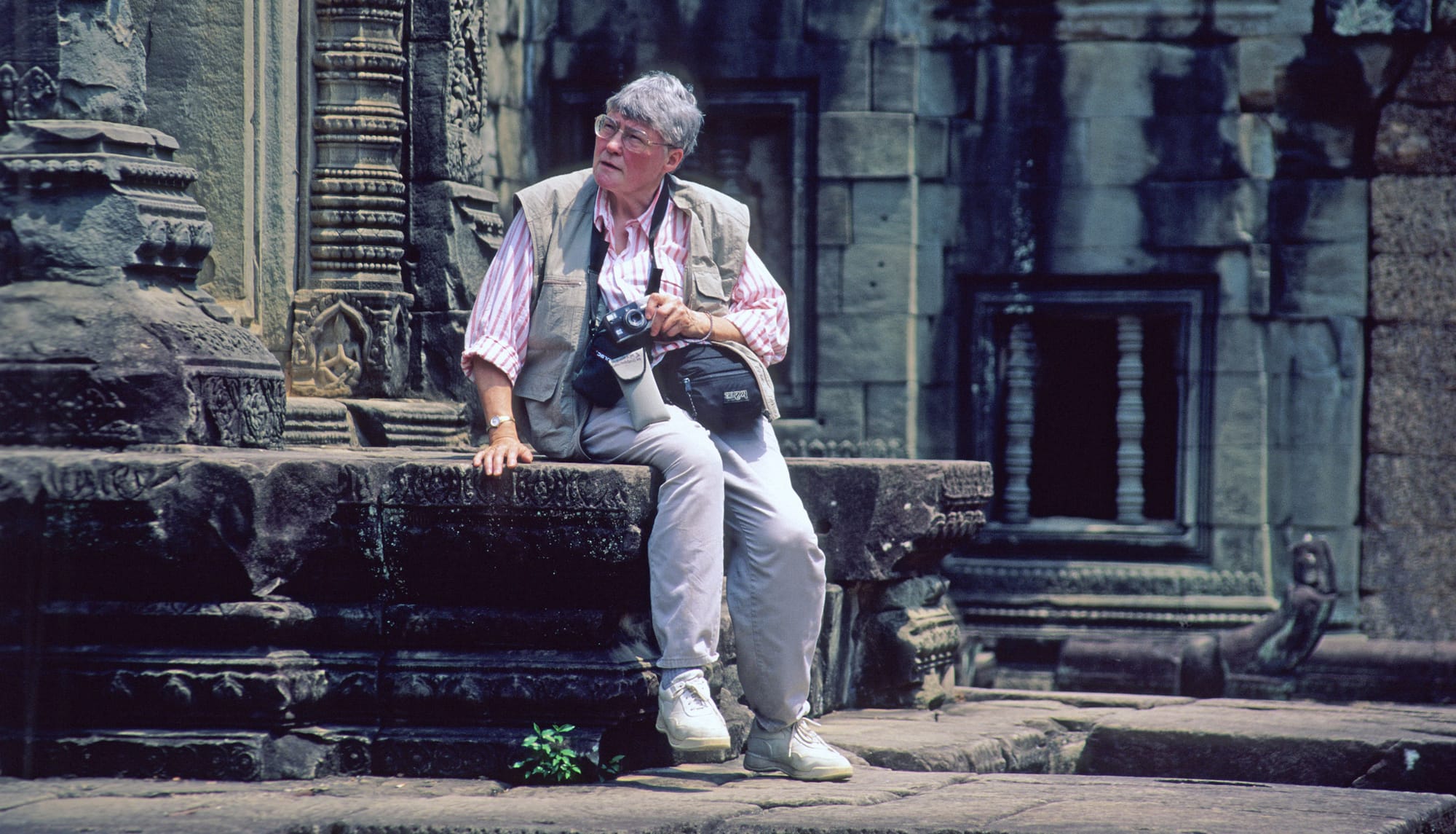
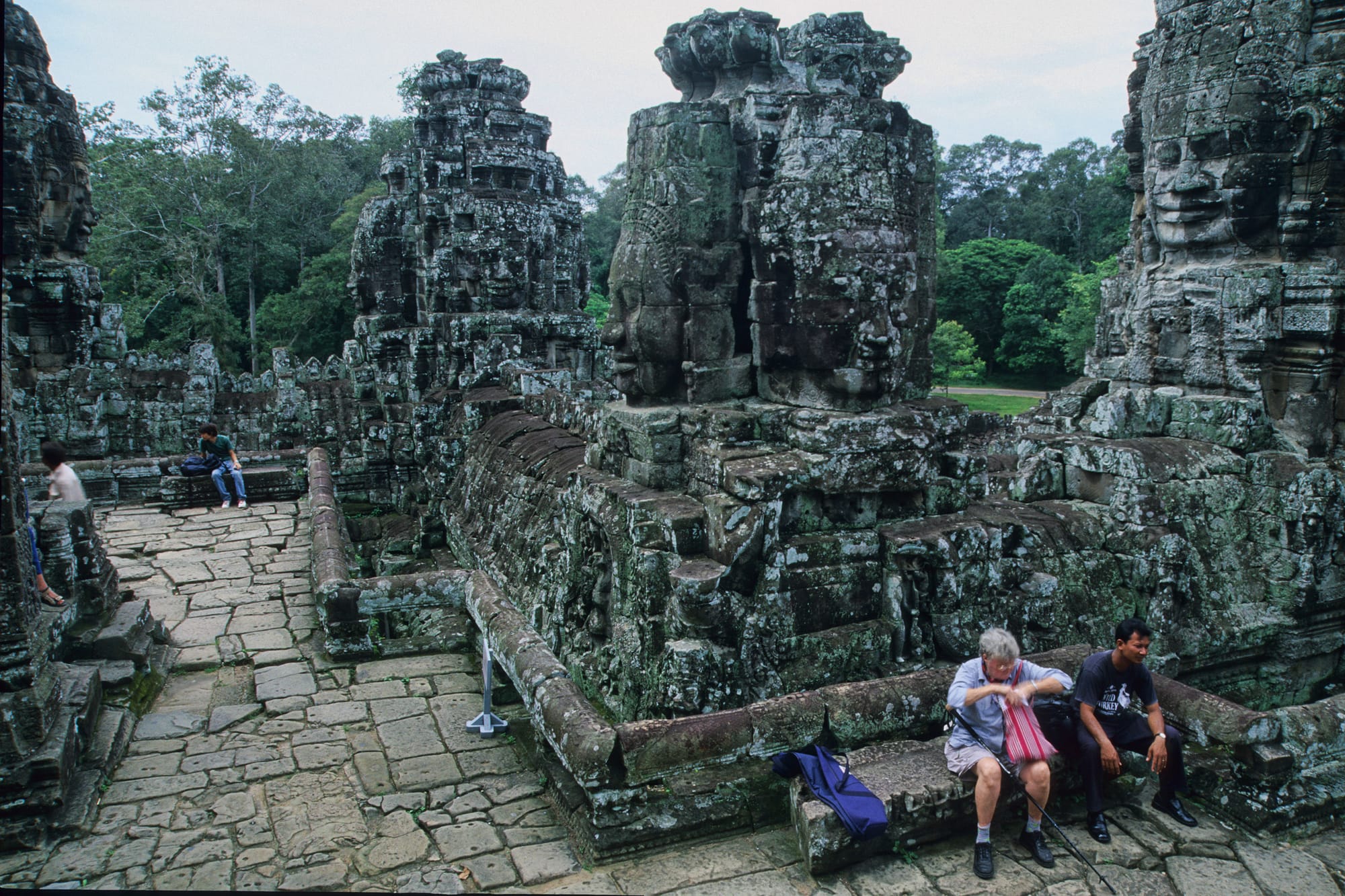
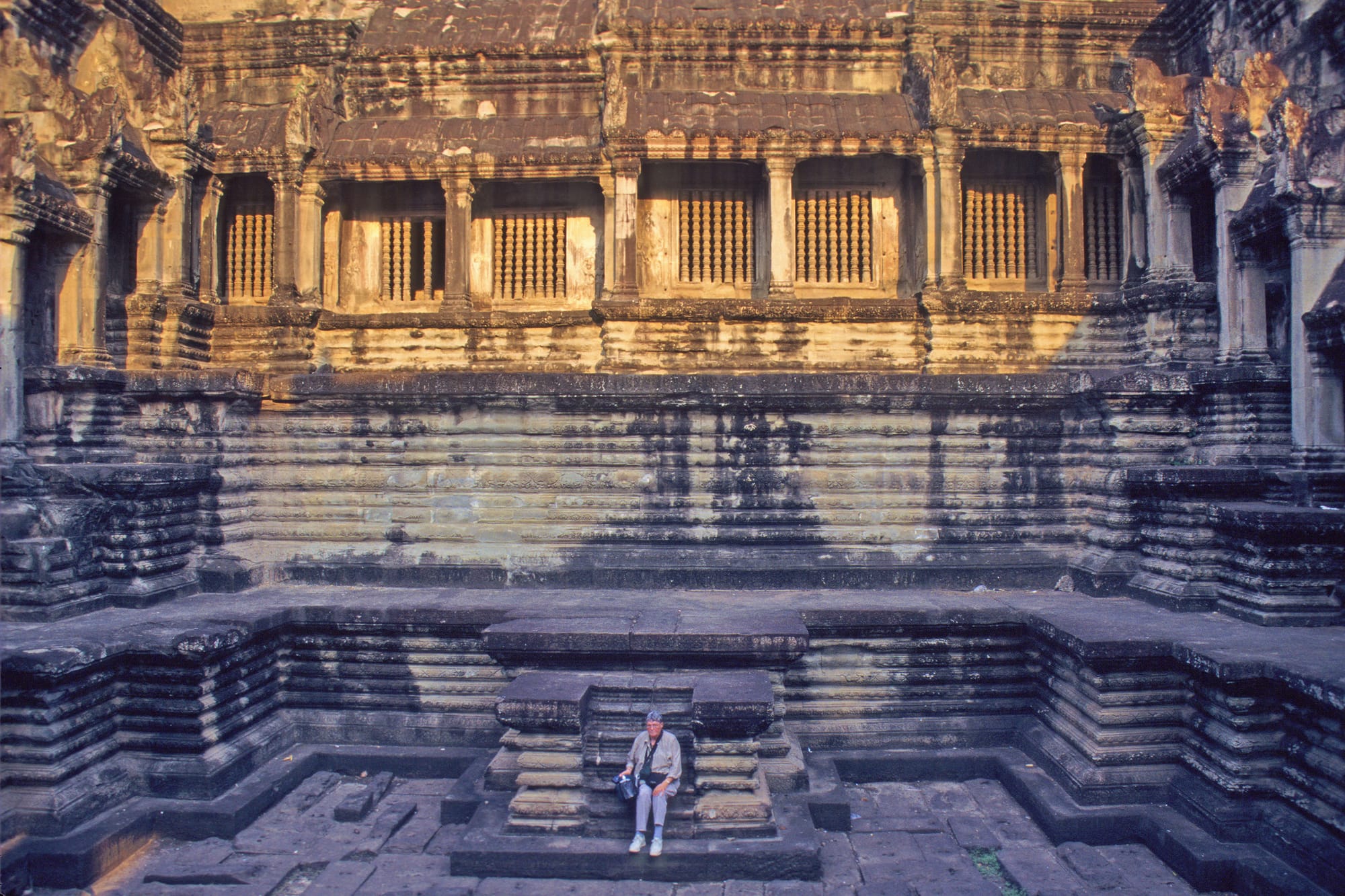
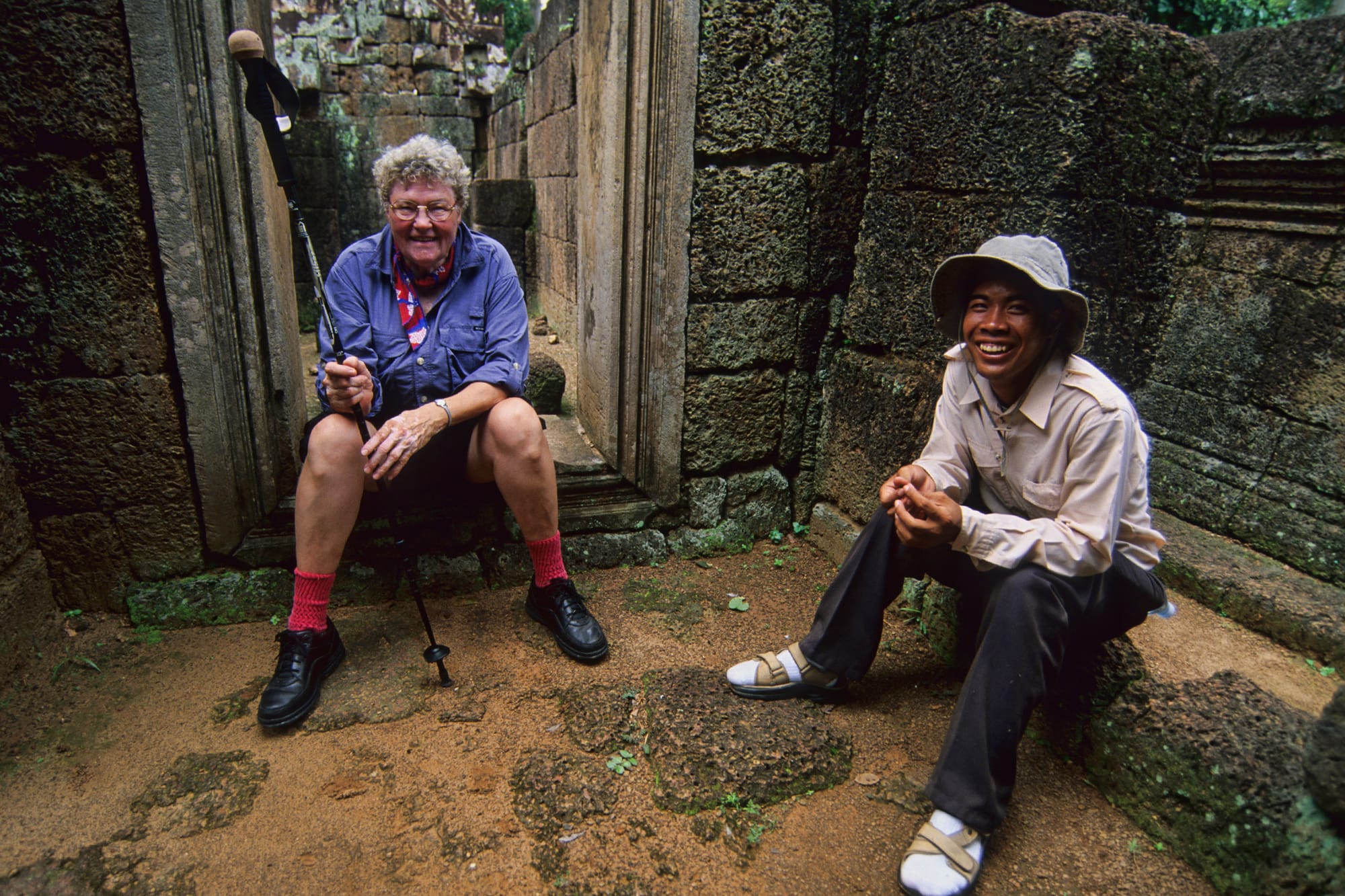
Mom at the Angkor temples. She got to know our driver and guide well, because she spent time hanging out with them while I climbed around to take photos at each temple.
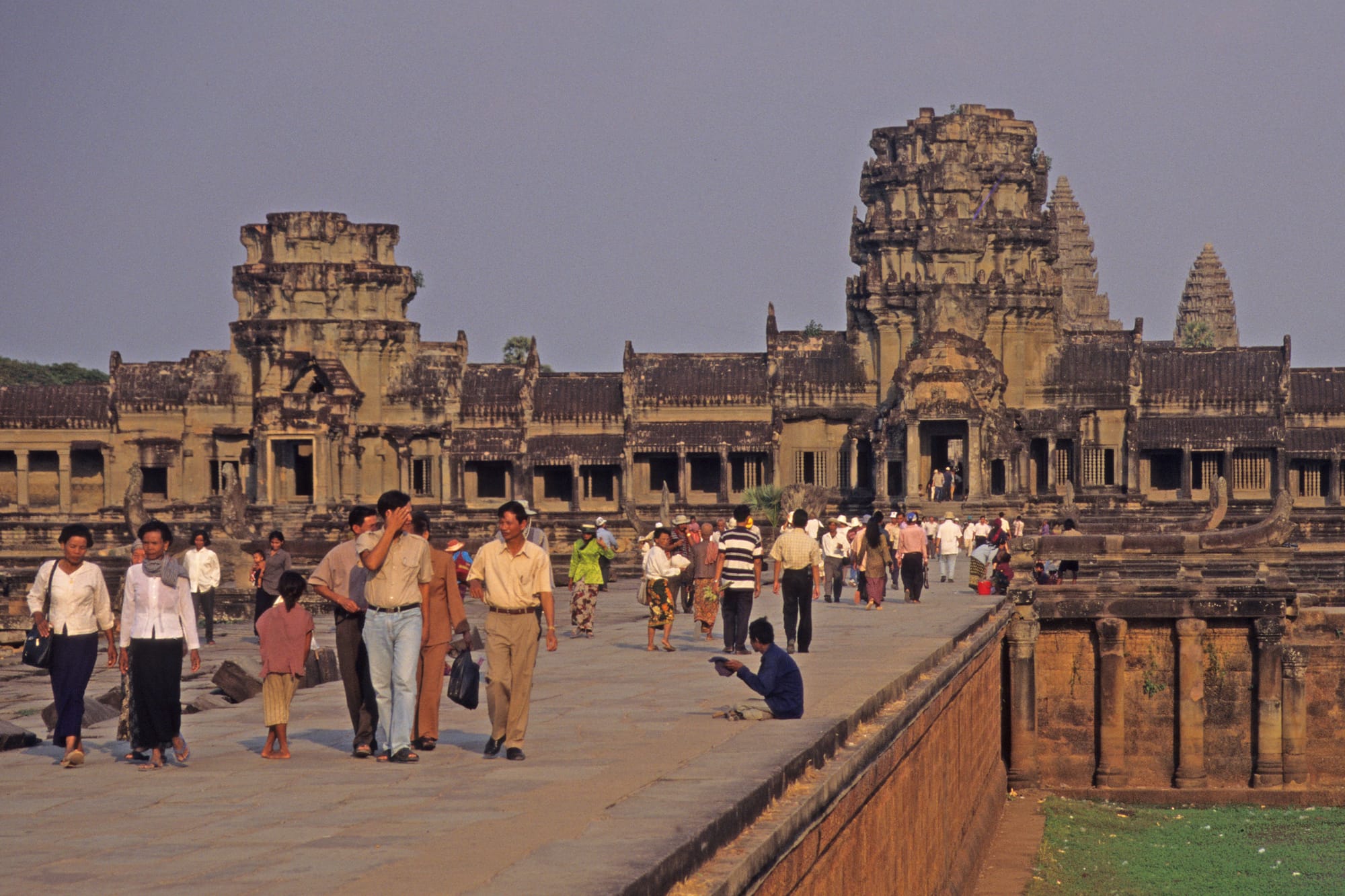
Mom and I both wanted to see the ancient city of Angkor and its namesake temple of Angkor Wat, the largest religious complex in human history. For those unfamiliar with Angkor, I'll try to briefly sum up what makes it special.
The city of Angkor thrived from roughly the 9th through 15th centuries A.D., and was the capitol of the Khmer Empire in present-day Cambodia. At its peak, Angkor's population was somewhere between 750,000 and 1 million; for comparison, the population of London was around 30,000 then. Angkor's sprawling stone temples and structures occupied an area greater than modern Paris, and its buildings were constructed from far more stone than all of the Egyptian pyramids combined.
The stone structures are impressive from a distance, and up close they reflect an amazing level of detail. Whereas the stone blocks of the pyramids are simple smooth-faced cuboids, throughout Angkor most structures are covered with intricate detail, including murals depicting thousands of humans and other animals, recreations of famous battles or events, and much more.
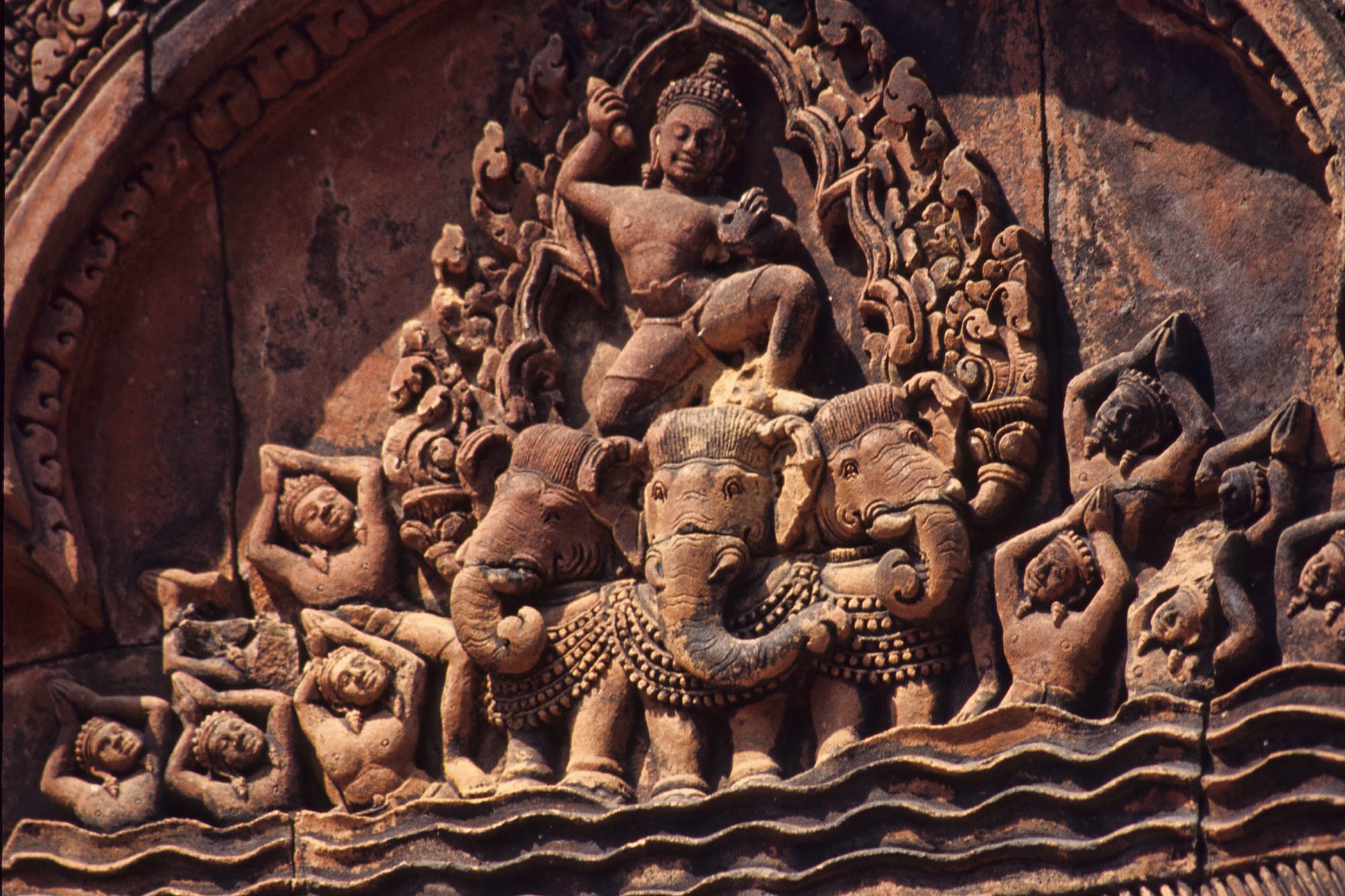
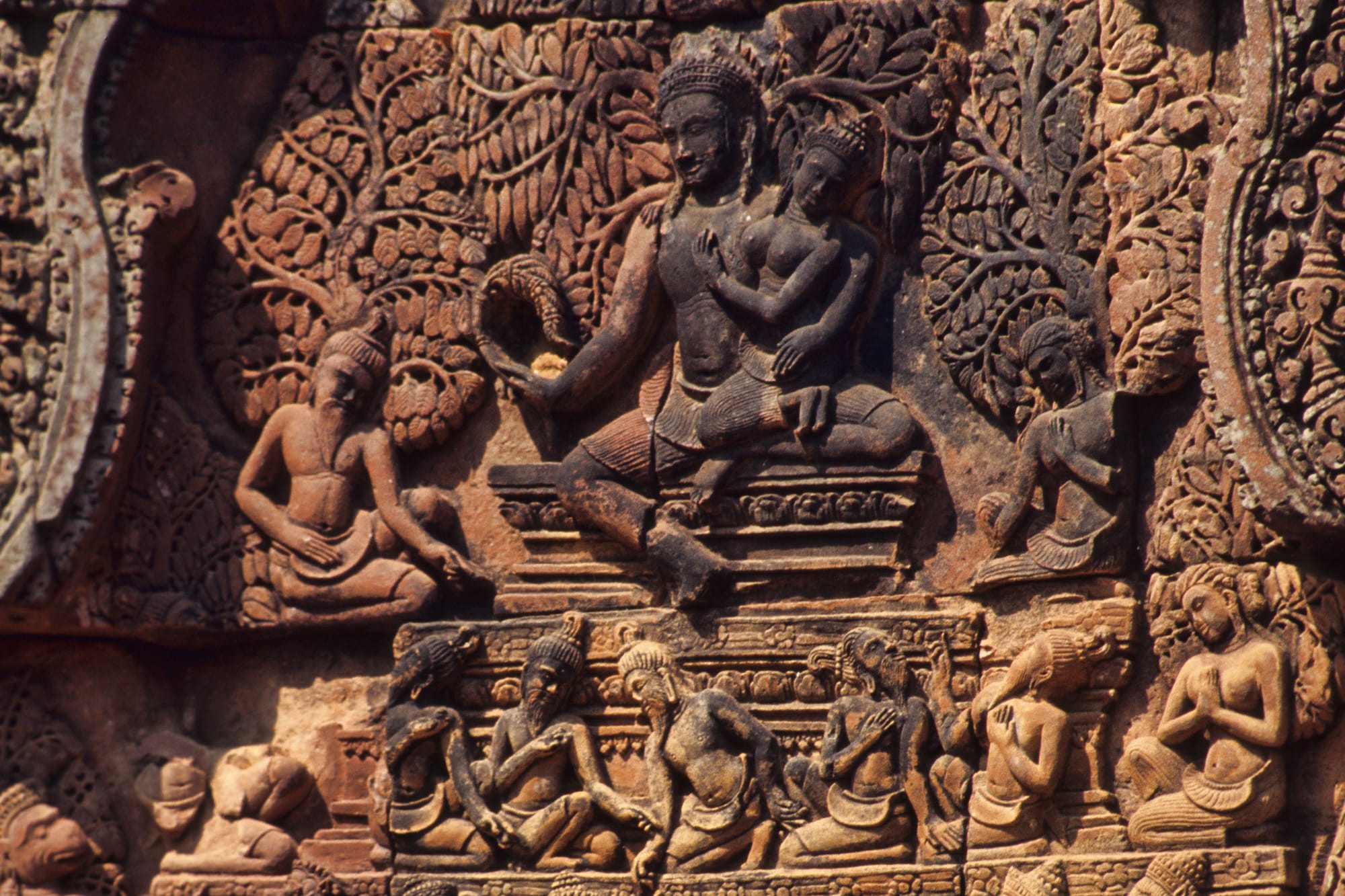
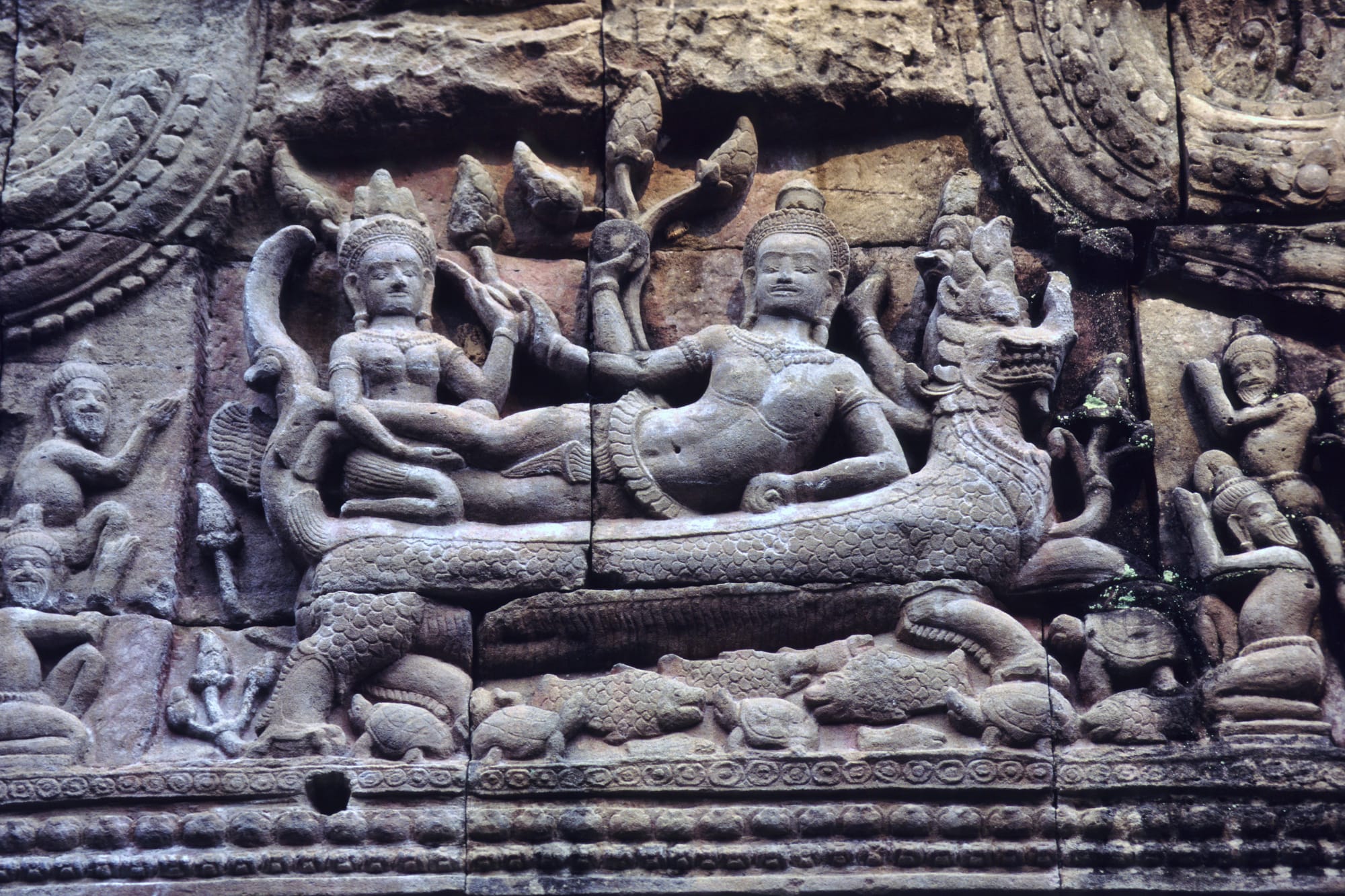
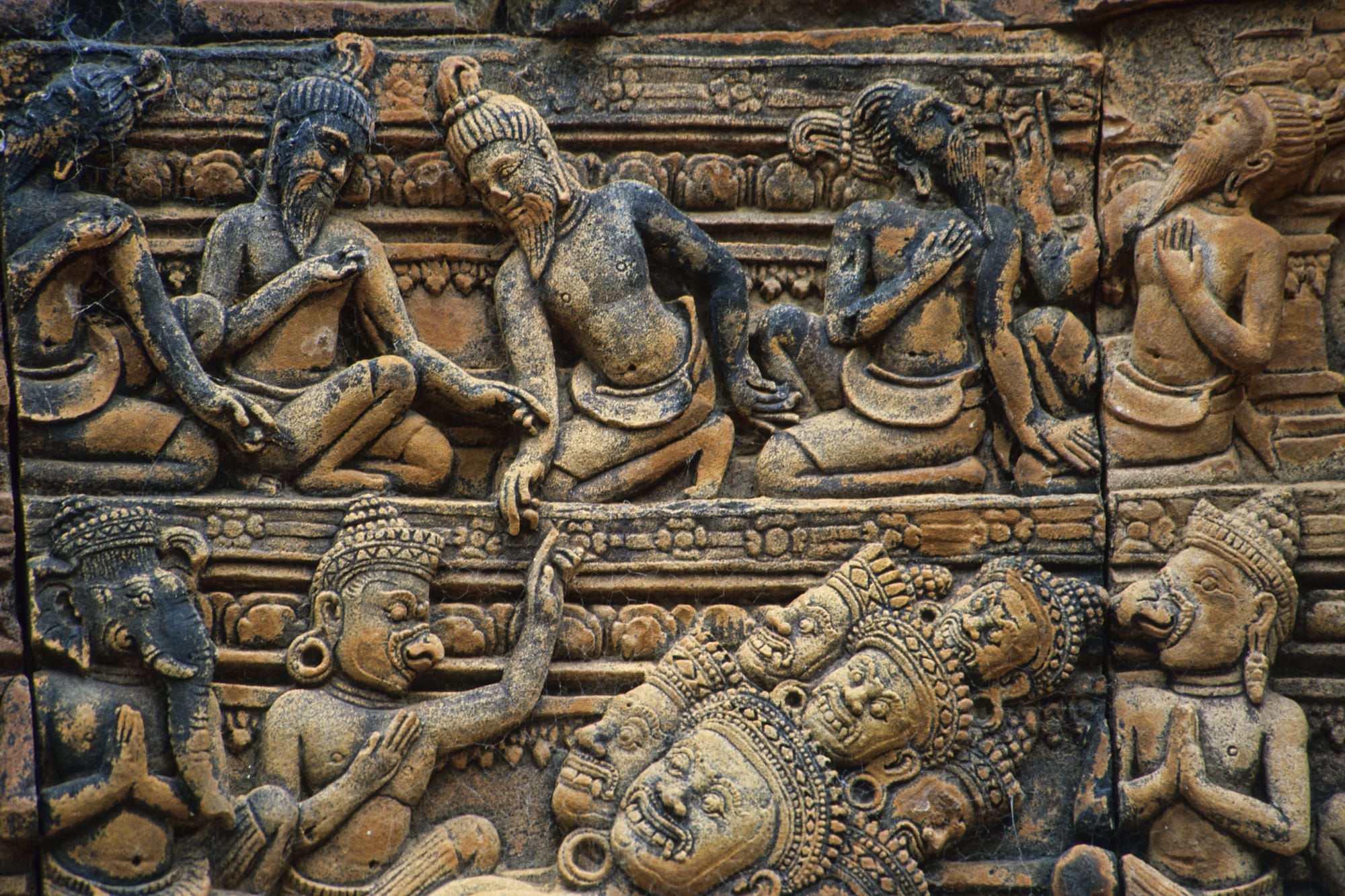
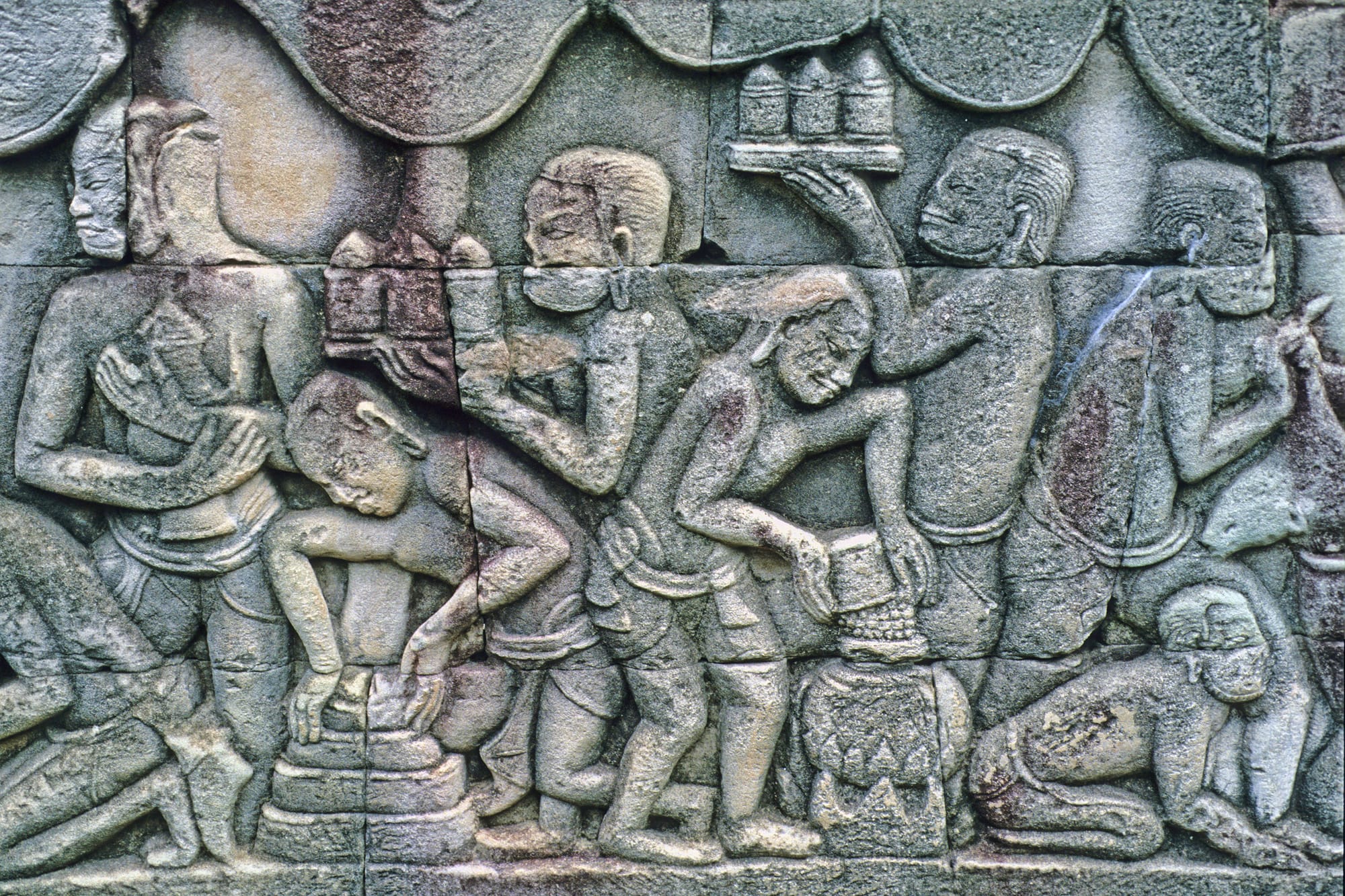
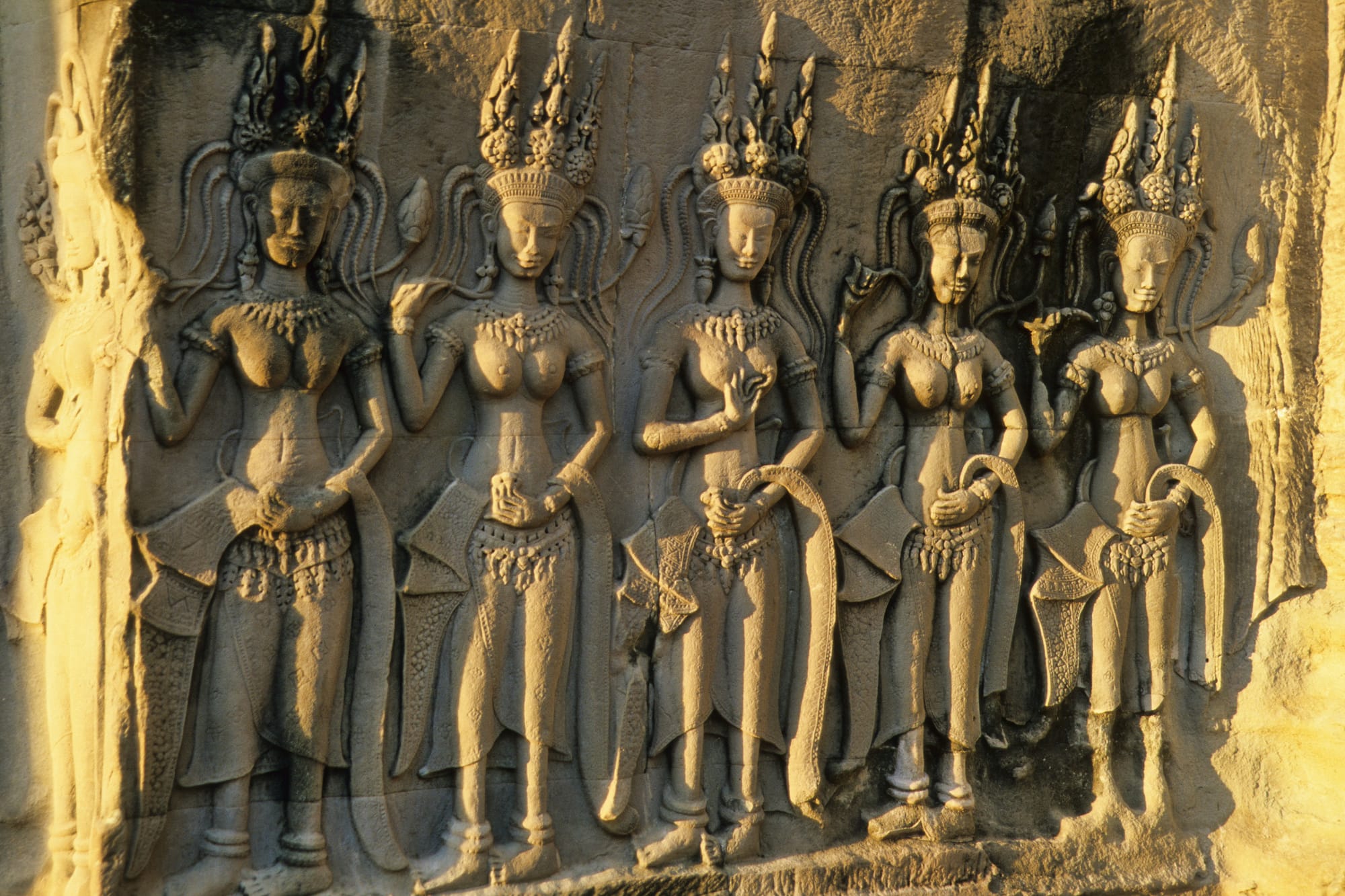
A few examples of the detailed stone carvings that adorn the temples of Angkor.
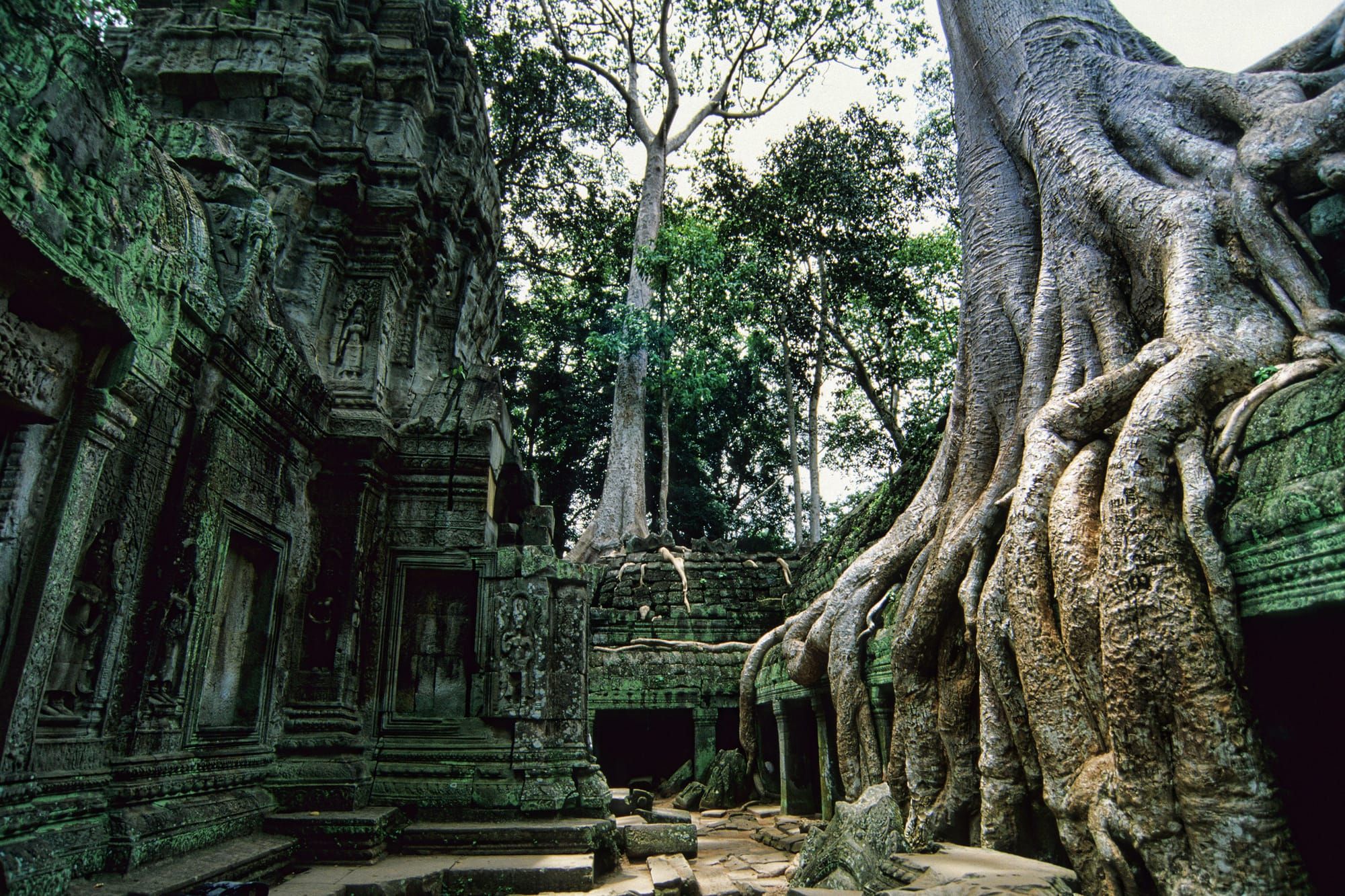
Angkor's temples exude chaos and conflict: man against nature, man against man, ancient dangers as well as current ones. After Angkor's construction by Khmer Hindus, Buddhists came into power and destroyed, defaced, or replaced many Hindu sculpture and structures. Then in 1431, the Siamese (from present-day Thailand) sacked the city and drove its entire population south to Longvek, which became the new capital of the Kingdom of Cambodia. For the next 400 years, the massive ancient city of Angkor was unpopulated and nobody in Europe knew that it had ever existed. During this time, huge trees grew up through its stone structures, ripping some of them apart. Then, in 1860, French explorers "discovered" Angkor, suddenly making the West aware of its existence.
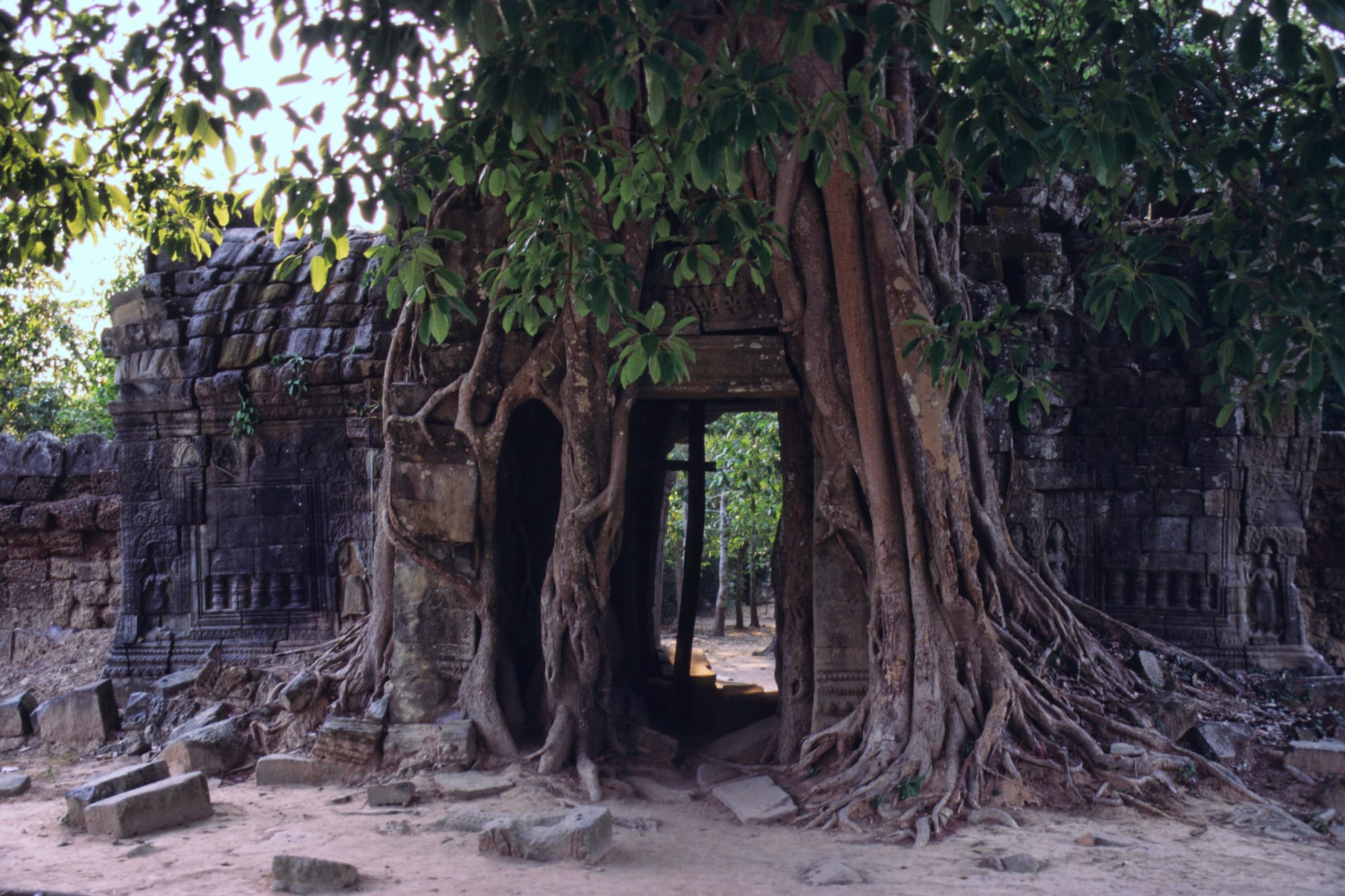
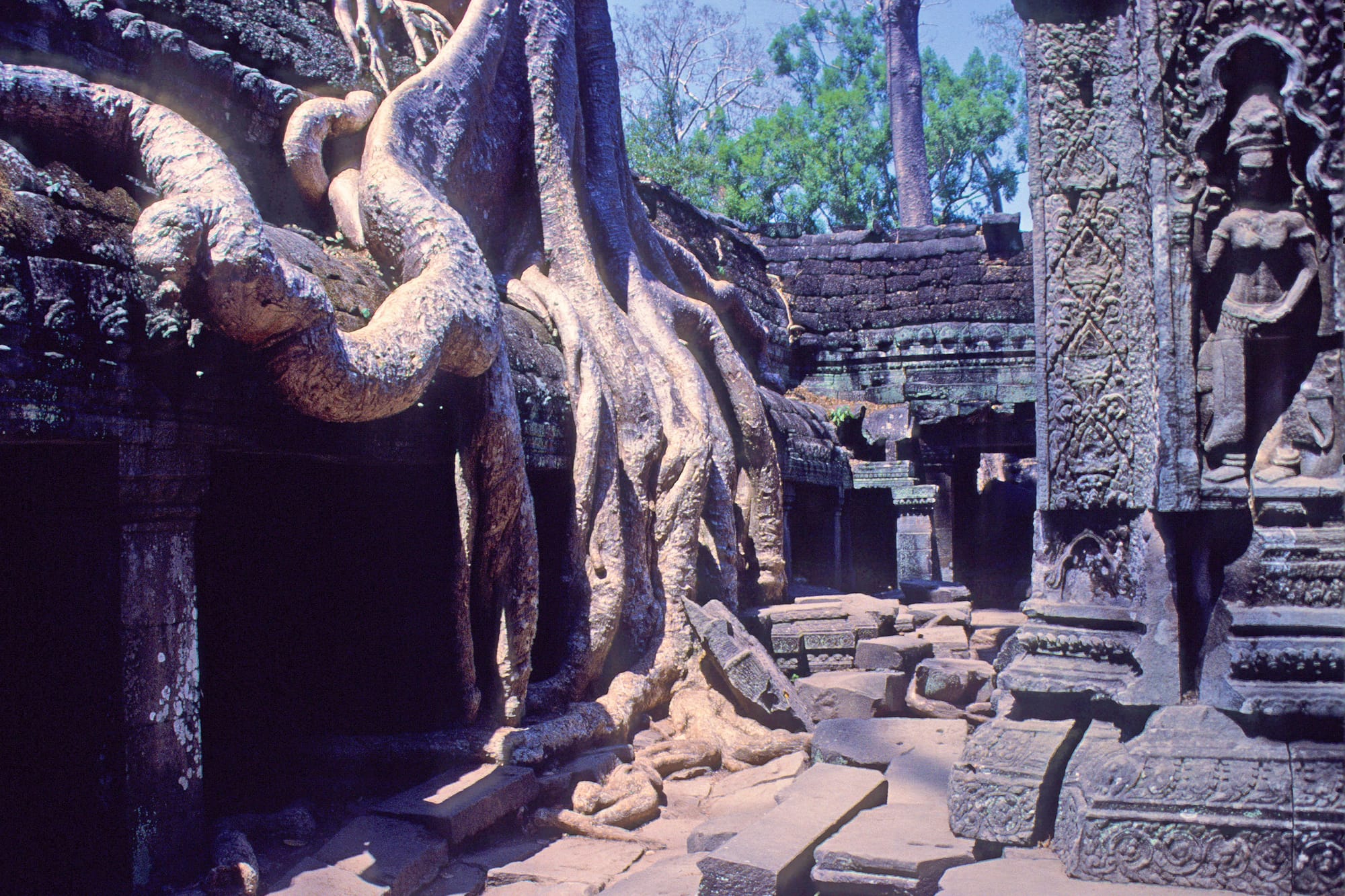
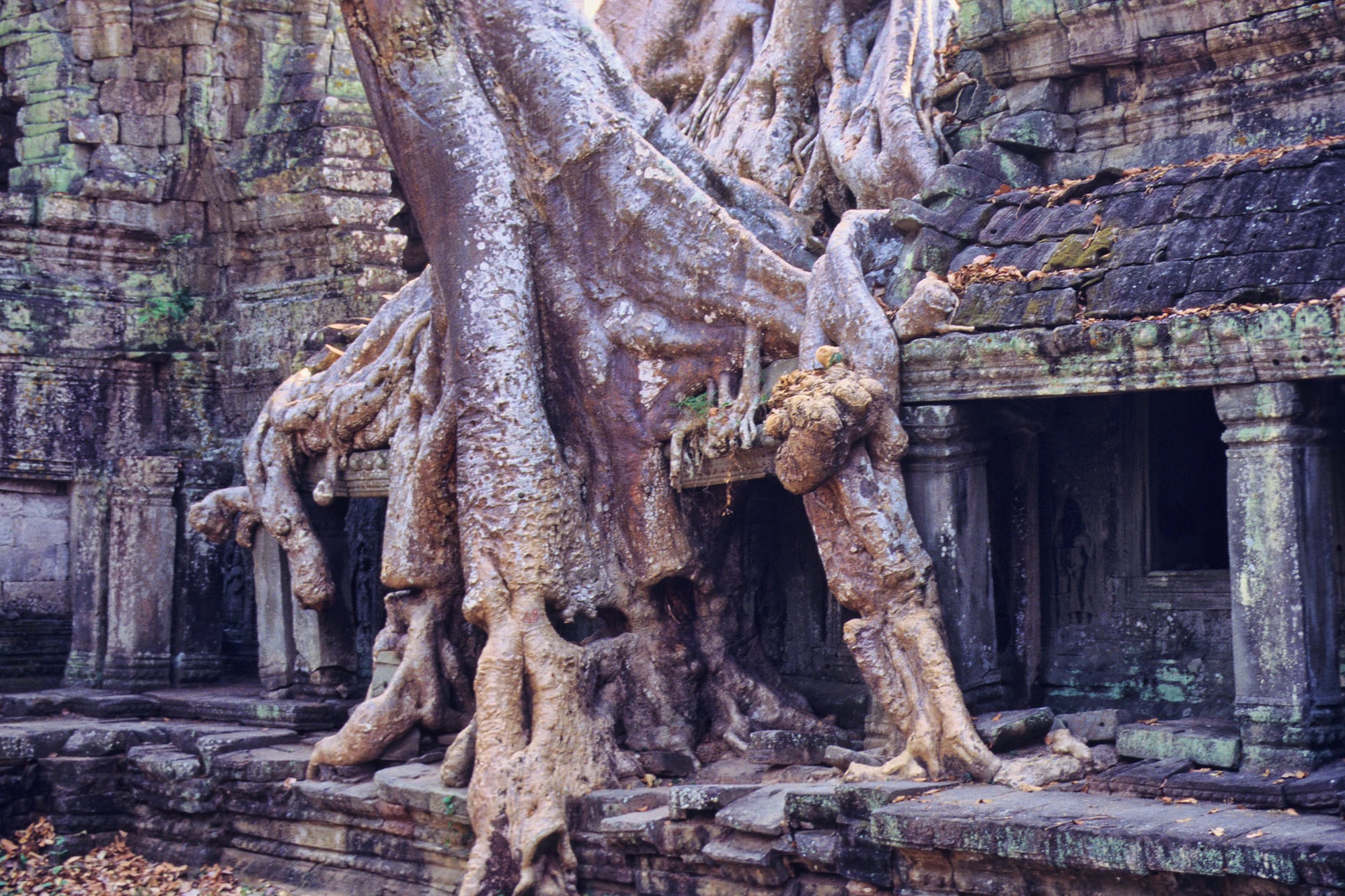
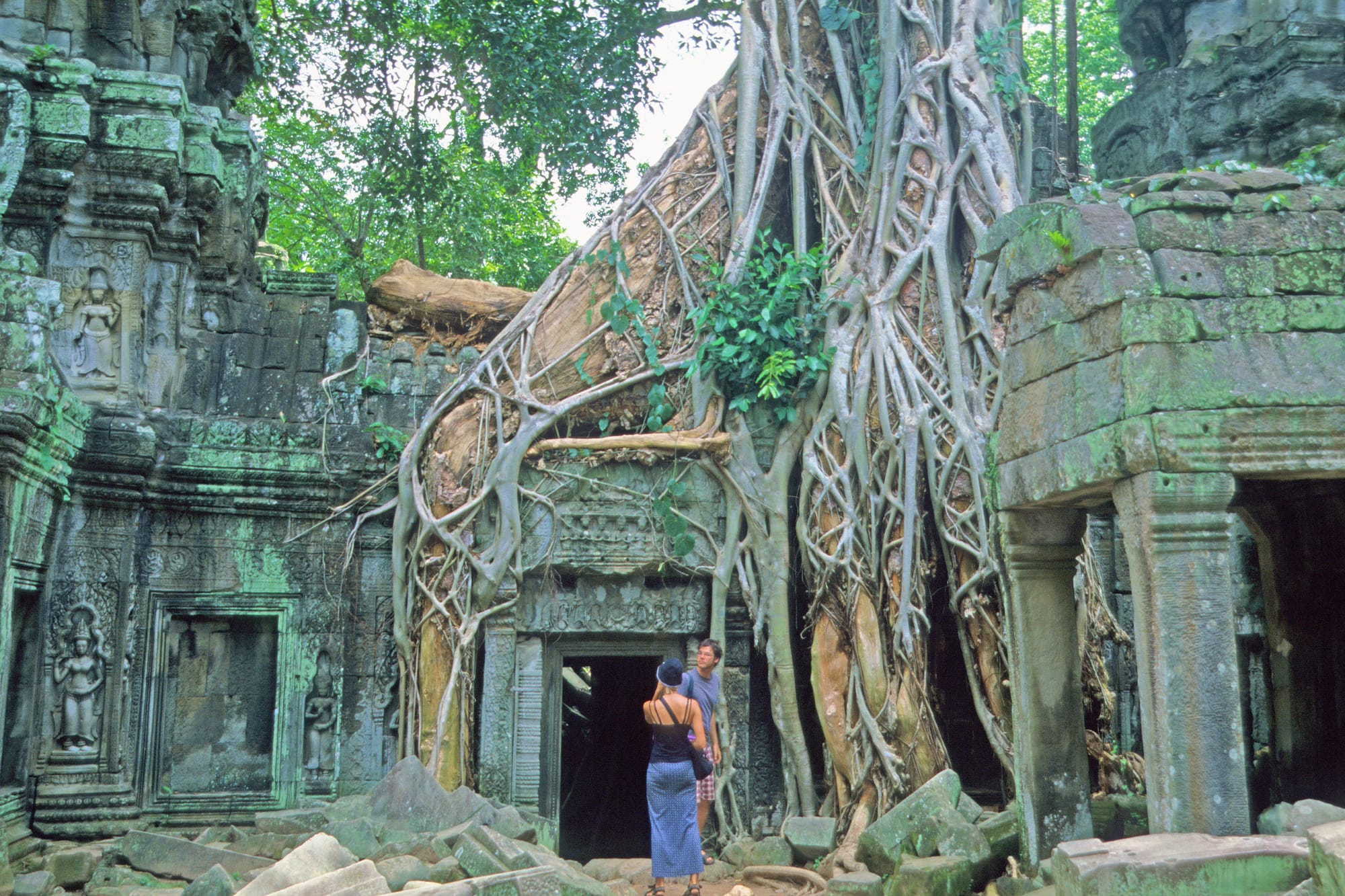
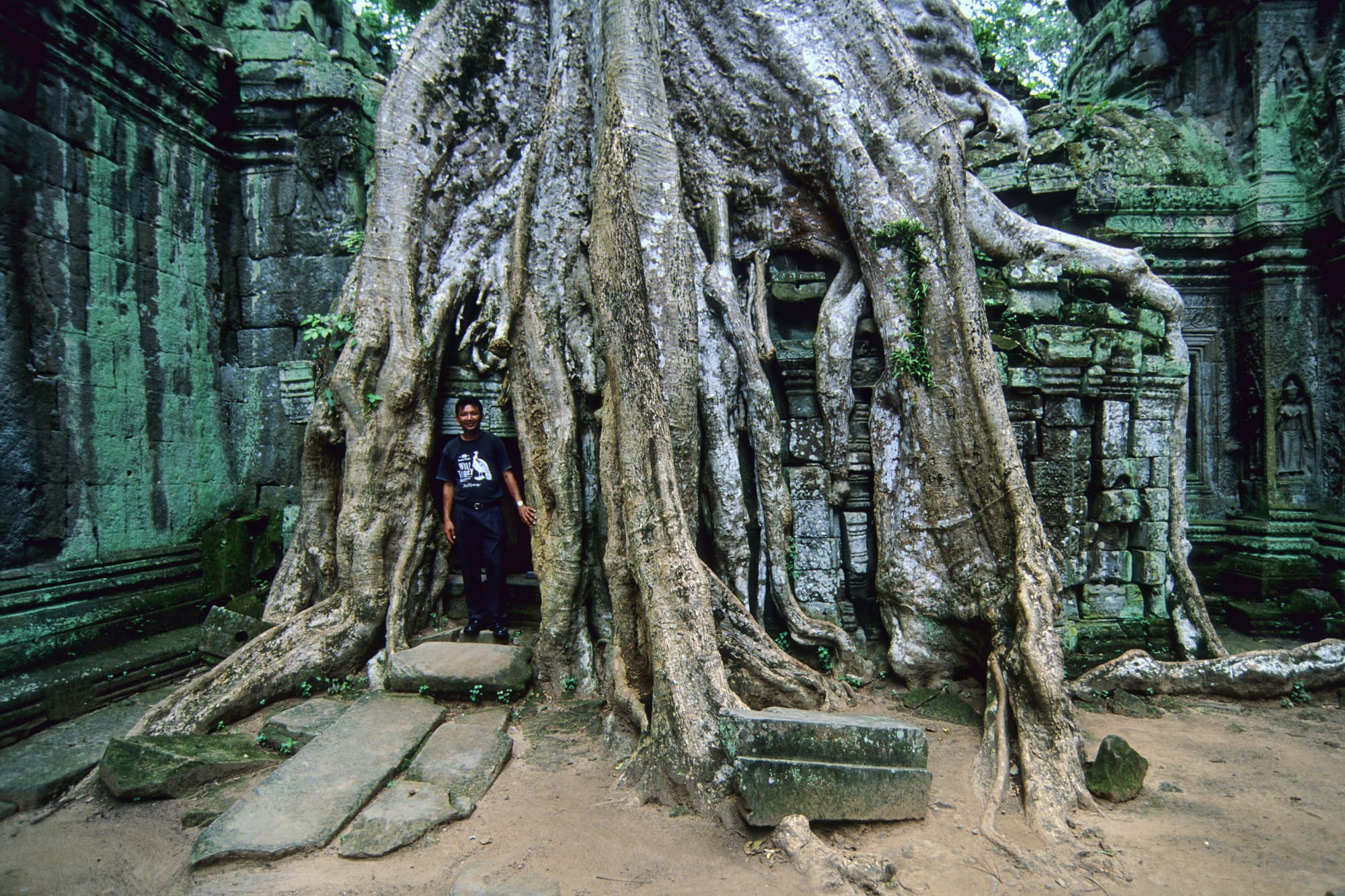
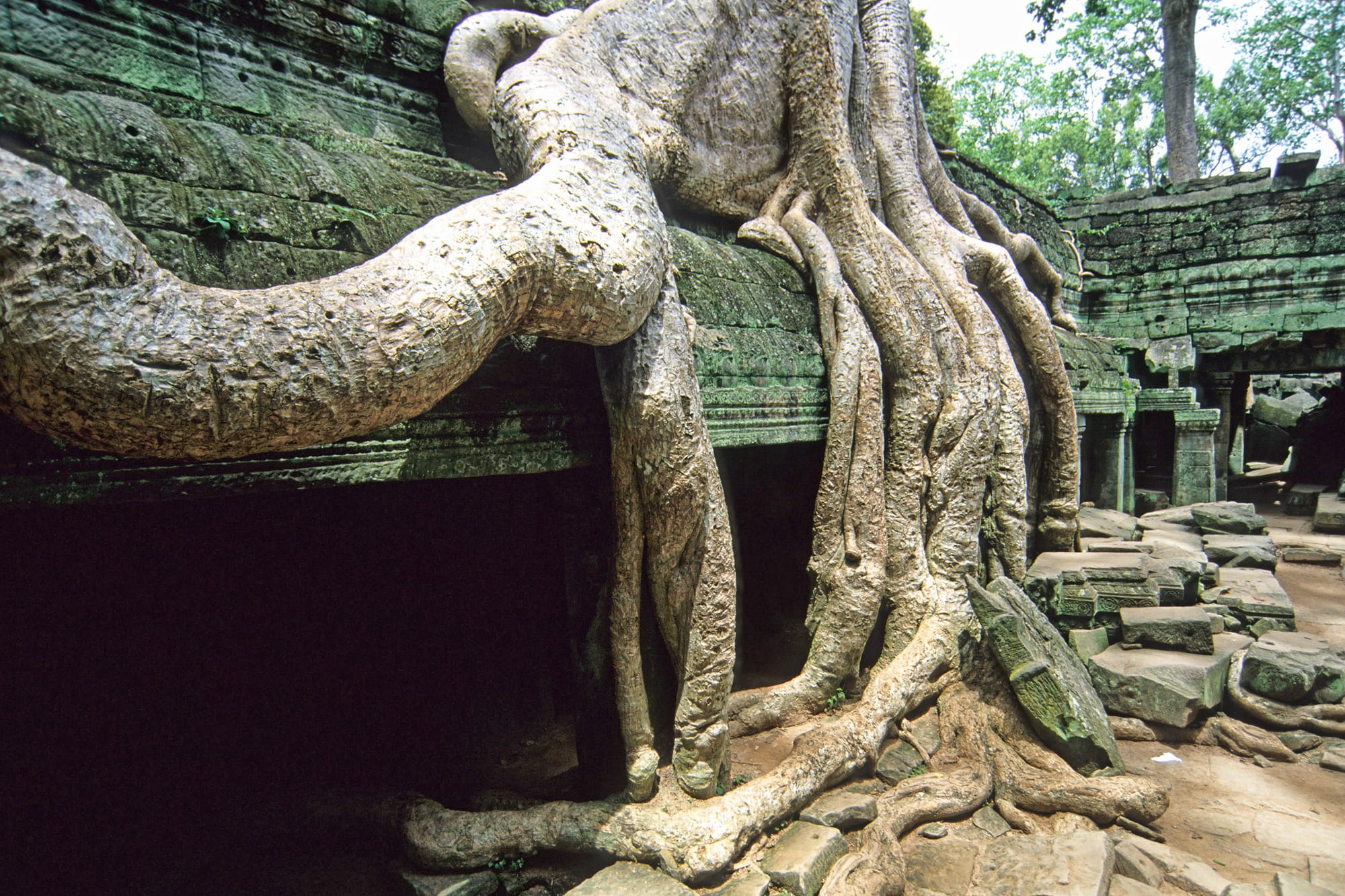
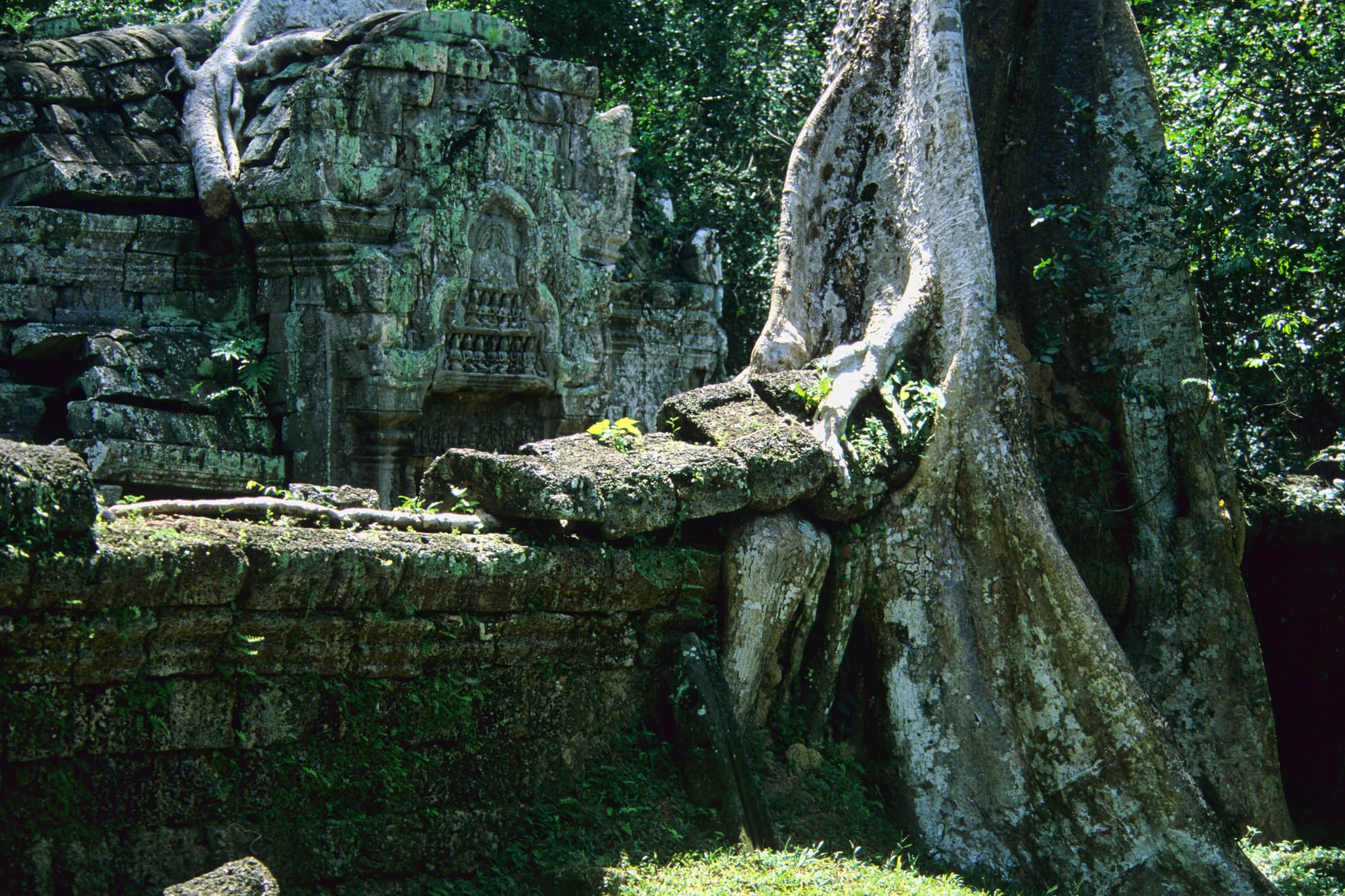
Trees growing through the temples of Angkor."
In the late 20th century, Cambodia continued its embodiment of human conflict. Between 1965 and 1973, the United States dropped over 2.7 million tons of bombs on Cambodia, making it the most-bombed country in history. This violence was immediately followed by the brutal reign of Pol Pot and the Khmer Rouge from 1975 to 1979, during which over a million Cambodians were slaughtered by their own government. The Khmer Rouge and others placed huge numbers of land mines across the Cambodian countryside, leading to over 40,000 amputees, and millions of unexploded land mines and bombs still exist in Cambodia. When Mom and I visited in 1999 – less than 20 years after the last land mines had been placed – amputee beggars were still a common sight, and signs in rural areas warned us not to wander off the roads.
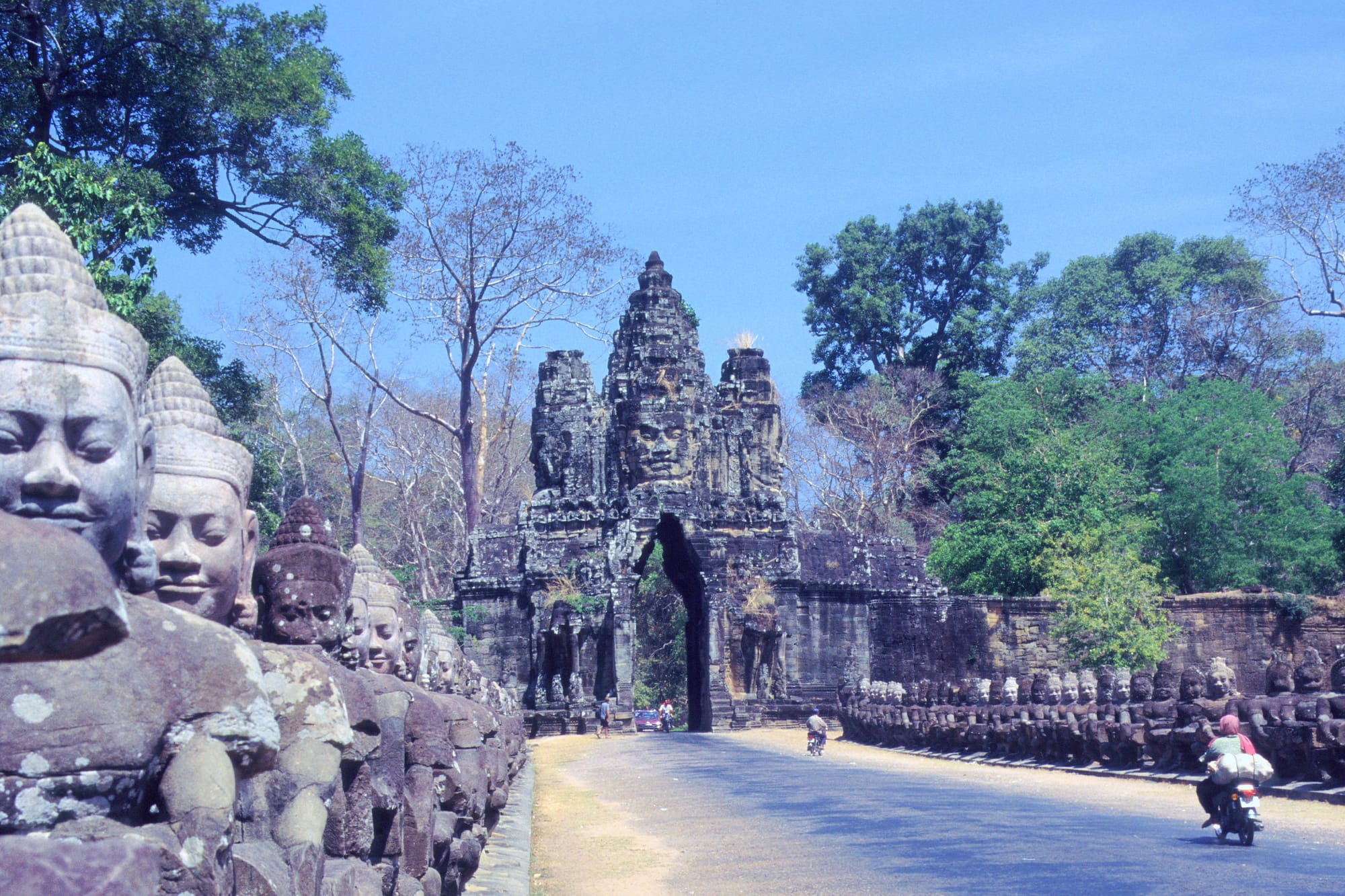
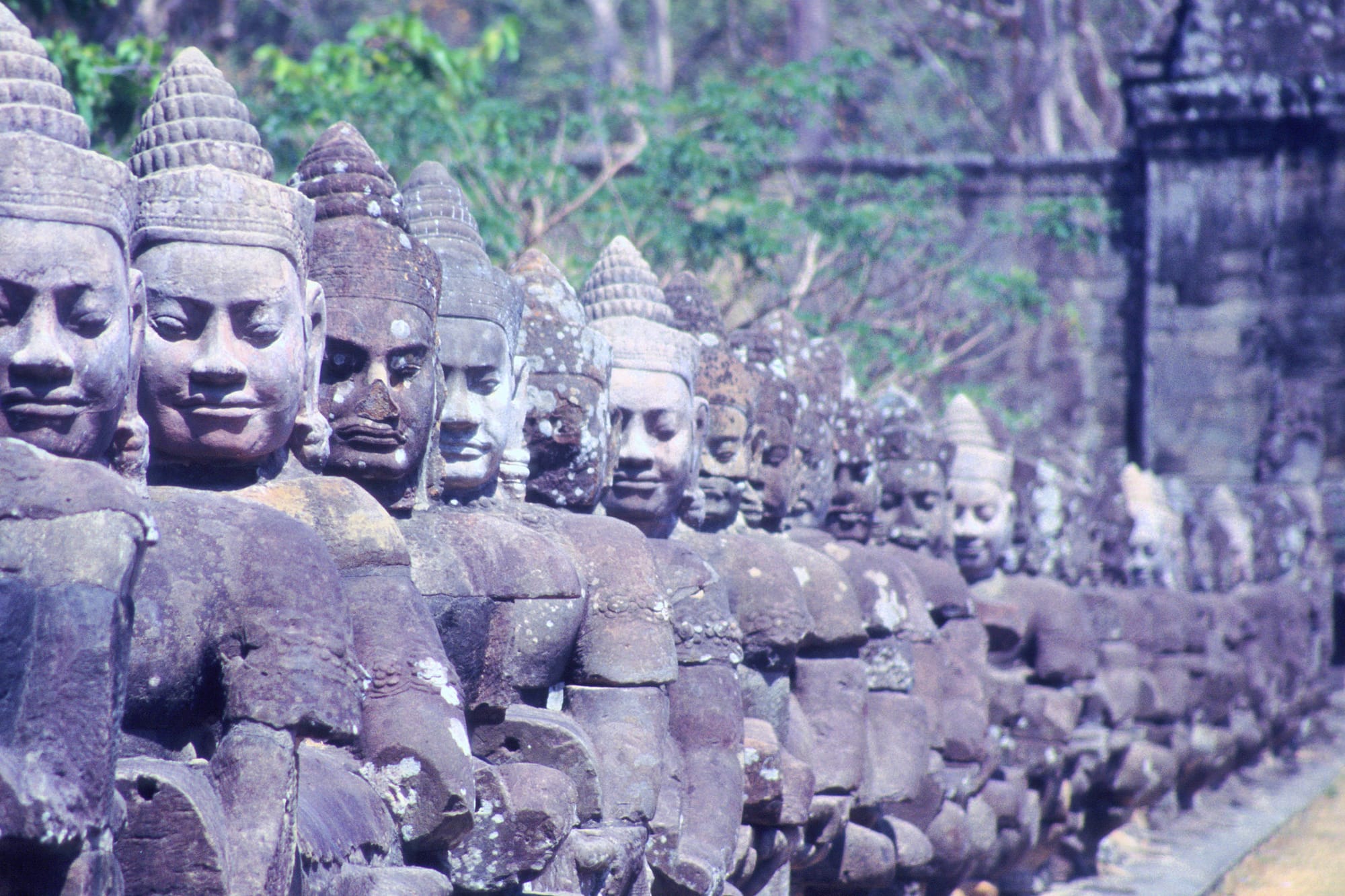
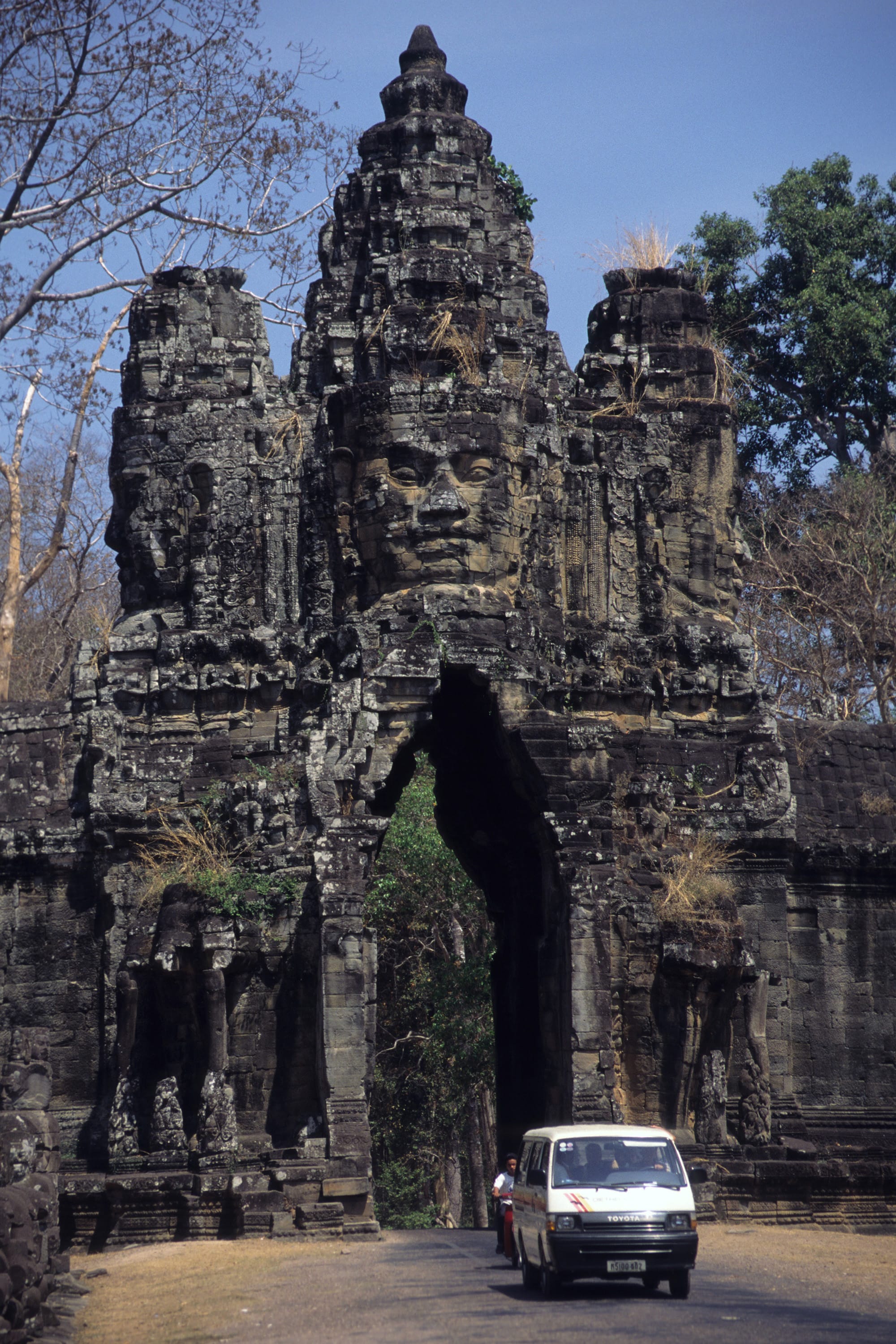
Our first glimpse of the temples of Angkor, driving across the south gate bridge of Angkor Thom. After months of preparation and planning, it was a surreal feeling to be seeing this in person.
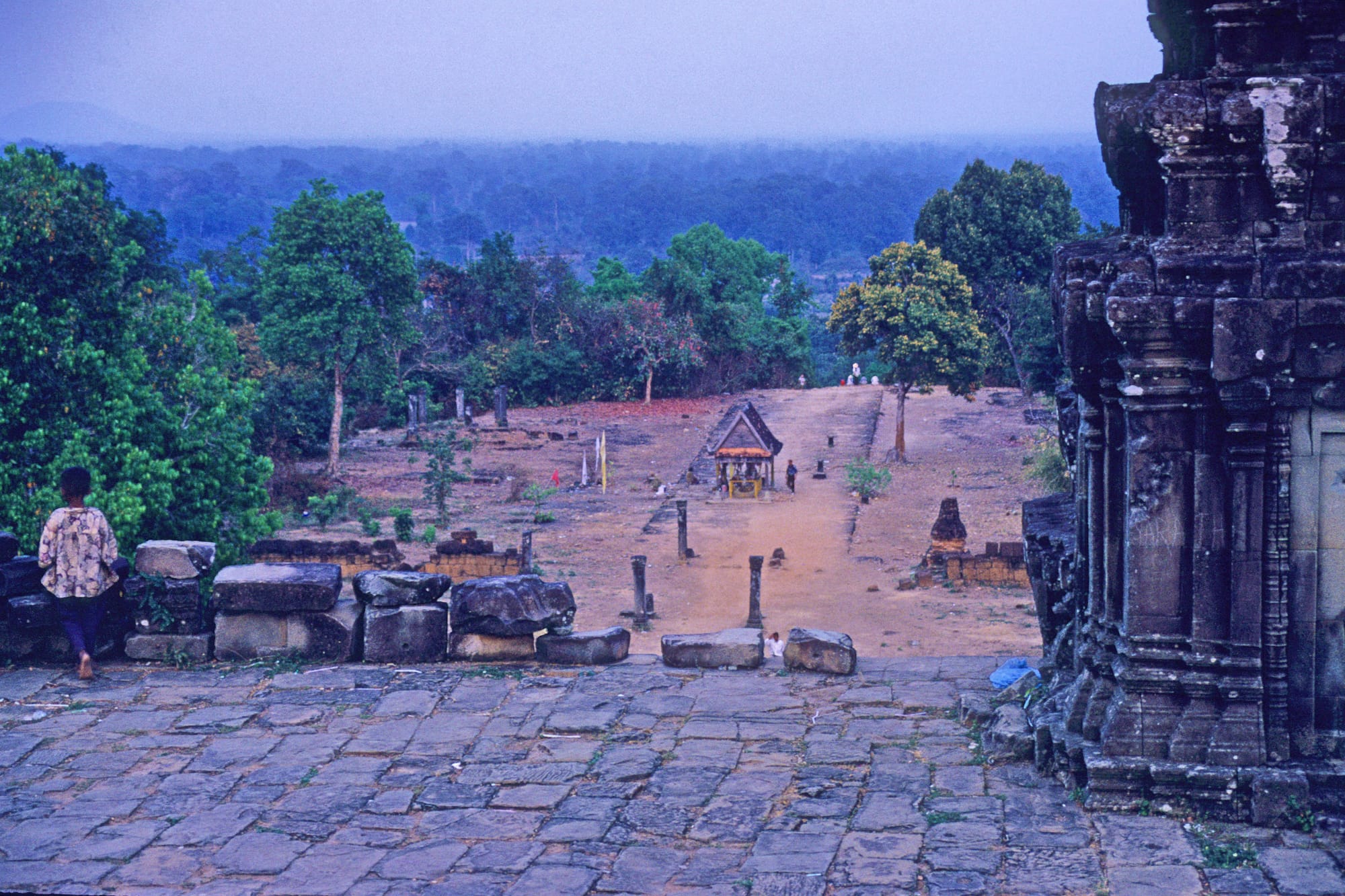
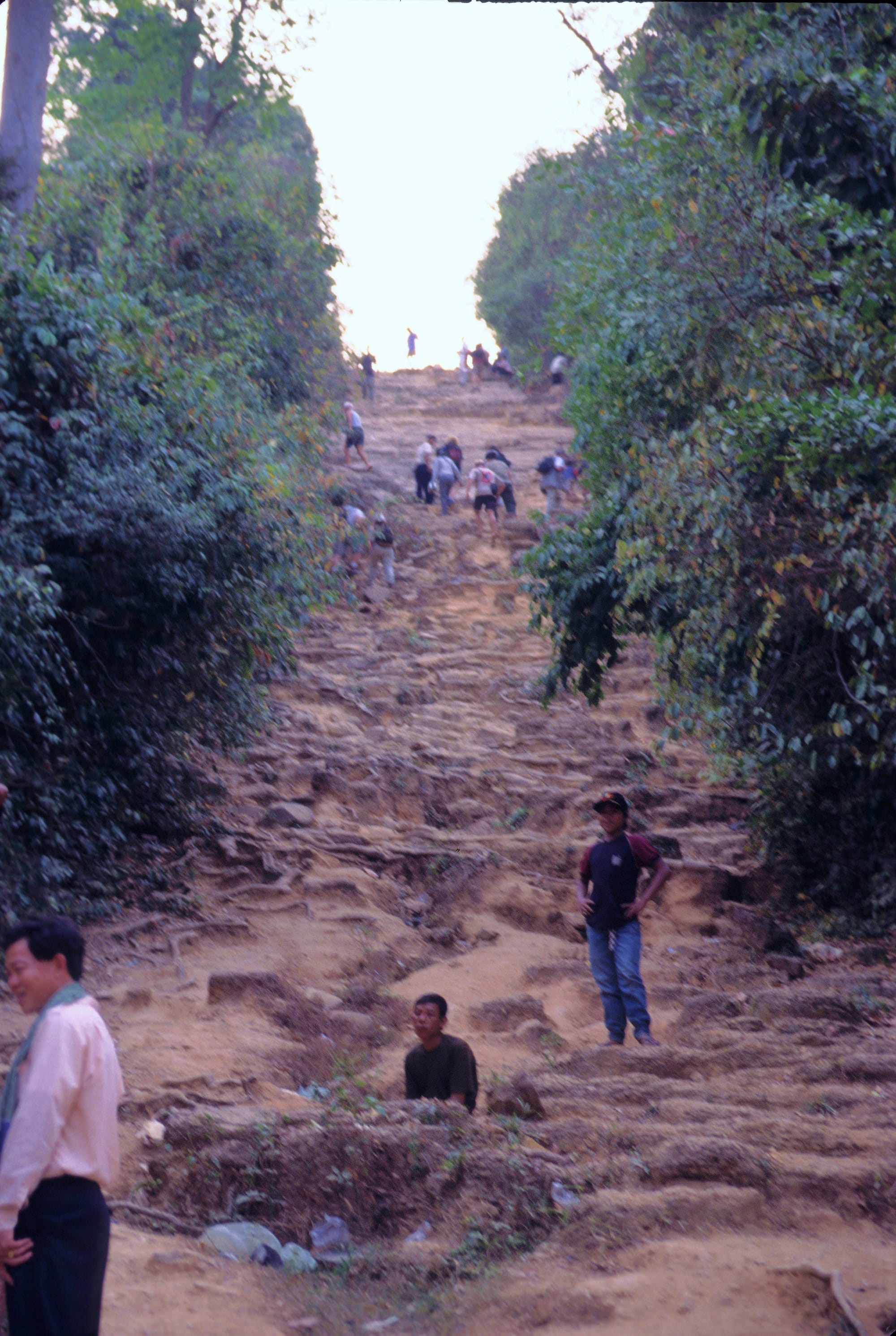
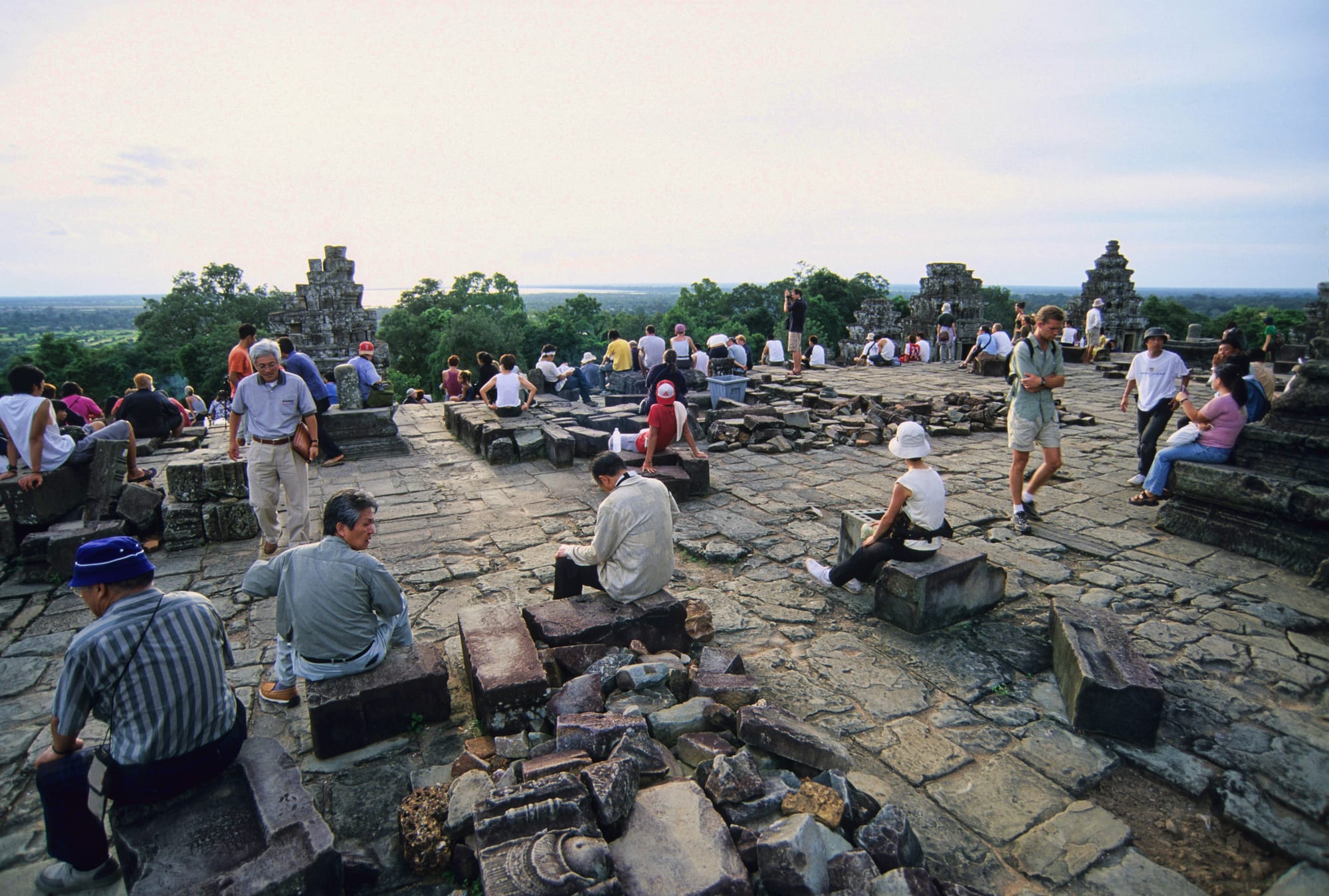
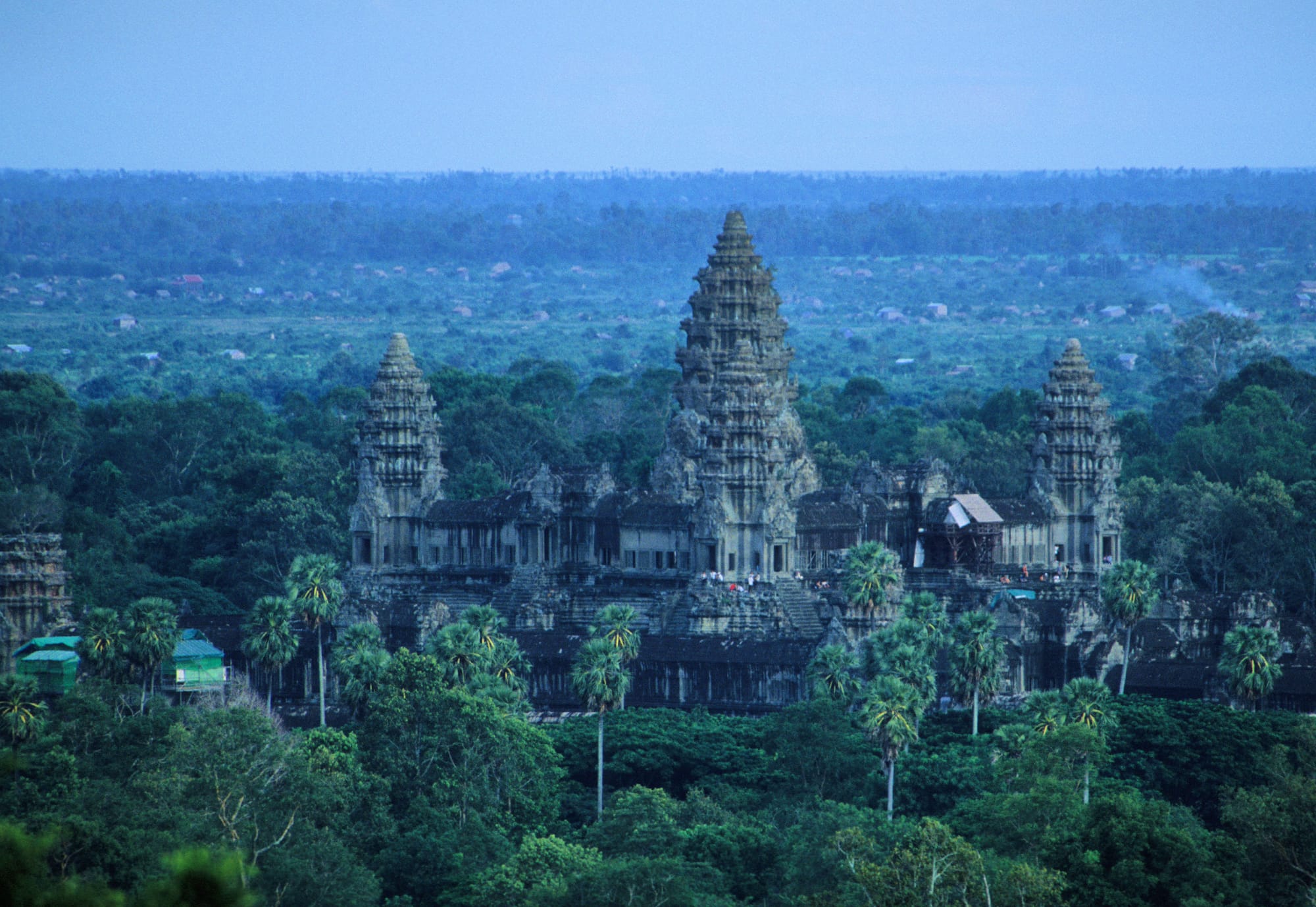
The steep climb to the top of Phnom Bakheng, where we waited for the sunset view of Angkor Wat. It wasn't a colorful sunset that day, but still an amazing sight.
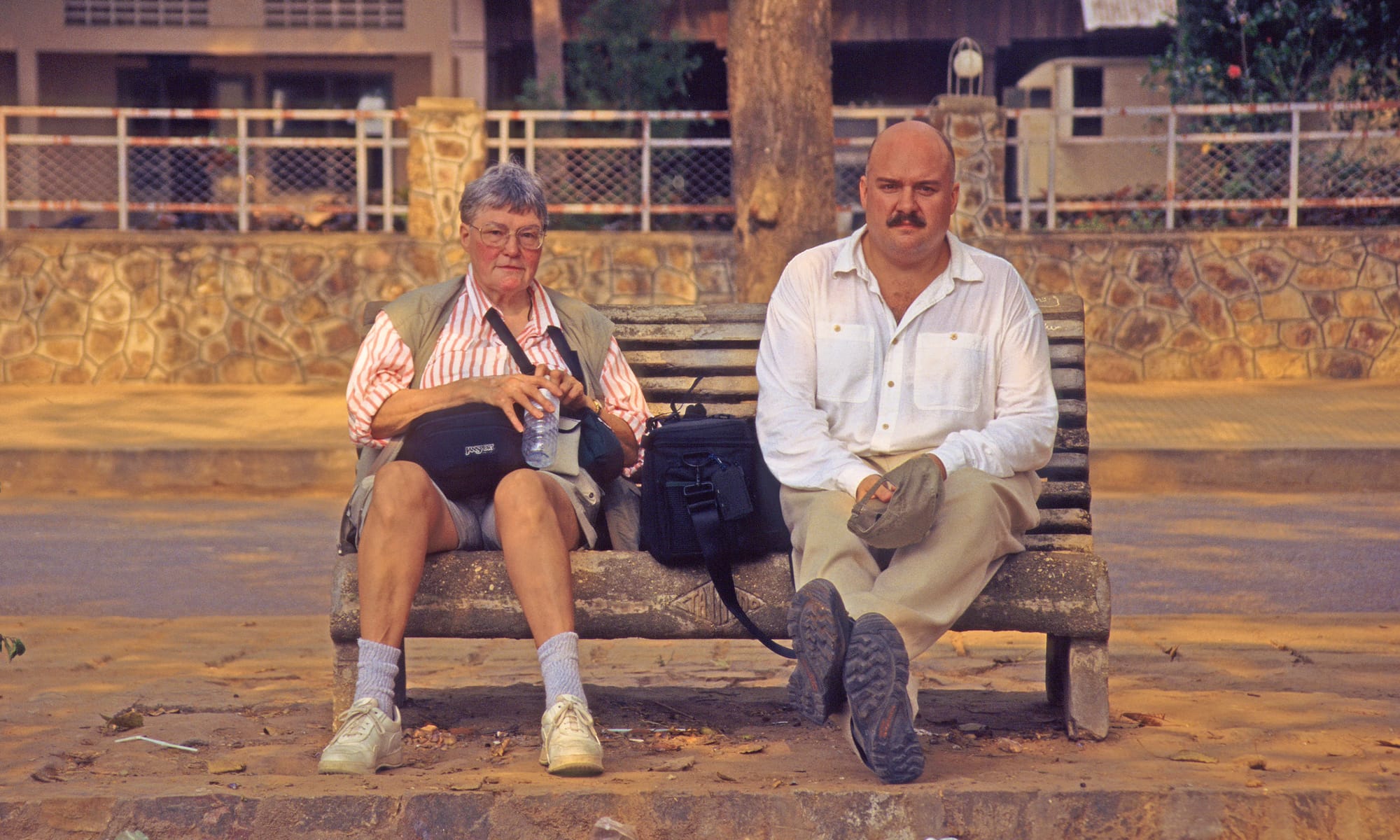
When I set up the tripod to take the photo above, a few teenage boys were watching closely from nearby. I was concerned about my new Nikon N90s SLR film camera sitting on the tripod – it was the most expensive camera I had ever owned at that time, and I was sure every one of those boys could easily outrun me. So I glared and swaggered and tried my best to look like a guy not to be trifled with, and when I sat down for the photo I forgot to wipe the glare off my face.
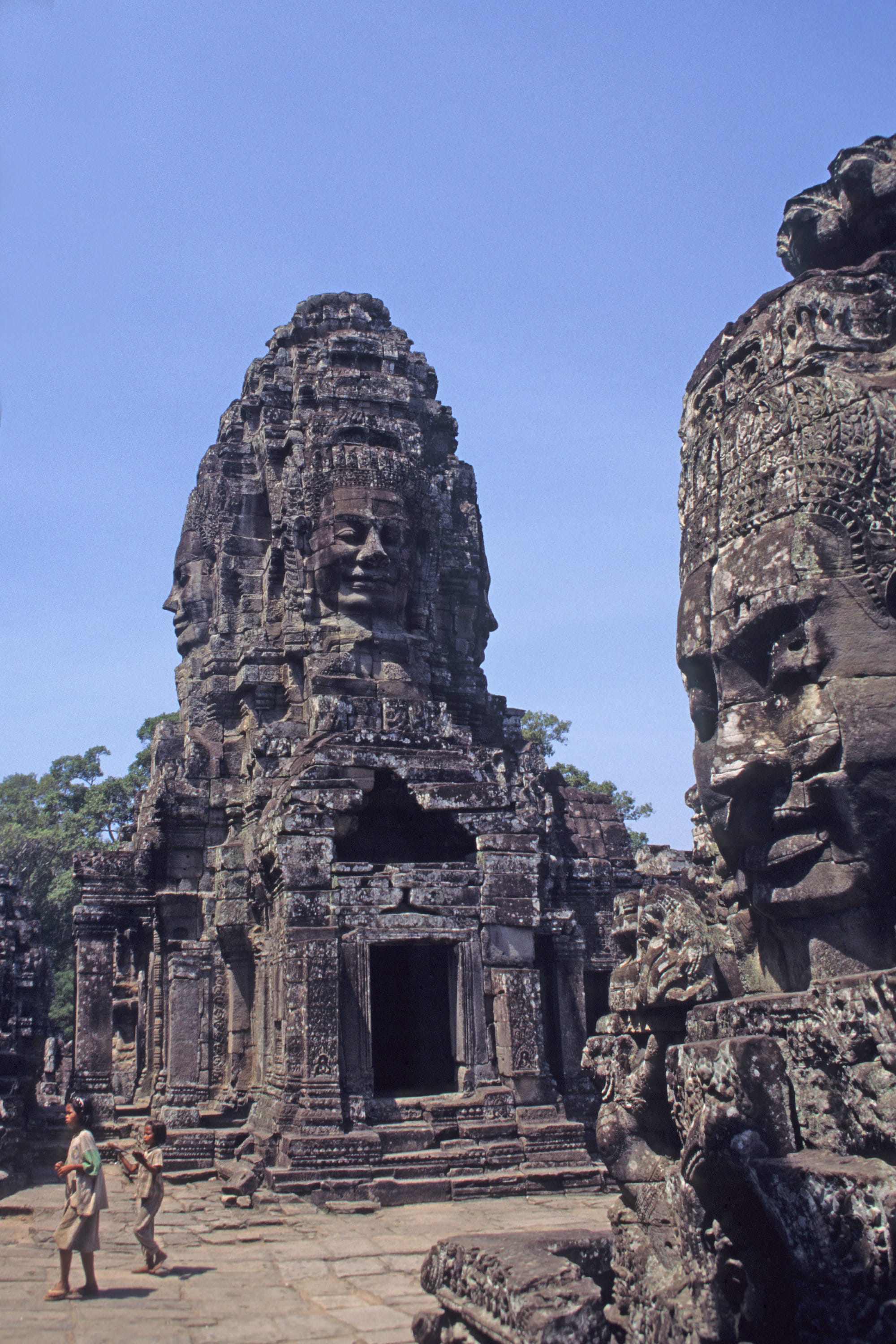
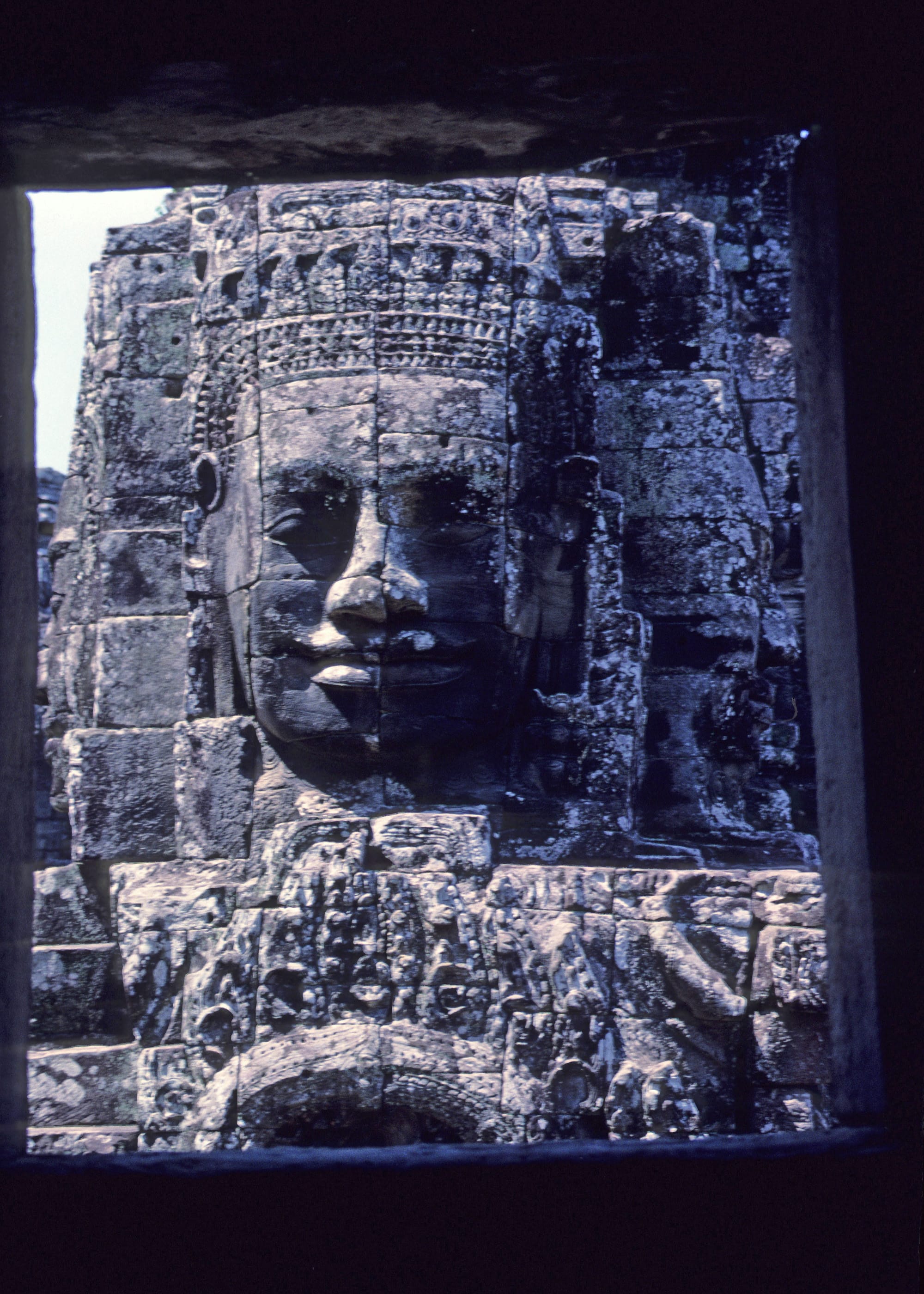
The Bayon is a Buddhist temple at the geographical center of Angkor Thom, built in the late 12th or early 13th century as the state temple of King Jayavarman VII. It is covered with dozens of serene smiling faces to represent the King.
We visited the crocodile farm in Siem Reap, where we learned that during Pol Pot's reign of terror, Khmer Rouge soldiers infamously fed people to the crocodiles. The Khmer Rouge was in power 20-24 years before our visit, and crocodiles can live up to over 50 years, so some of the big crocodiles we saw may have witnessed those horrors.
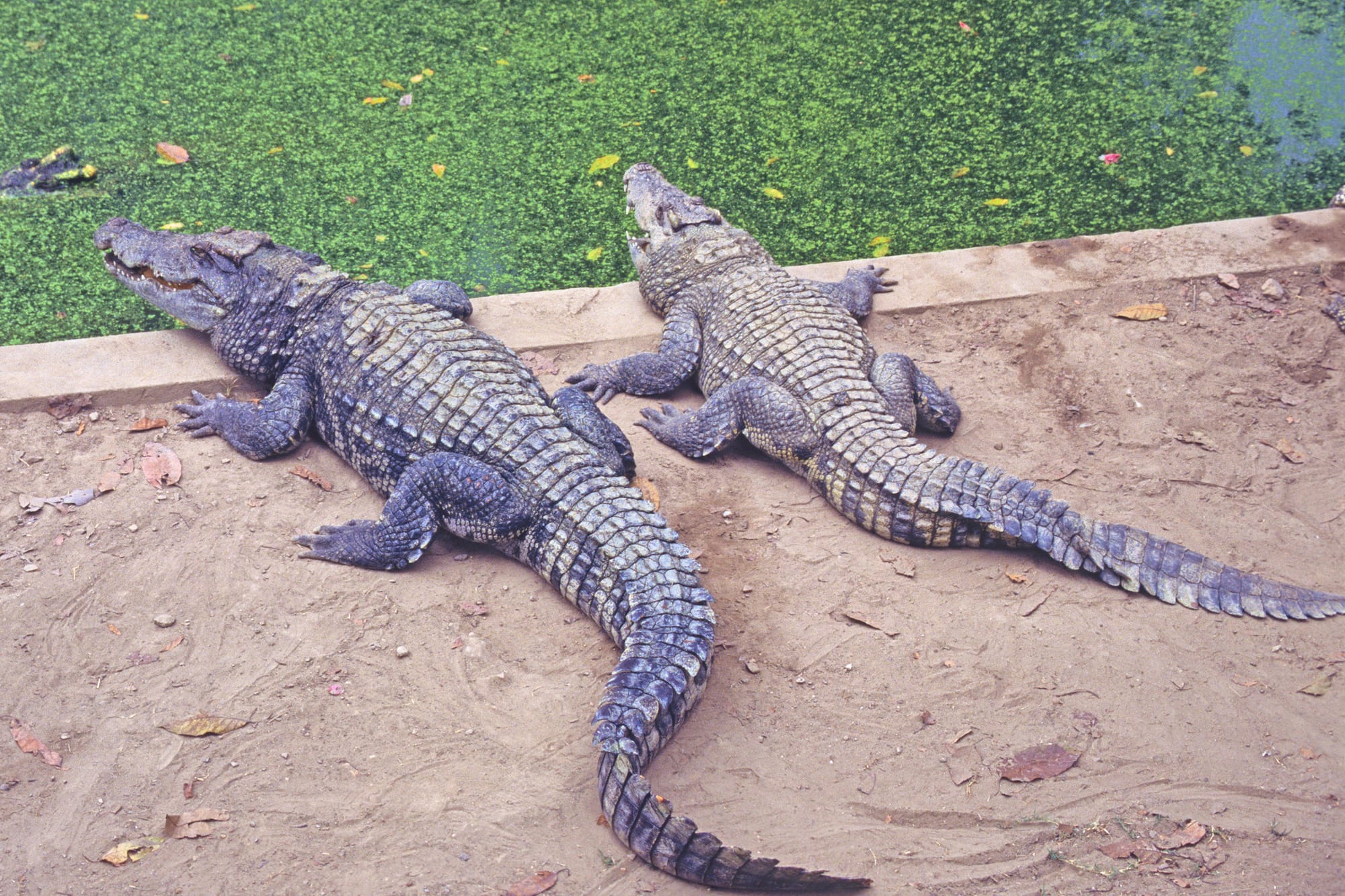
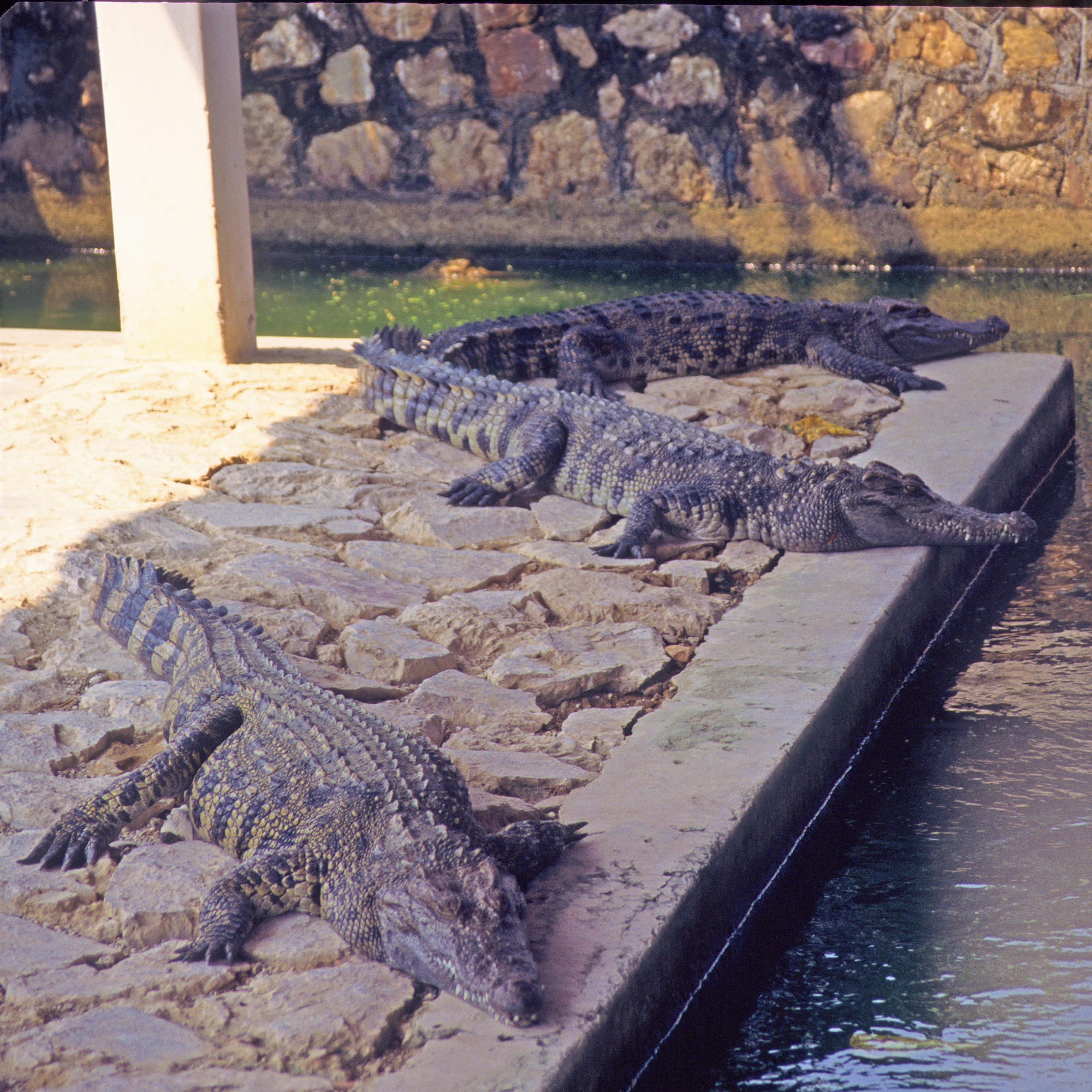
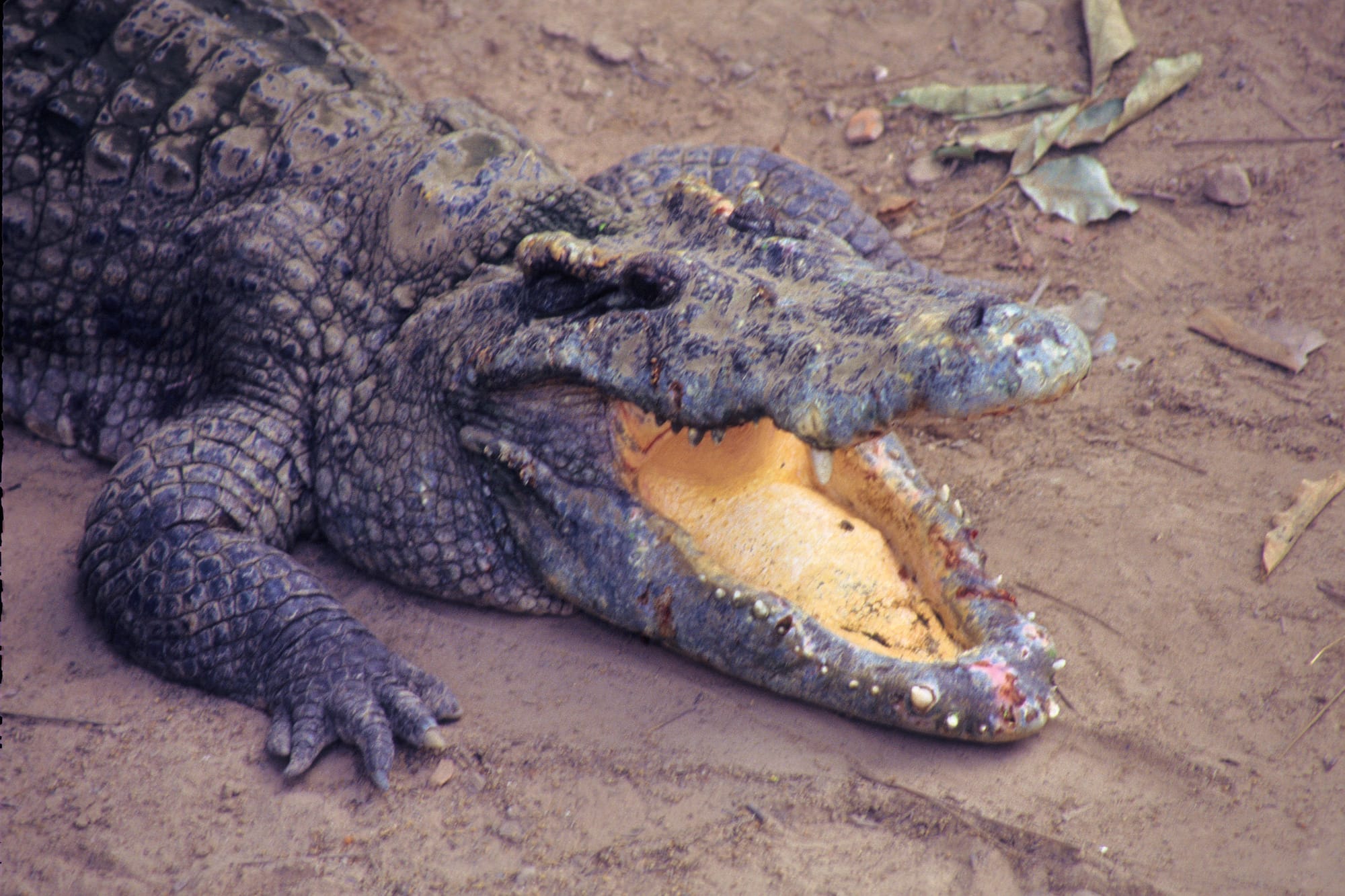
The crocodile farm in Siem Reap.
On our drive from the Bayon to the temple of Preah Kahn, we saw some monkeys along the road and asked our guide David to stop so we could photograph them. David felt I got too close to the biggest monkey when I took a photo of him eating something, and warned me “he is the commander, protects the others, when bites customer we must go to hospital, not good.”
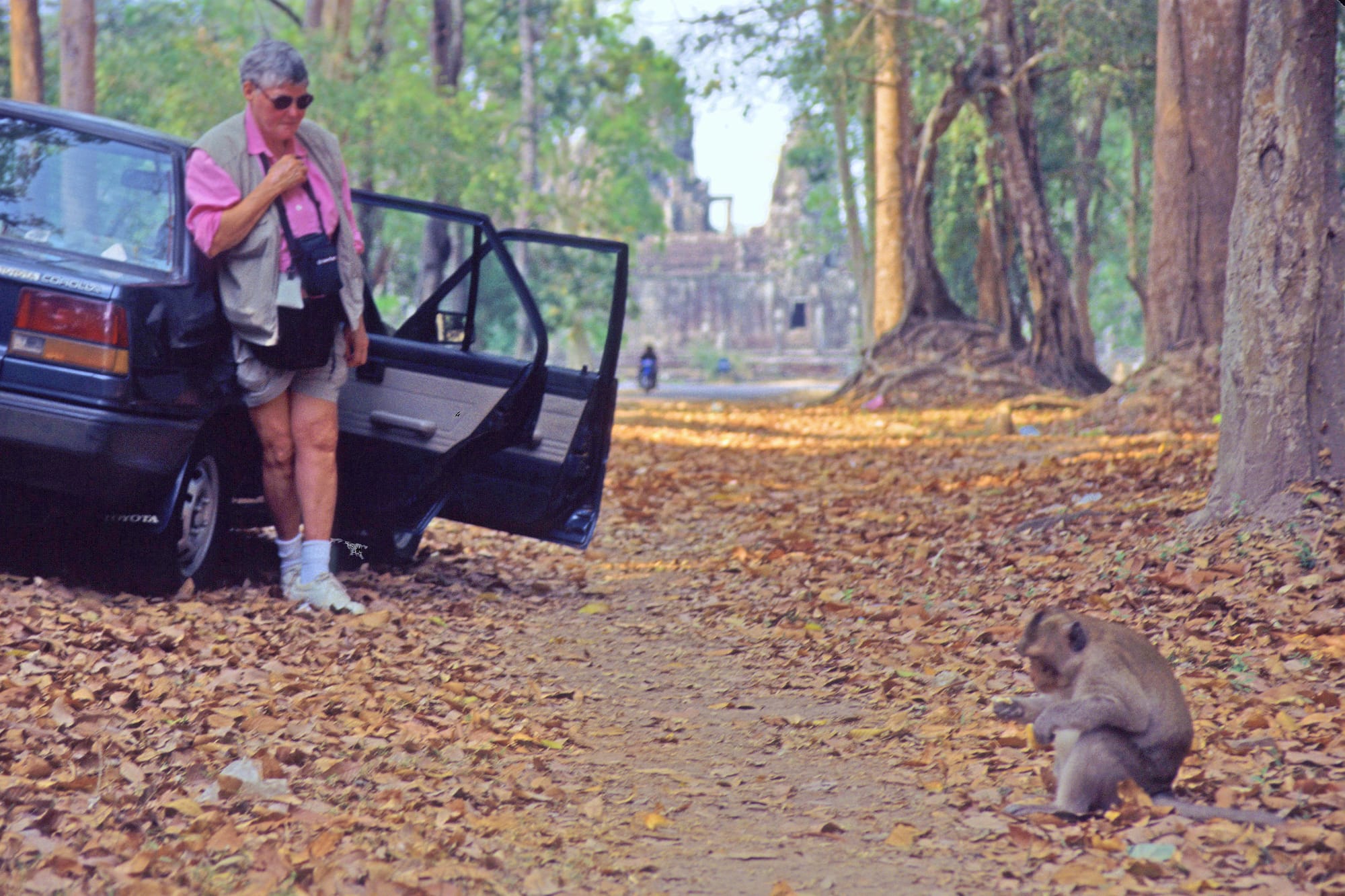
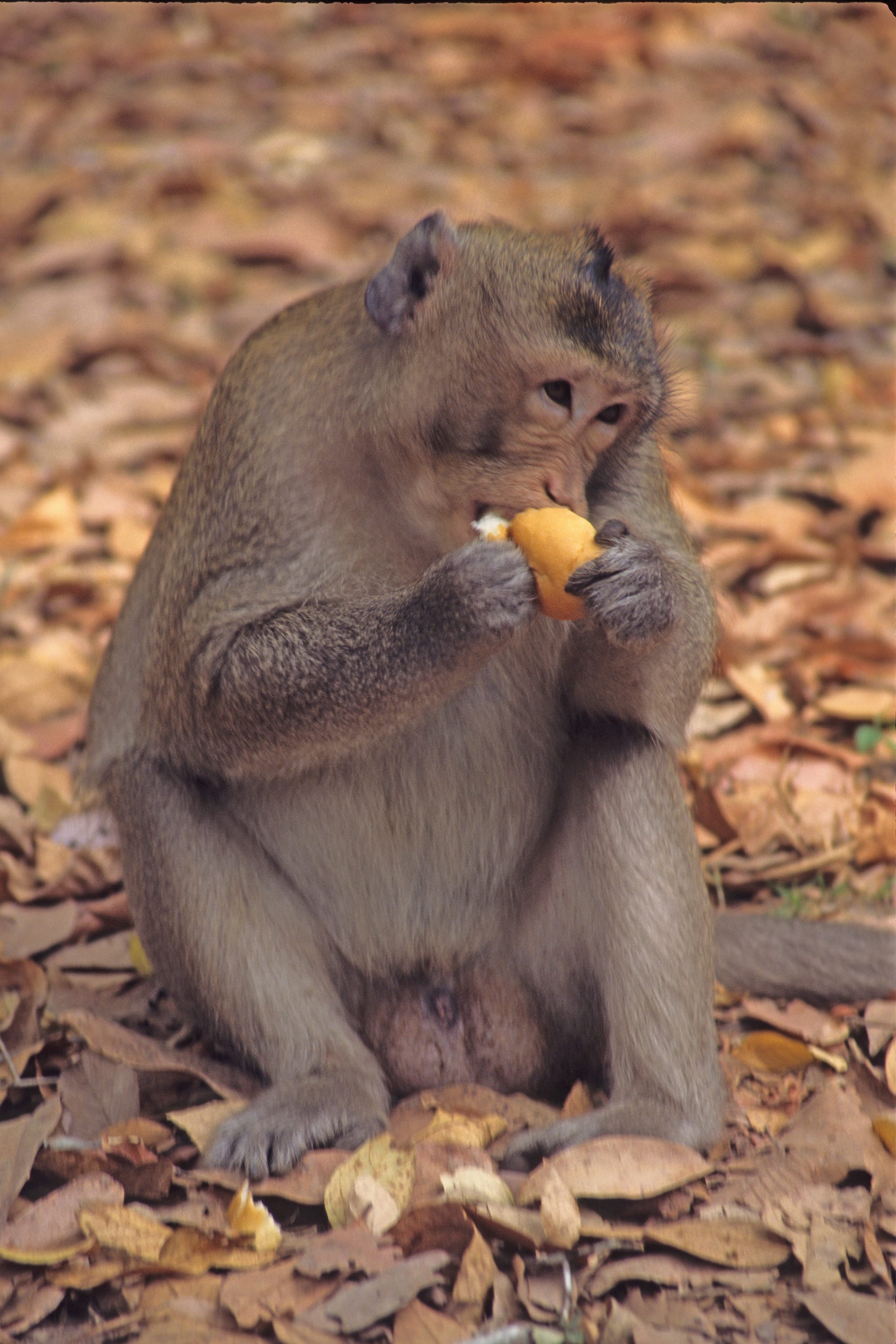
Photographing monkeys near the Bayon.
A few notes from my journal entry for this day:
- After wandering around Angkor Wat for a while, we decided to climb the stairs to the highest level in the center of the temple. The last flight of steps is VERY steep, with stairs 4 inches deep and 12 inches tall. Mom was the oldest person at the top, and I was the heaviest.
- We've seen few local men over the age of 30 (due to the Khmer Rouge genocide?), and those we've seen have mostly been openly unfriendly. Not surprising, given the US's role in what happened in the 1970s here. I asked David how the Khmer Rouge years affected his family, and he said “not many killed by Pol Pot because we are poor, he mostly kill doctor and teacher and government worker. Pol Pot kill my uncle, he works for government.”
- A comment I saw in the Bayon Pearnik (local newspaper) regarding the UN-backed elections in Cambodia: “give a man a fish and he can eat for a day, but teach a man to fish and you can make him hire your friends as fish-harvest consultants.”
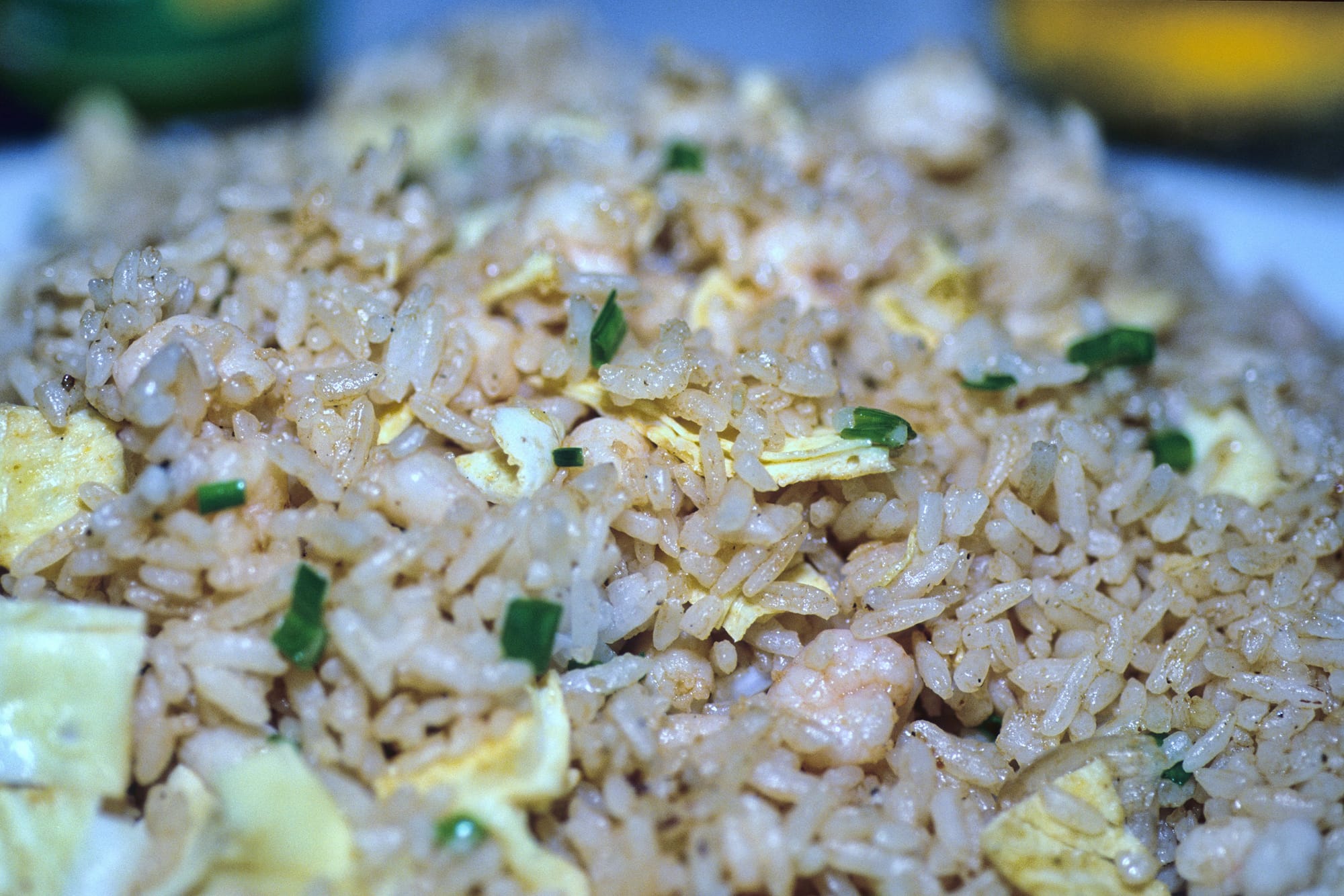
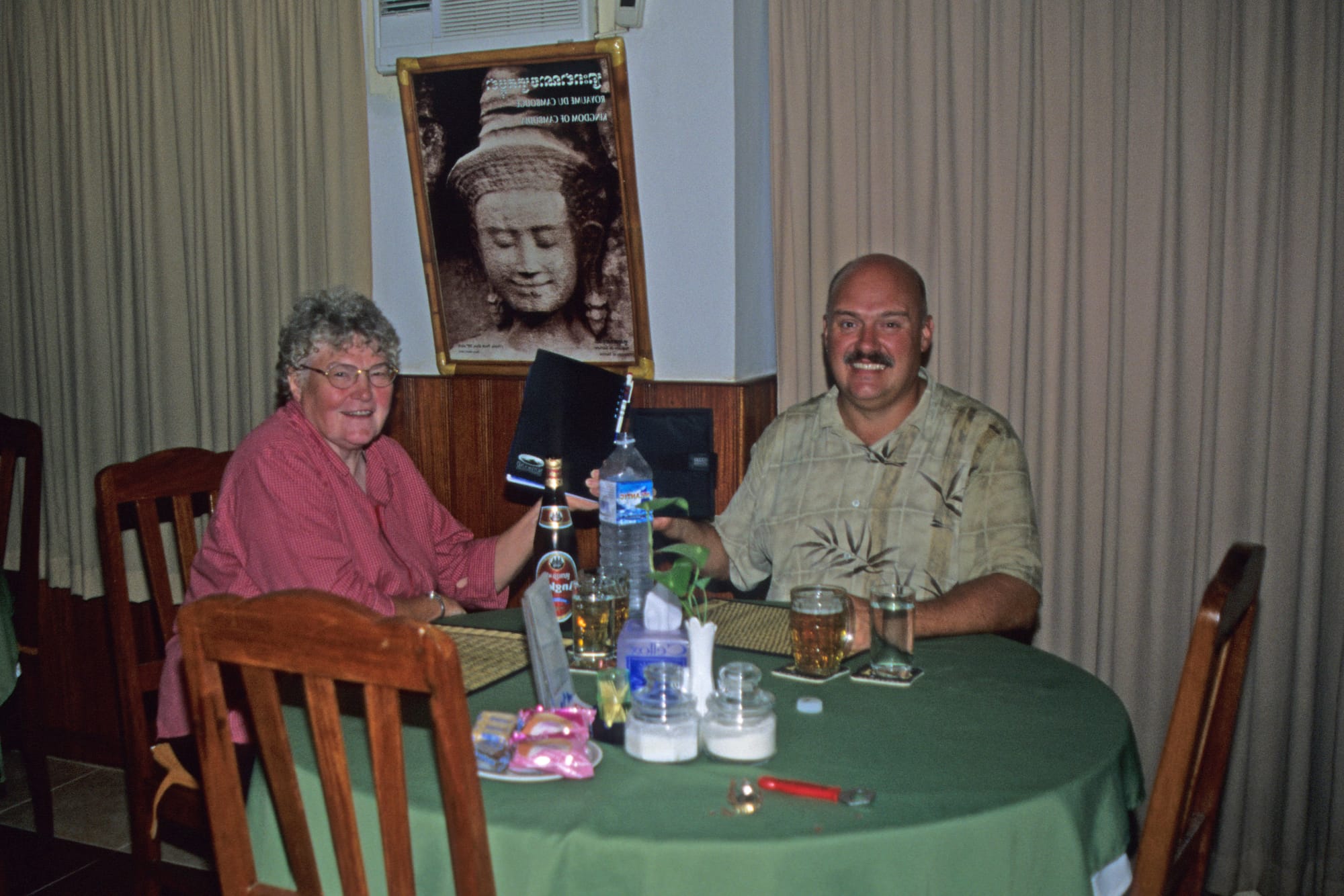
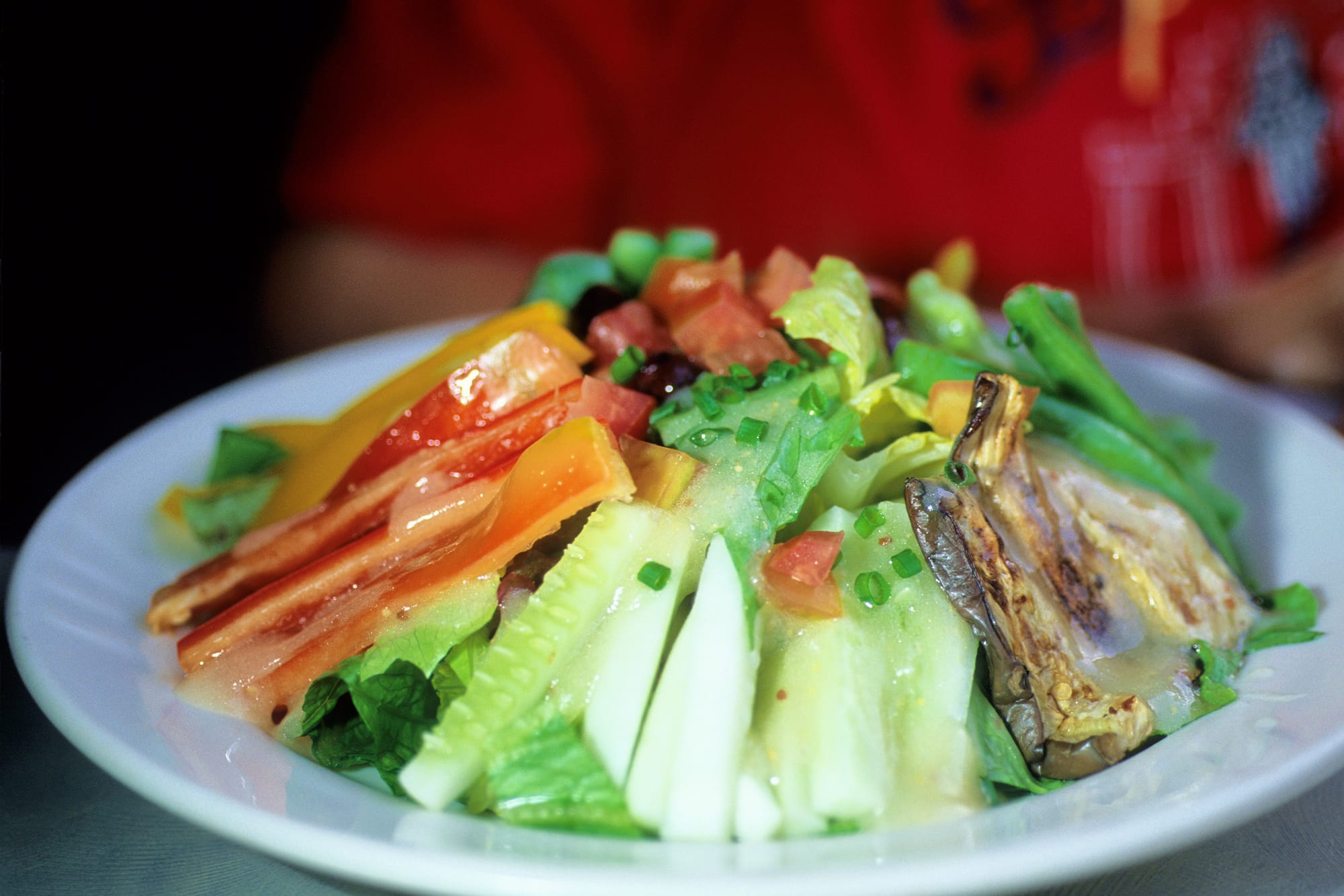
Enjoying the food in Siem Reap.
Tonlé Sap Lake, just south of Siem Reap, is the largest freshwater lake in Southeast Asia. Its water level can vary by as much as 30 feet due to flooding in the monsoon season, and consequently the village of Chong Kneas near Siem Reap is on dry land part of the year and out in the lake at other times. Residents have a variety of creative ways to address this, including homes that are essentially houseboats that can move out into the lake during the dry season, or homes that are on stilts during the dry season and float after the monsoon season. Our guide David arranged for us to take a boat tour of Chong Kneas.
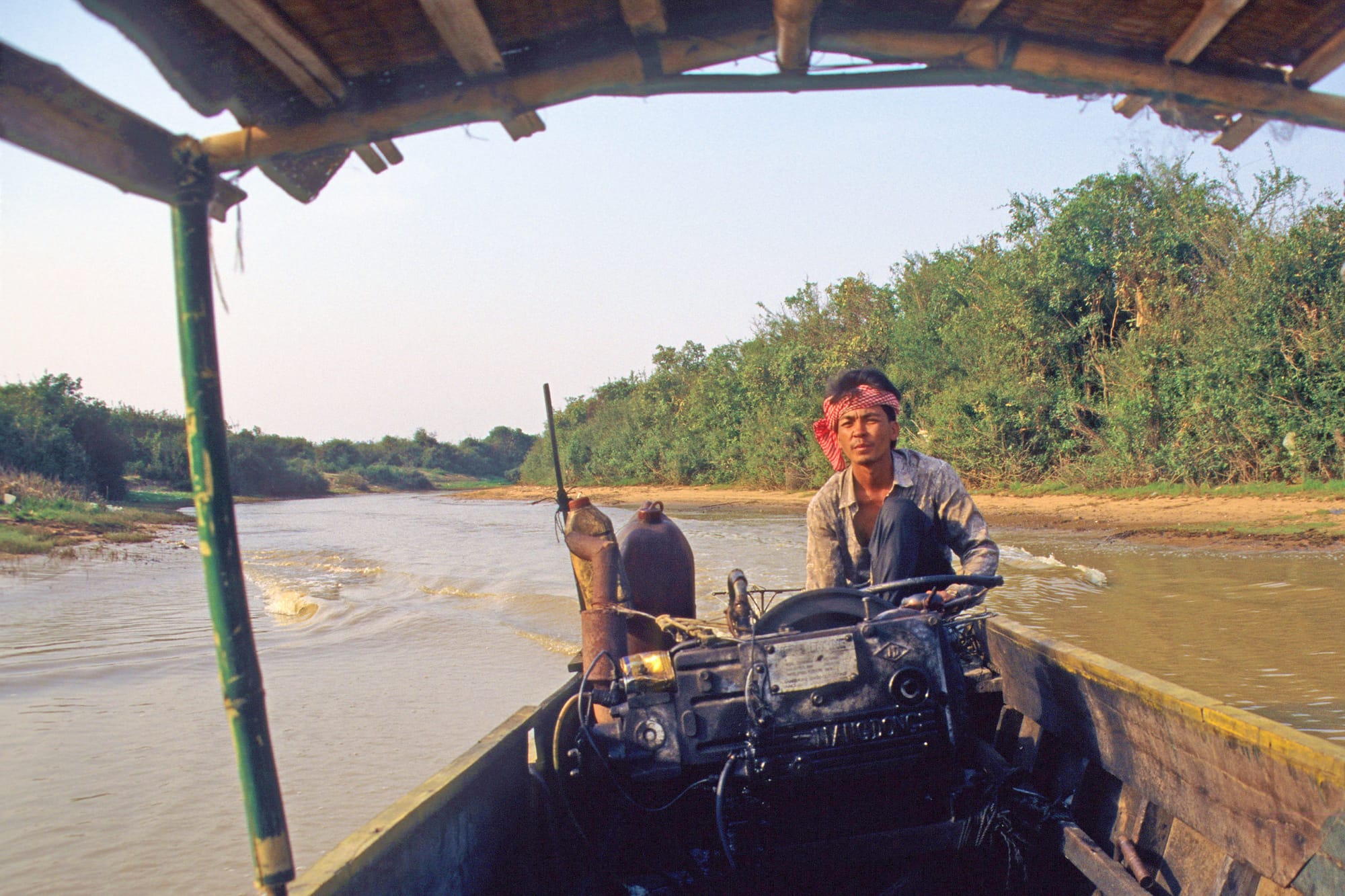
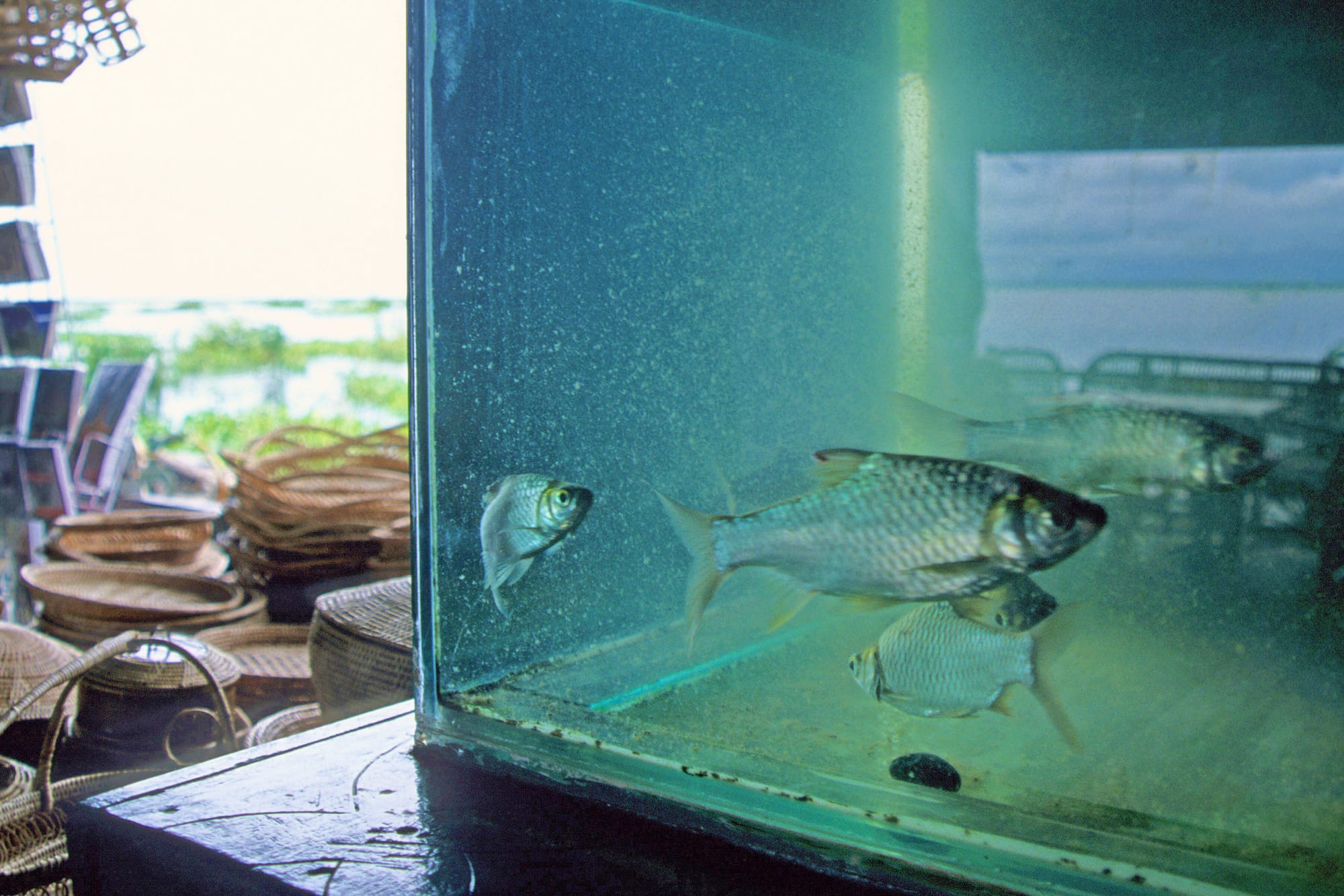
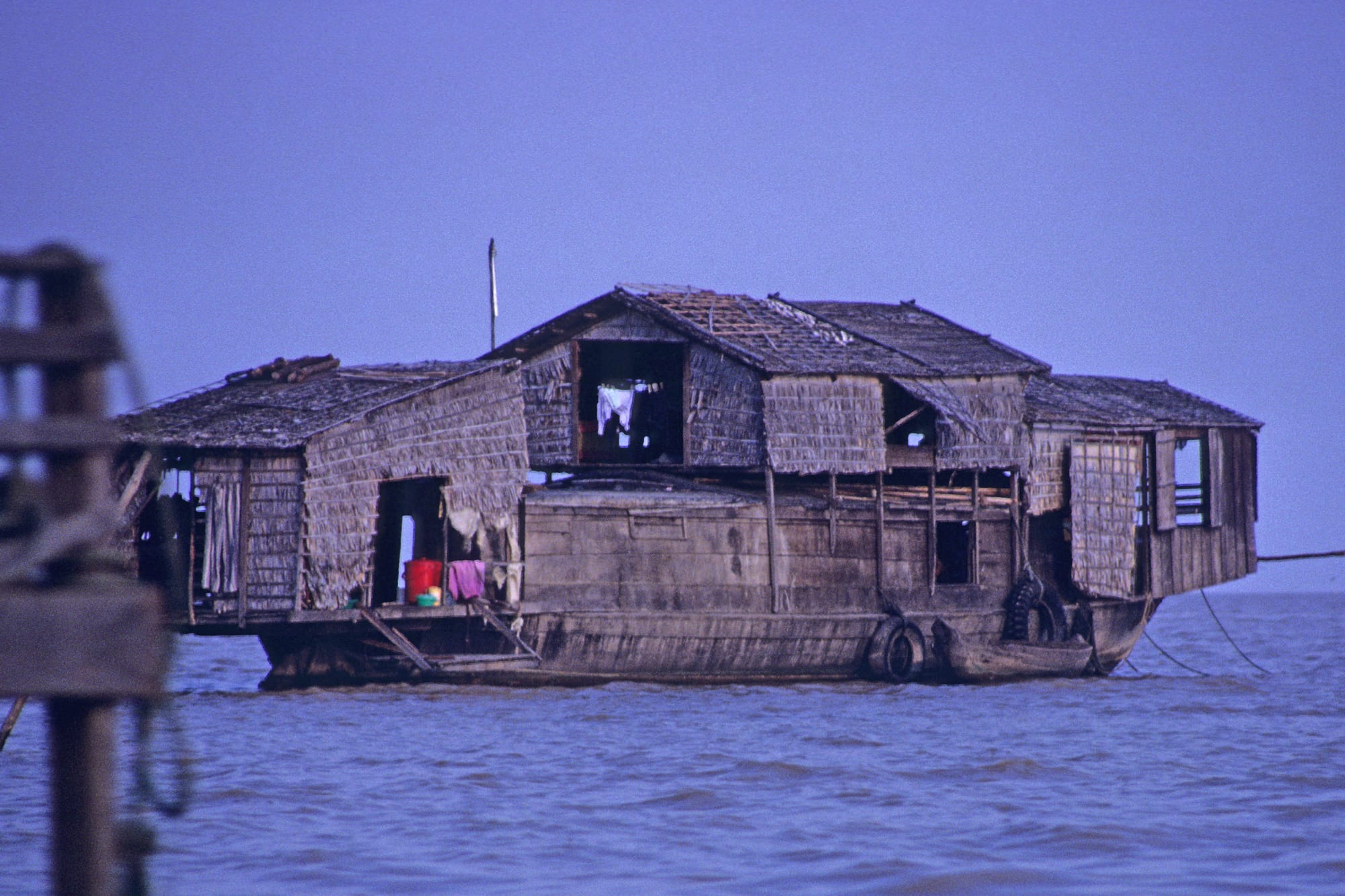
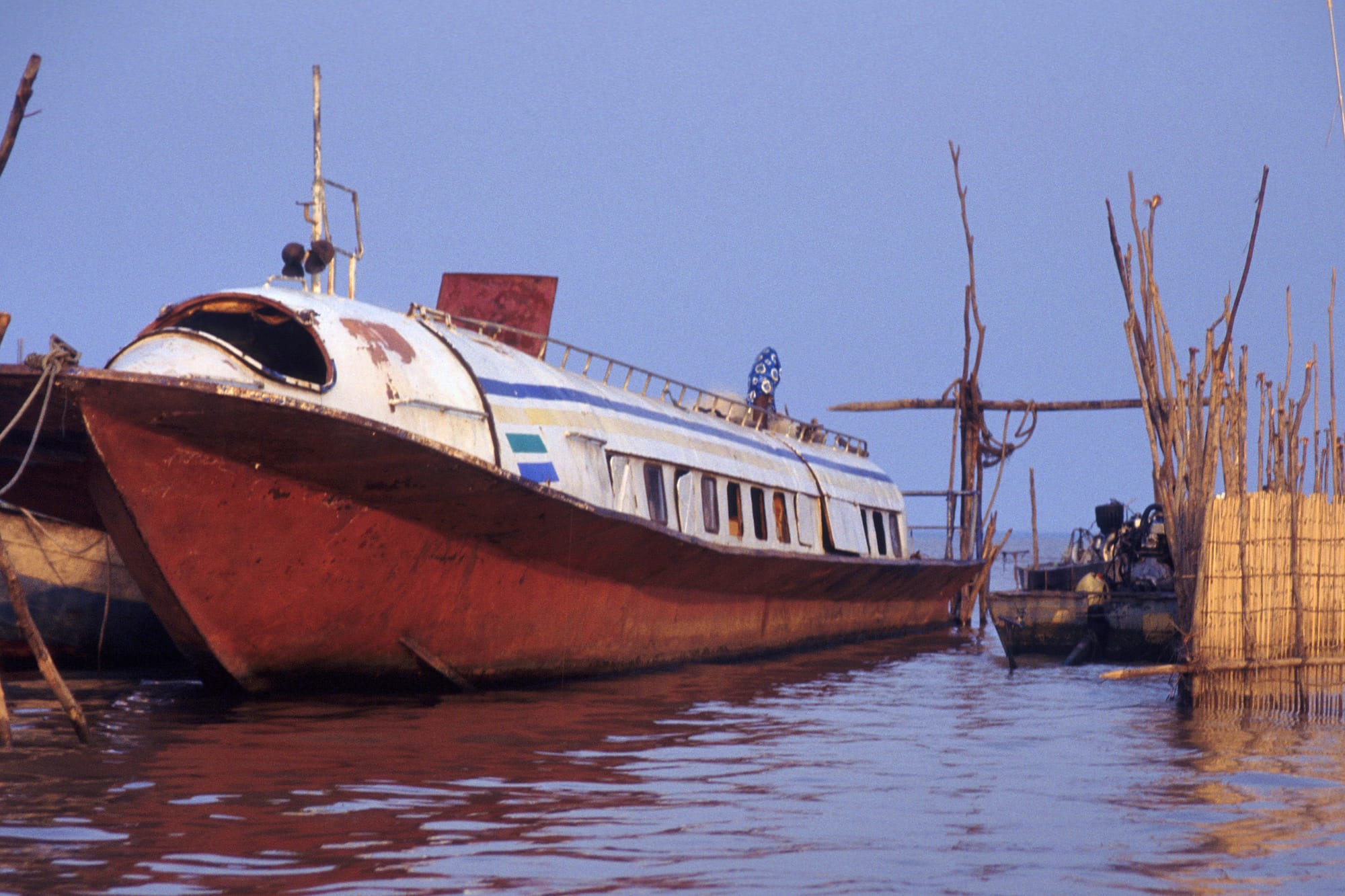
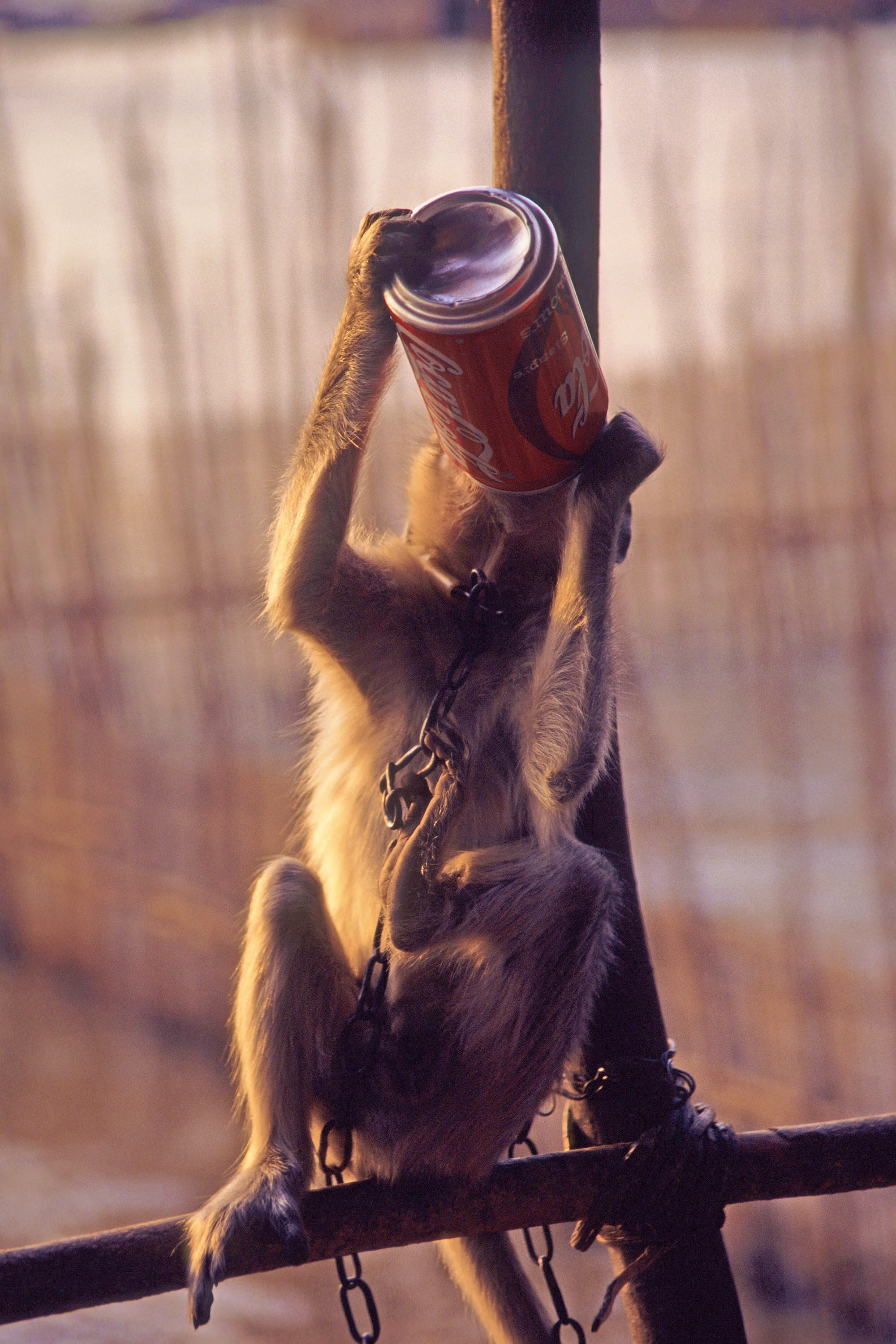
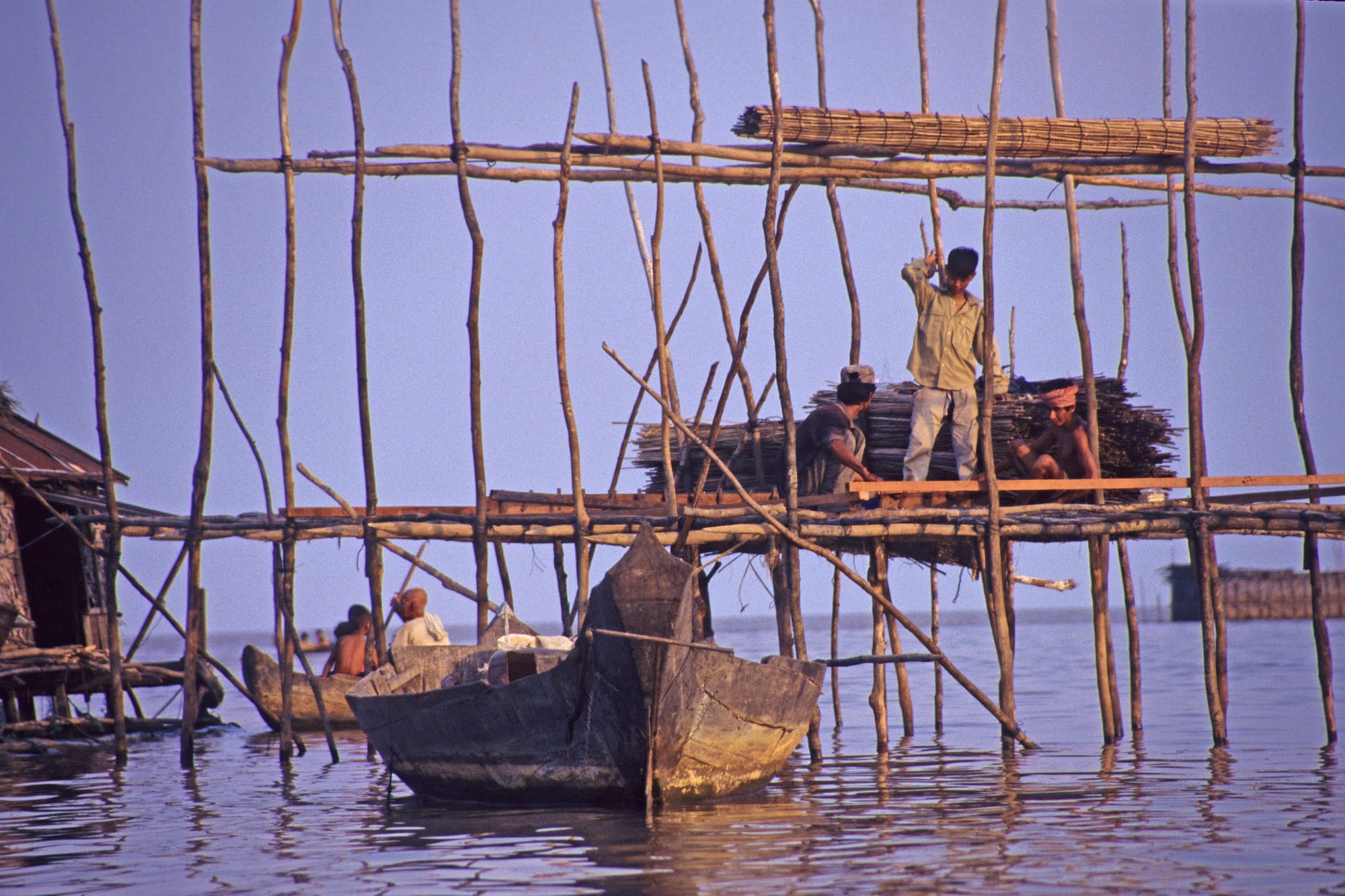
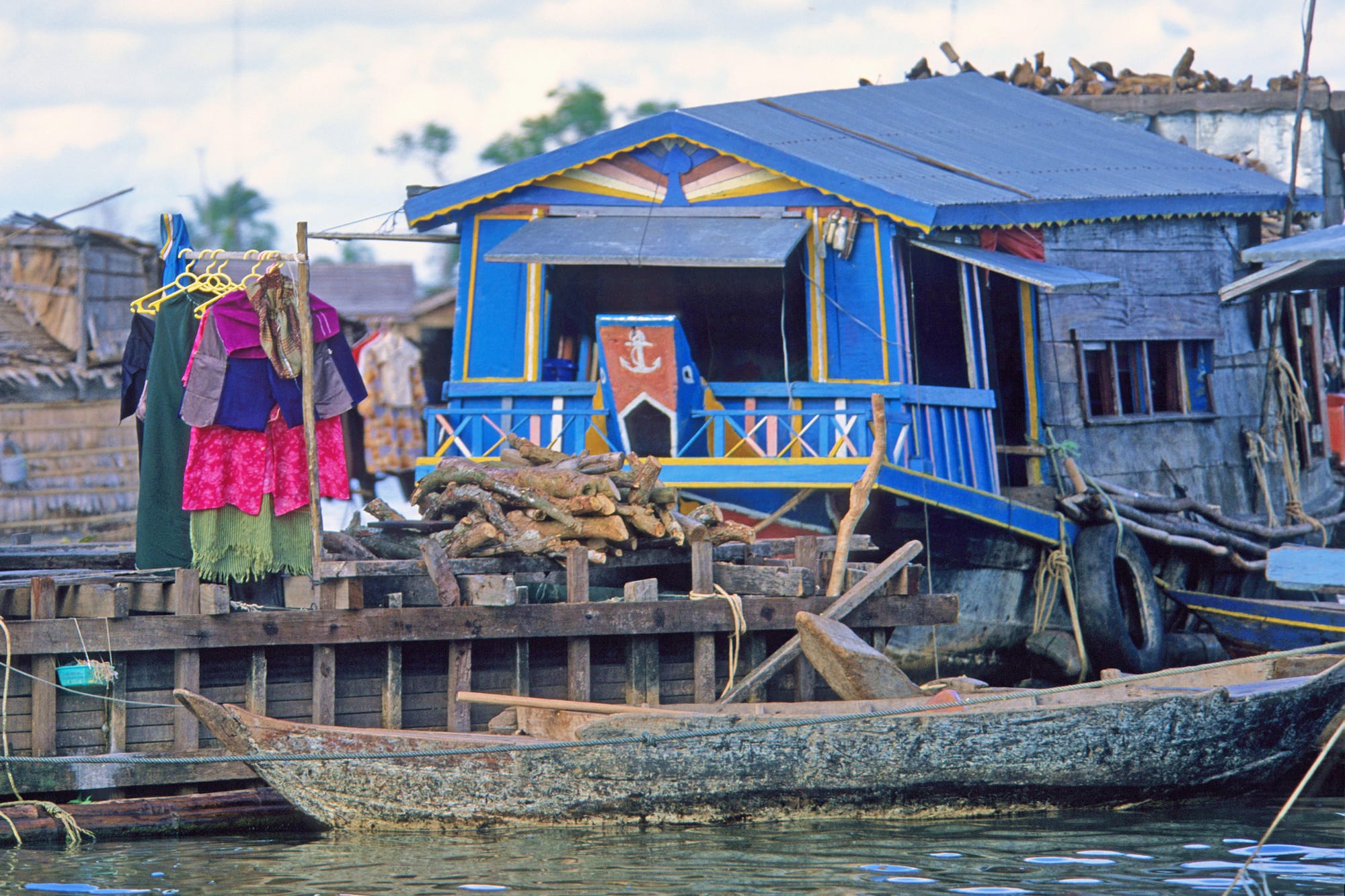
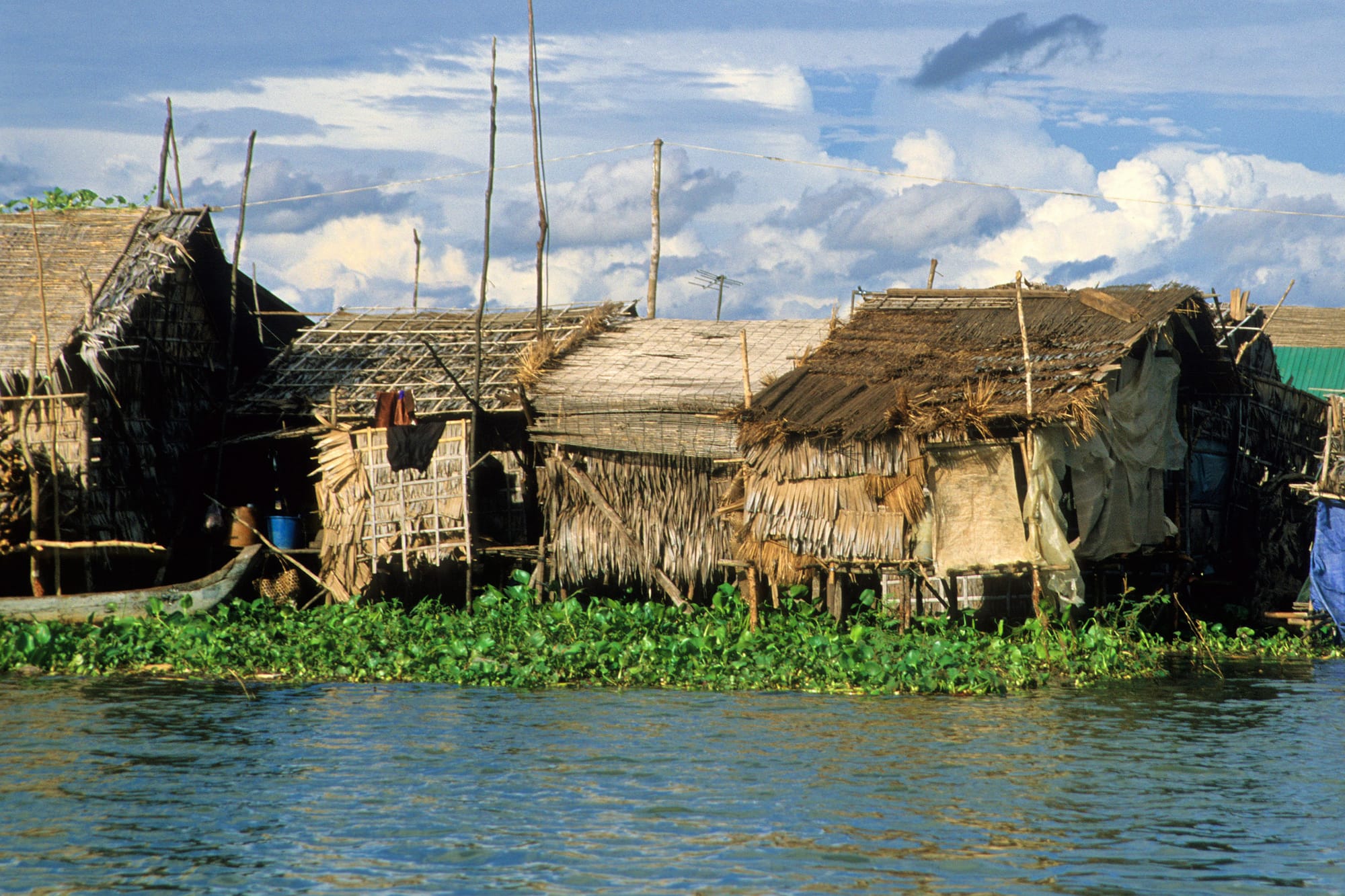
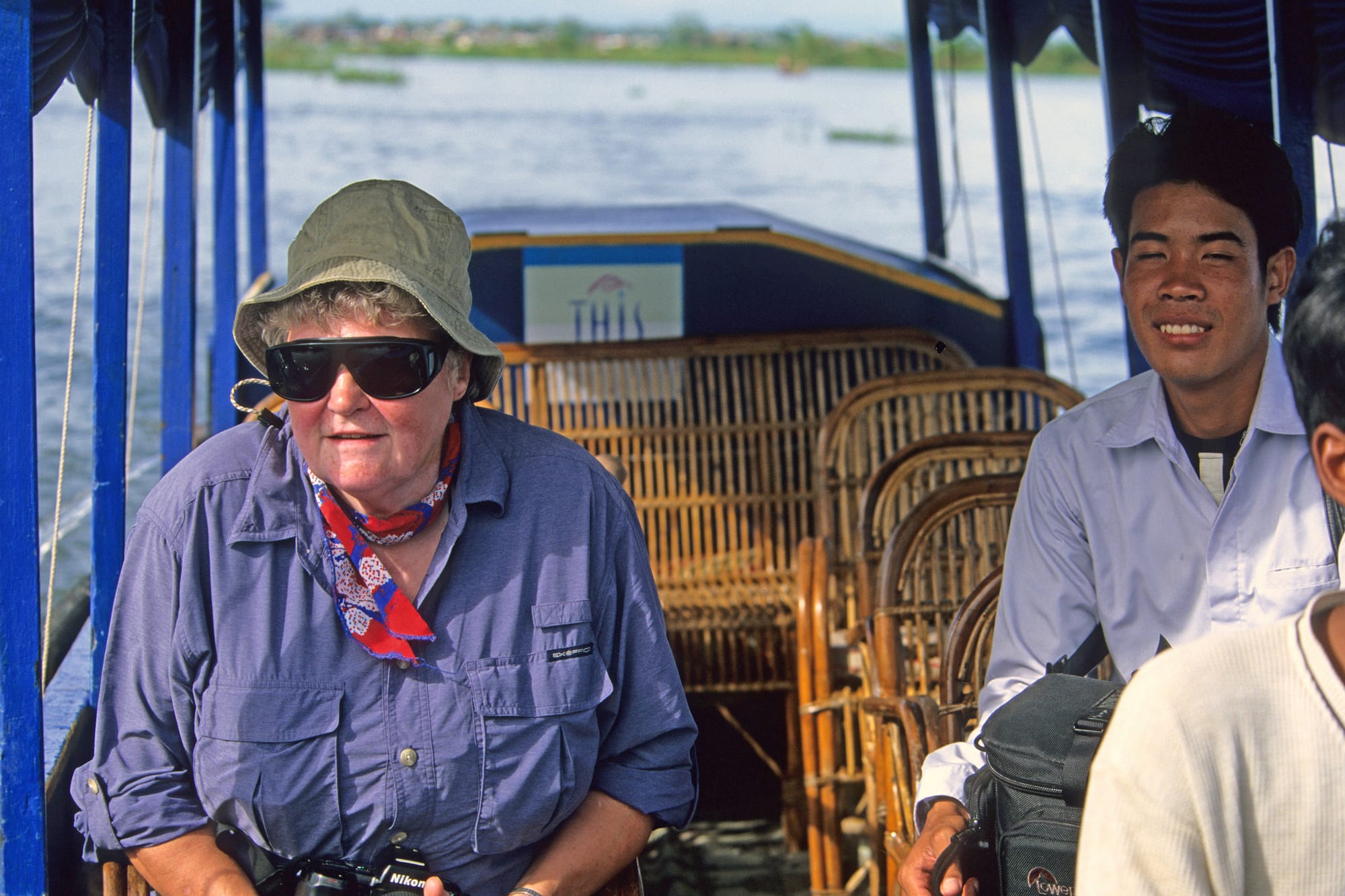
A boat ride on Tonlé Sap Lake around the floating village of Chong Kneas.
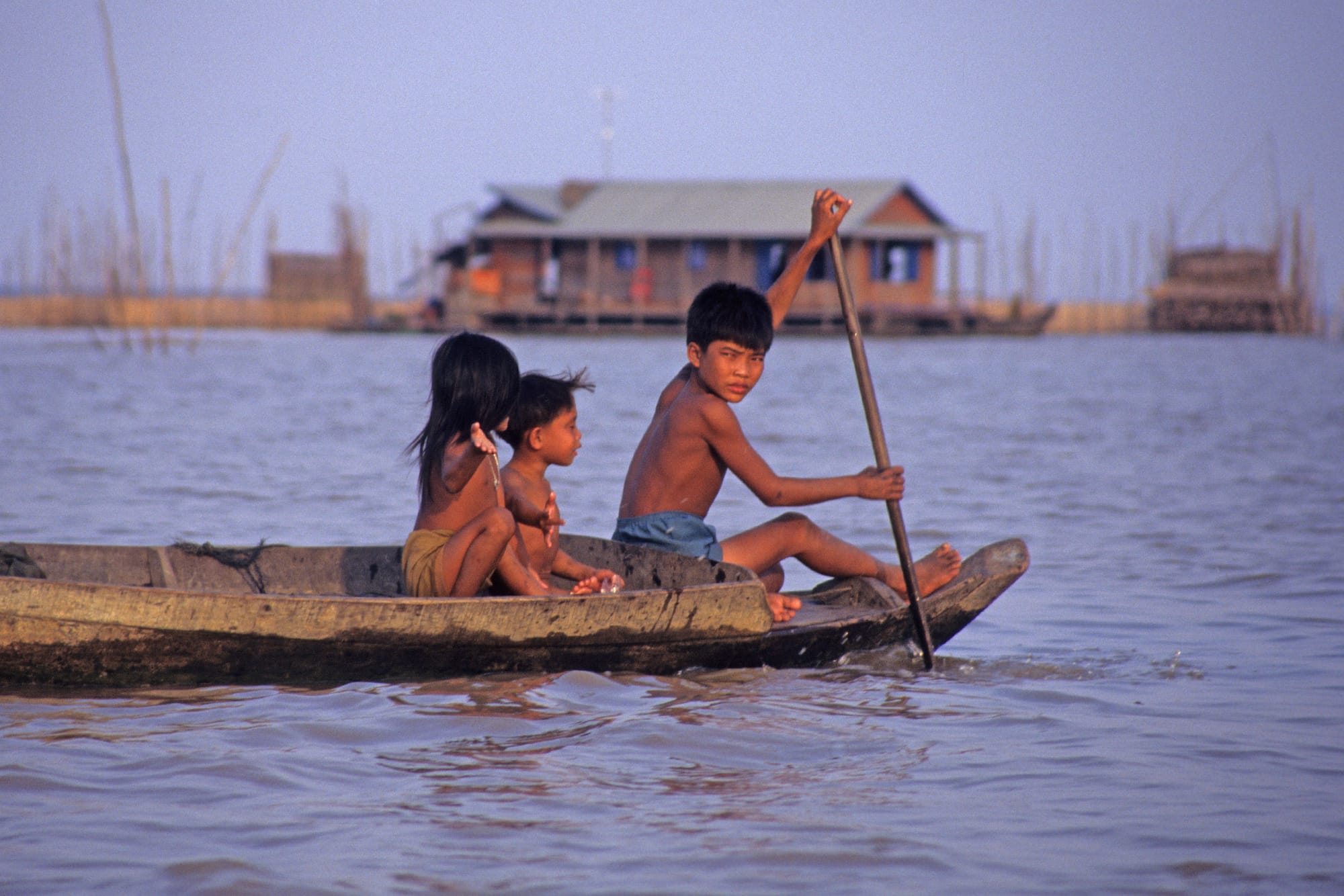
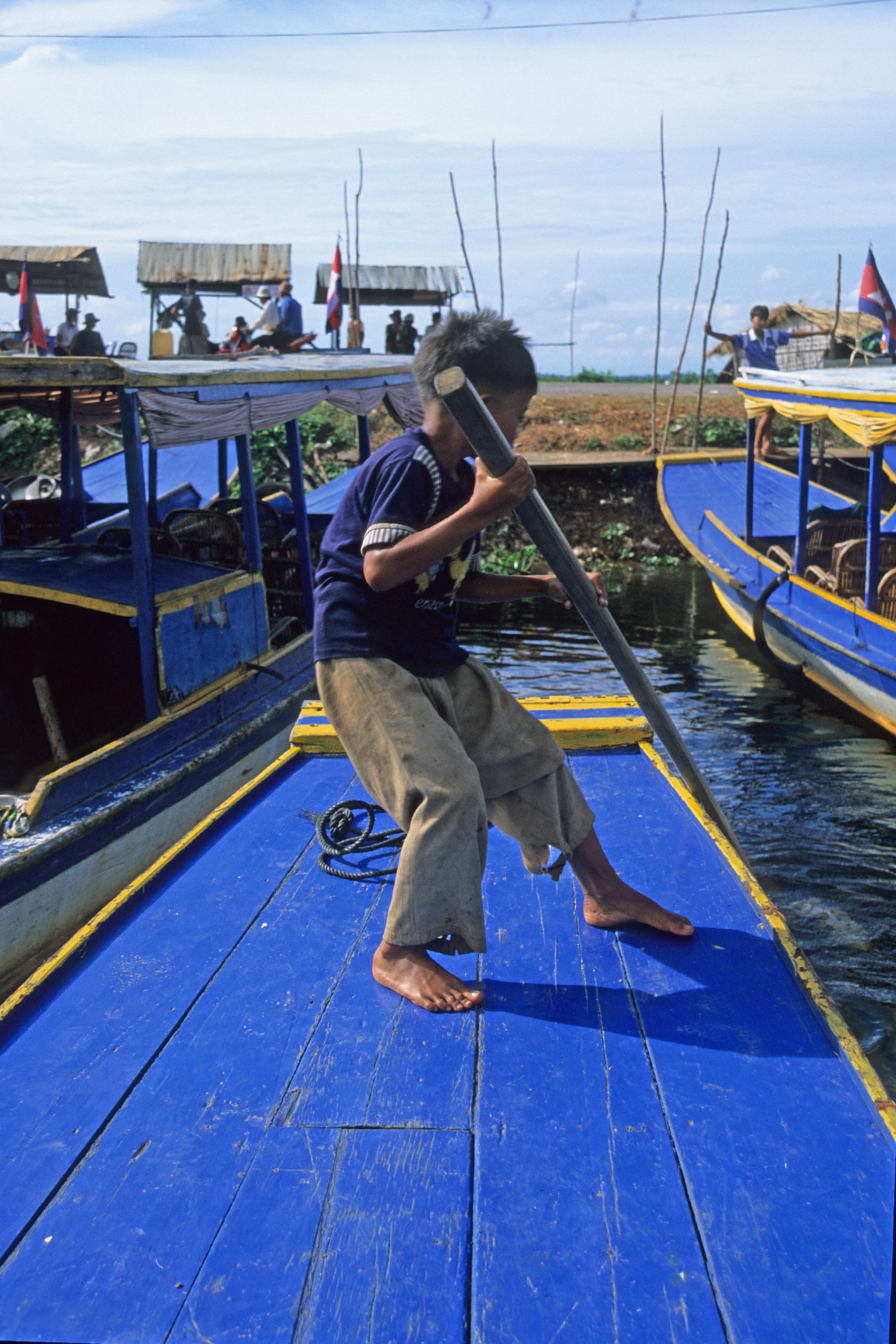
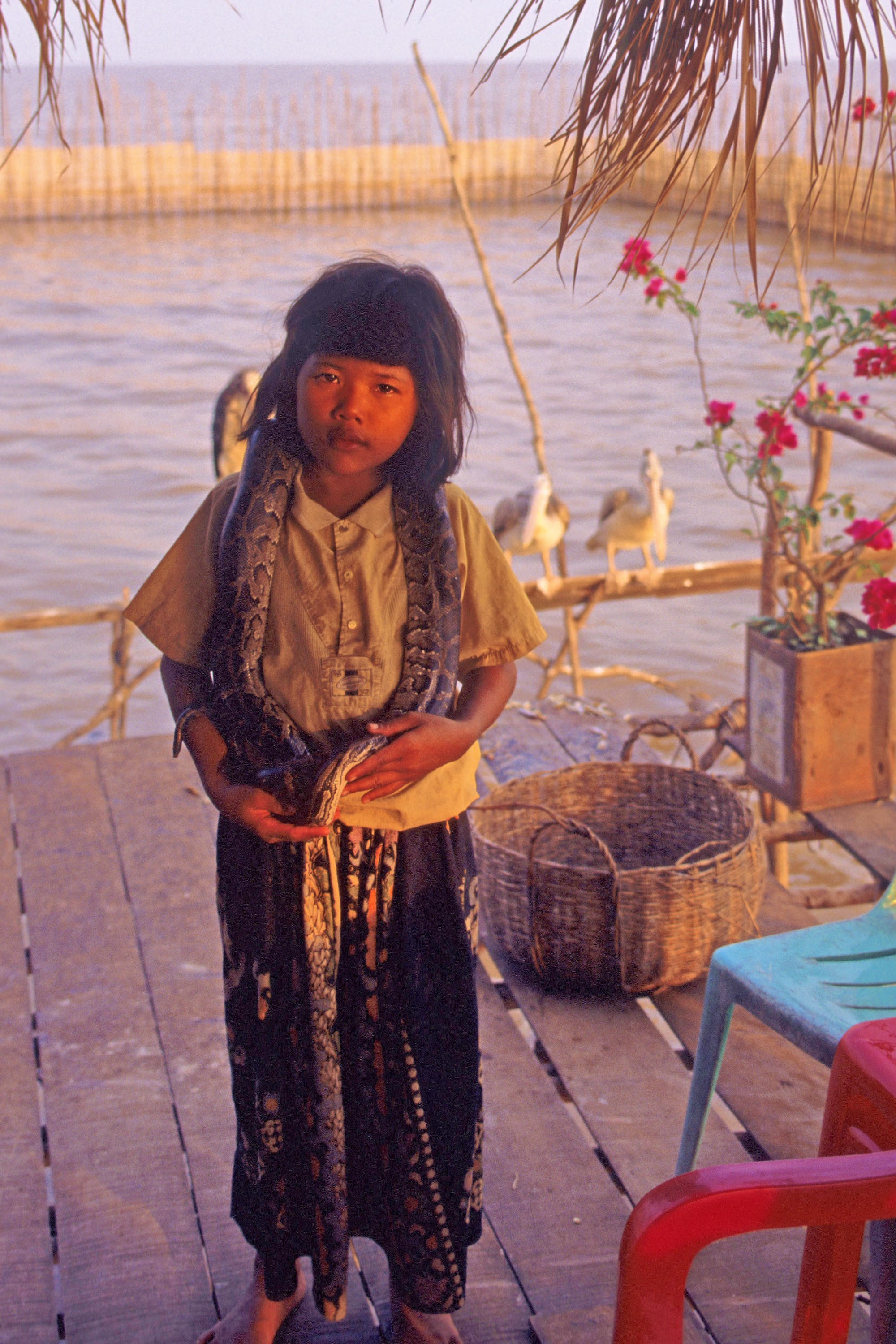
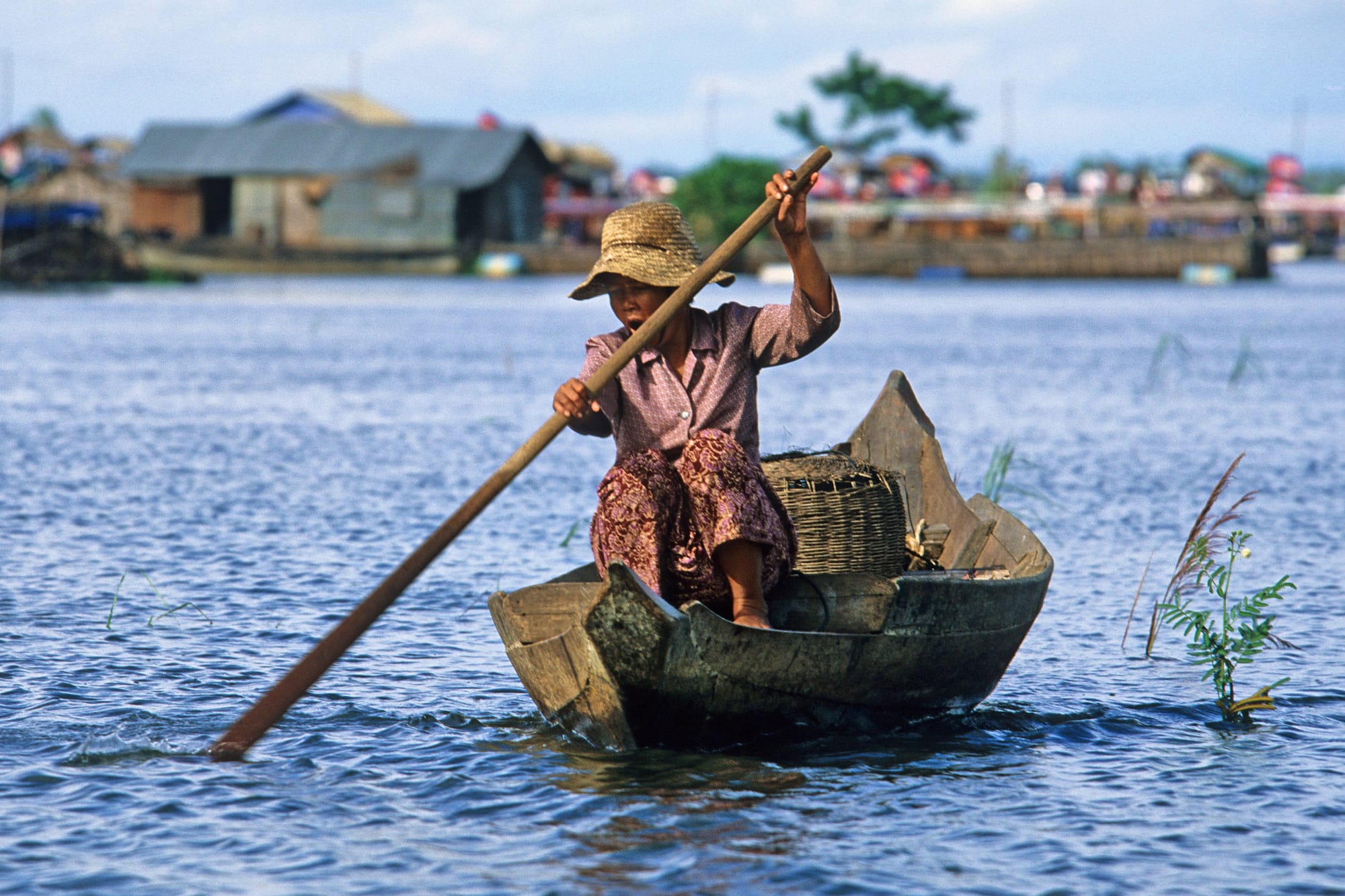
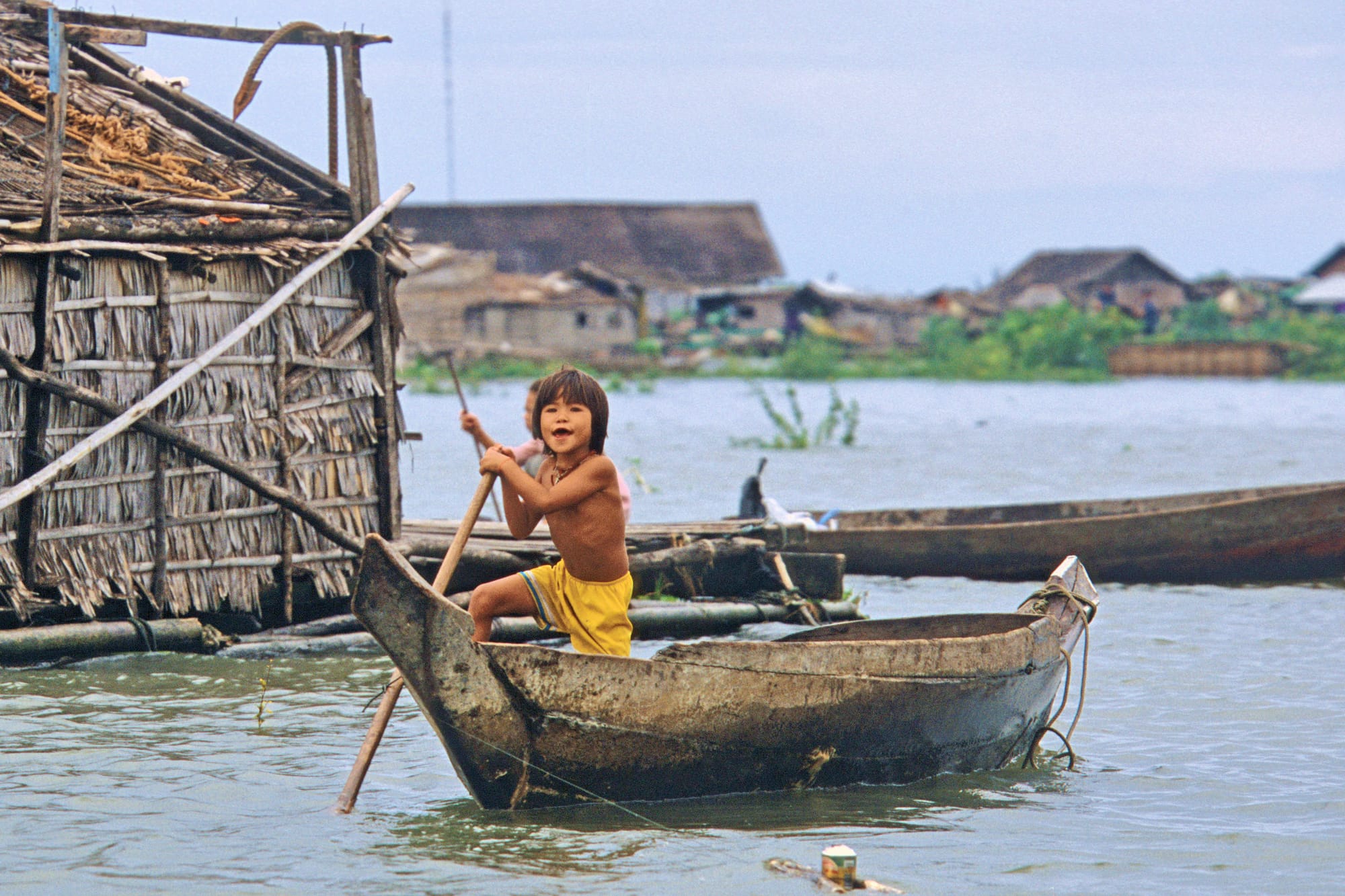
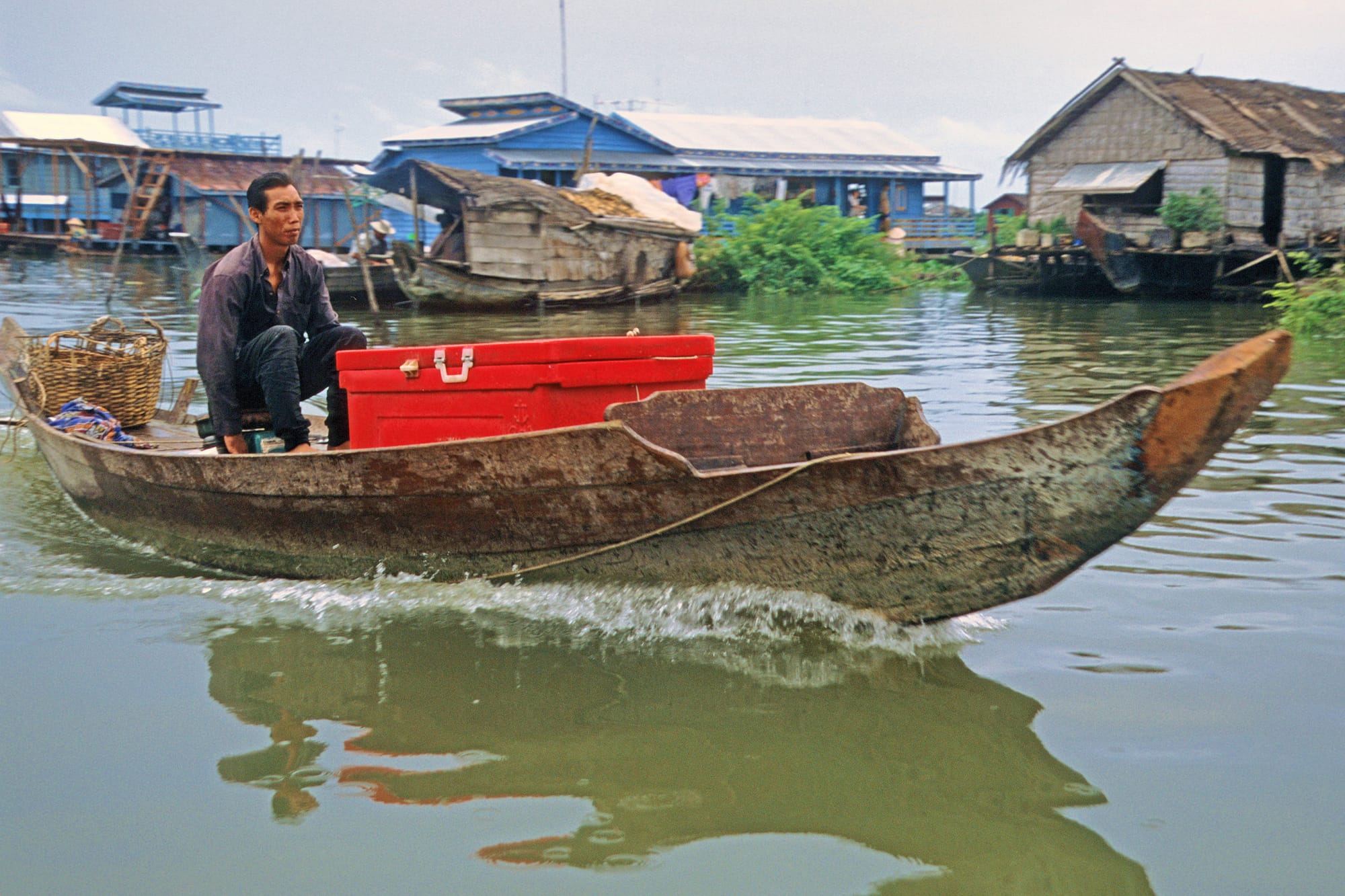
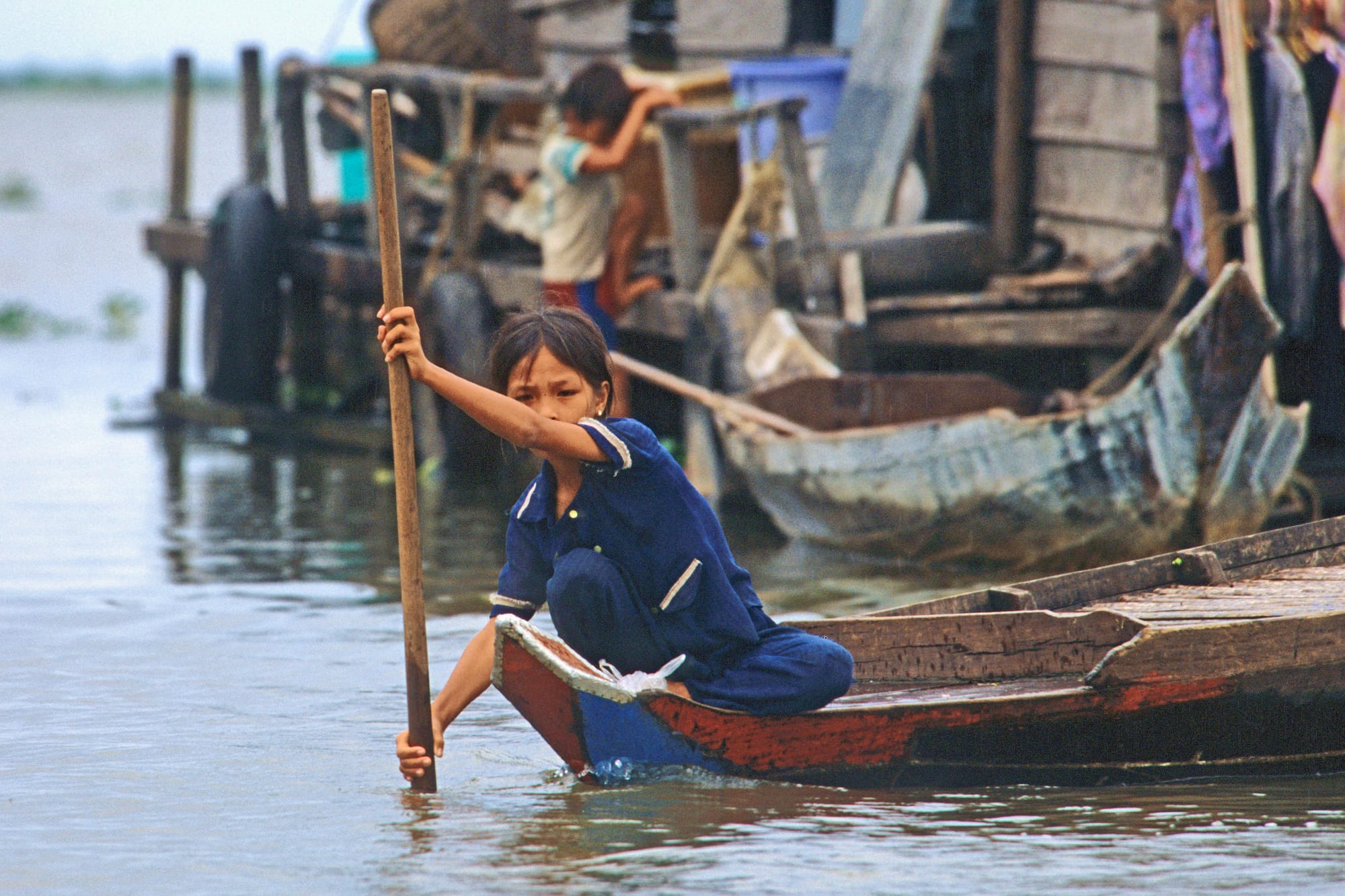
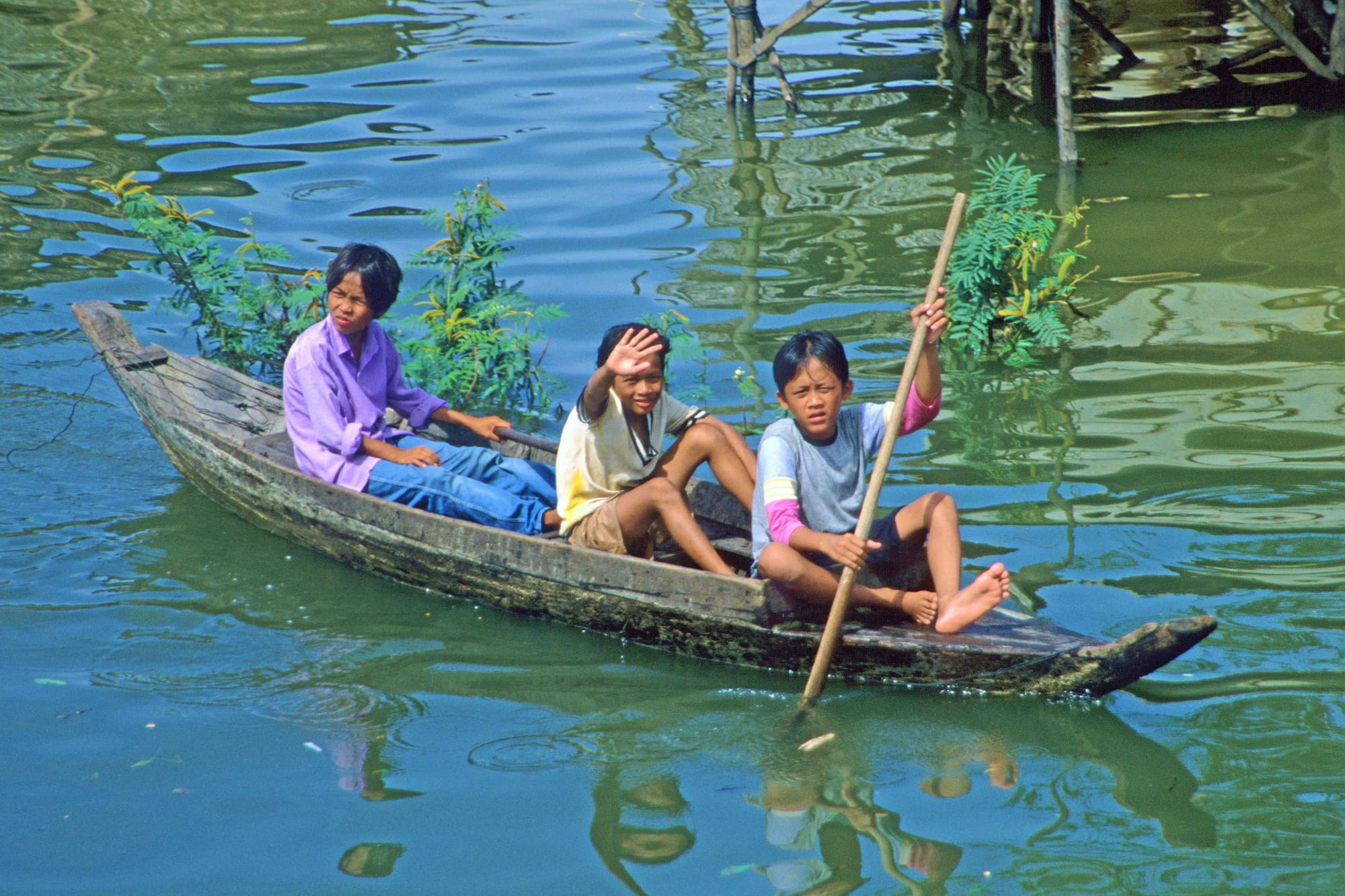
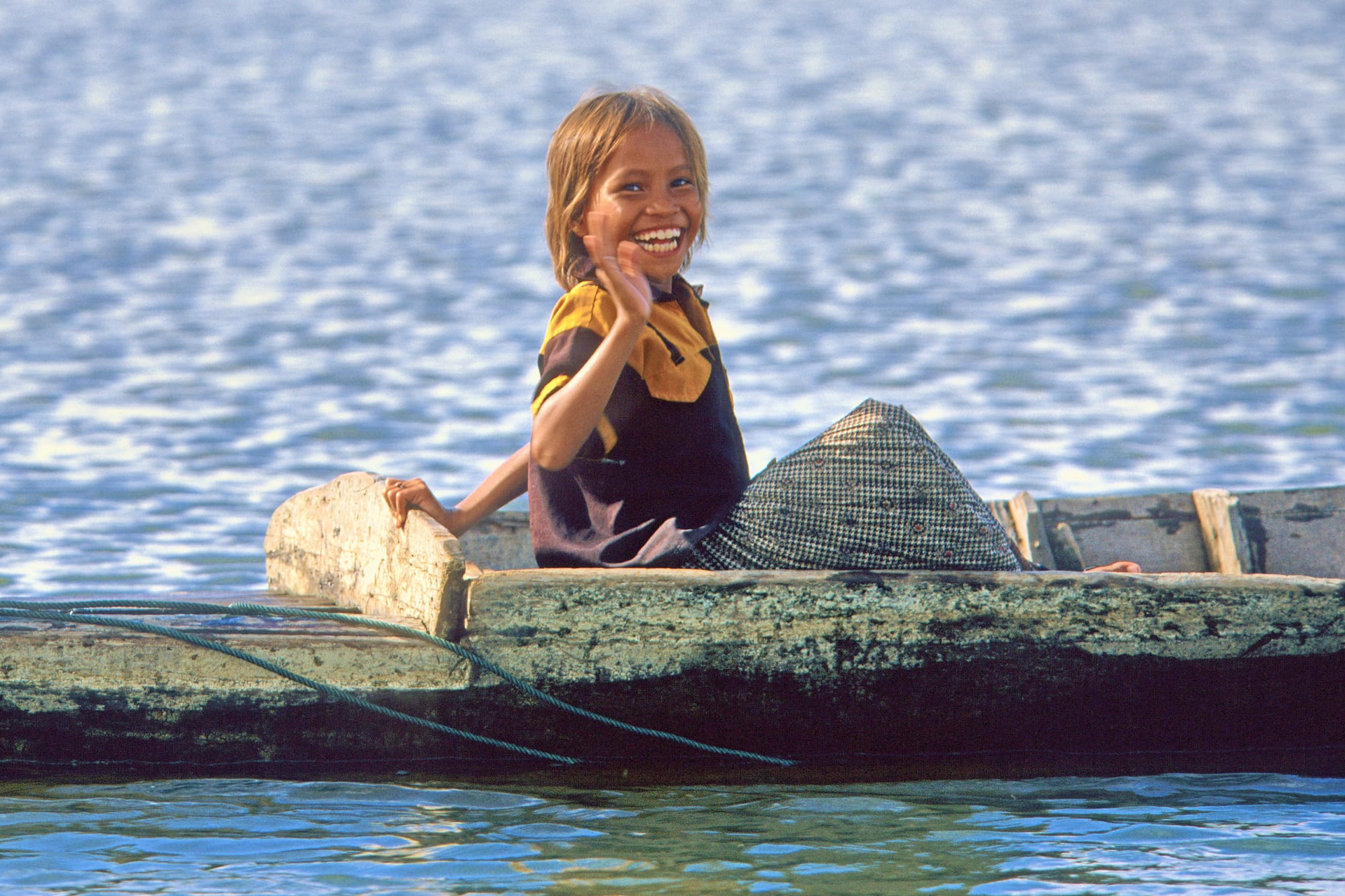
Residents of Chong Kneas floating village
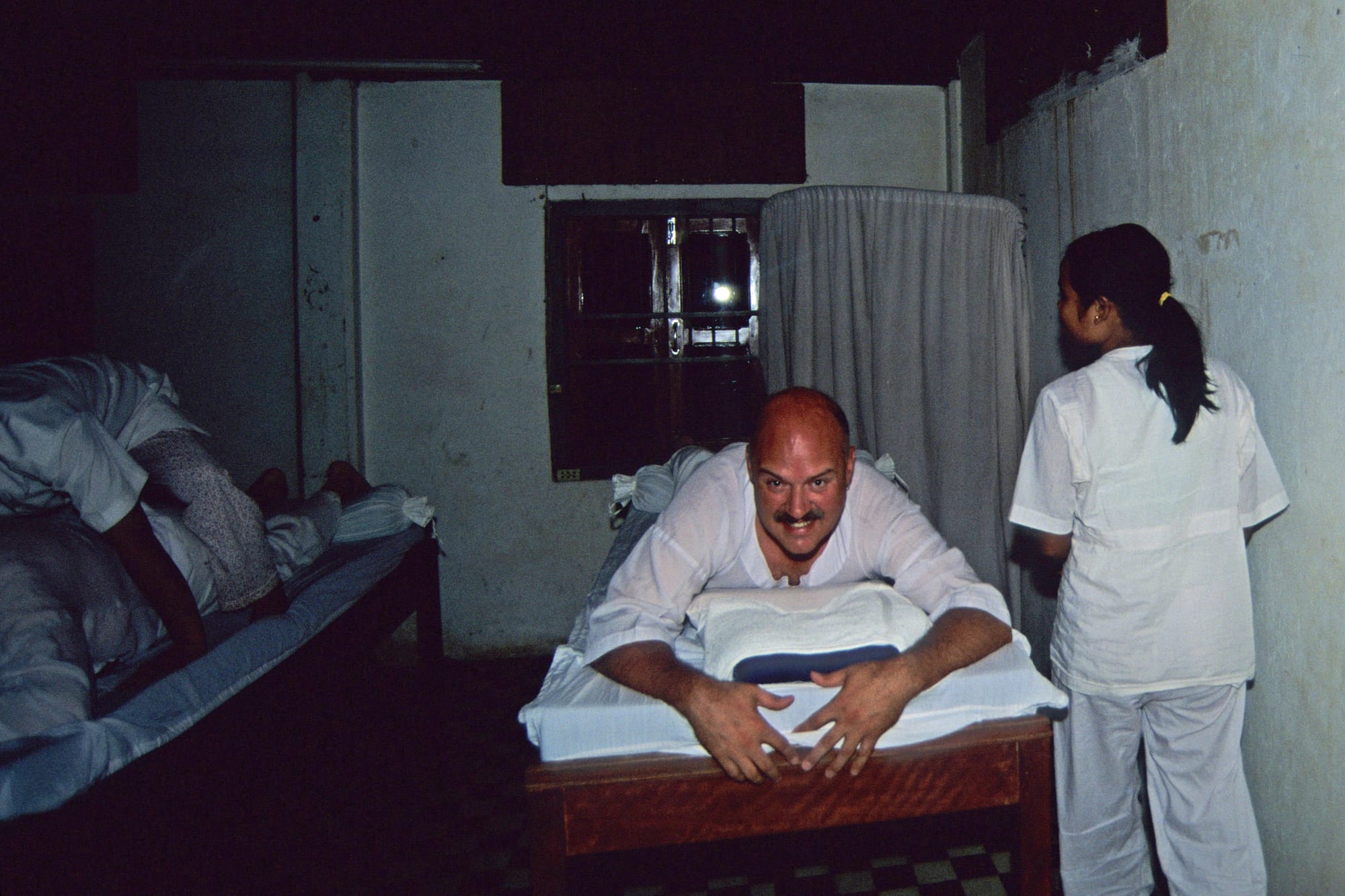
We got massages while we were in Siem Reap, at a business that employs blind people who have been taught Swedish massage so that they can make a living. The massage felt great after spending all day walking up and down stairs at the temples. While we were getting dressed afterward, I heard Mom scream and spun around to see what was going on. A few little boys, apparently knowing that foreigners who visit the massage place get undressed before and afterward, had their faces pressed against the window next to Mom's bed, and she had screamed when she saw them.
Mom and I found Angkor so interesting that we decided to return three years later. This first visit in 1999 had been in March, the dry time of year, so when we returned in 2002 we decided to go in September, during the monsoon season. On that trip, everything was lush and green and the reflecting pools were full of water. We visited the temples each day in the morning, usually in bright sunshine and high humidity, and then in the afternoon while the monsoon rains were pouring we hung out at our hotel in Siem Reap.
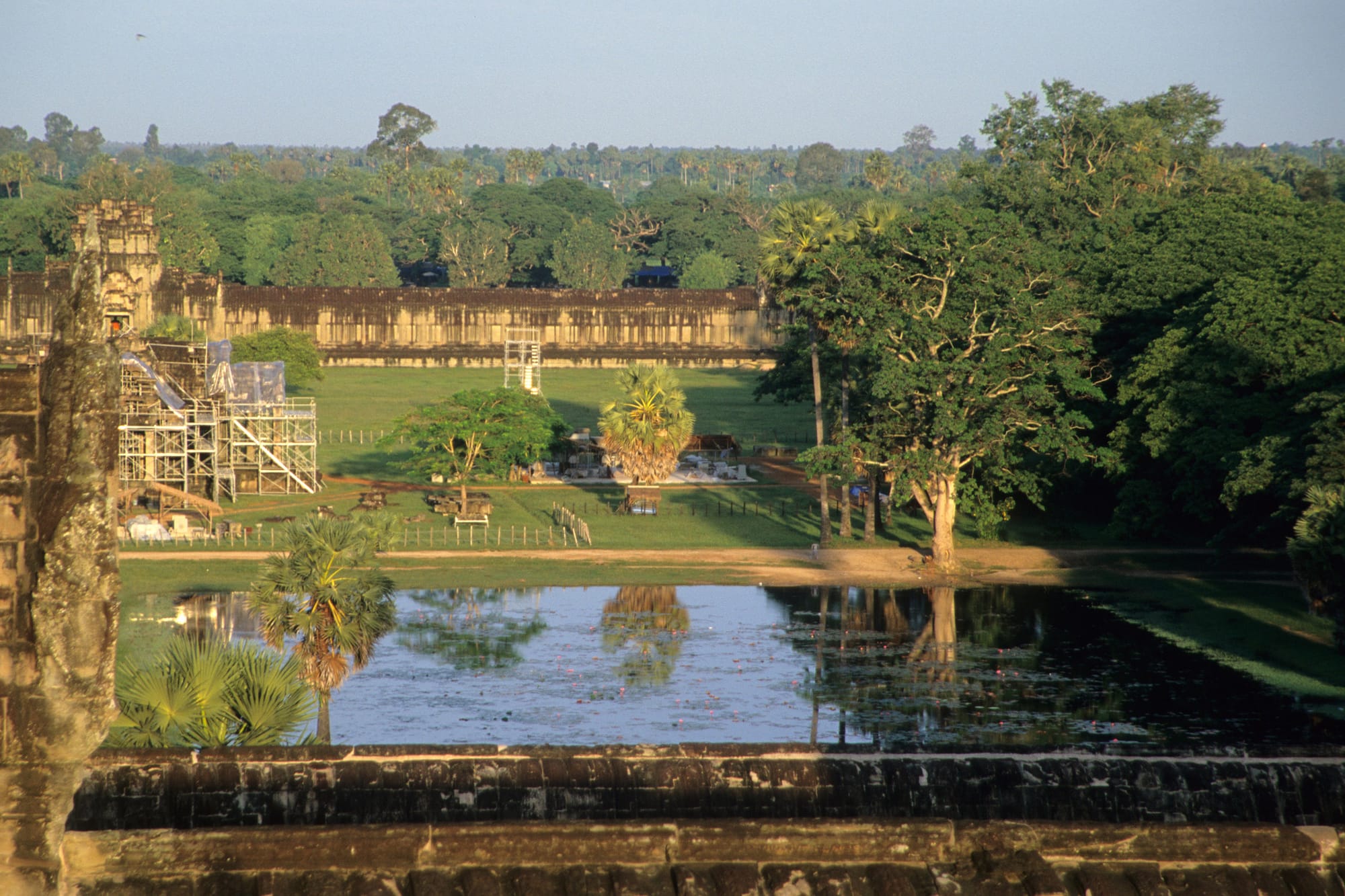
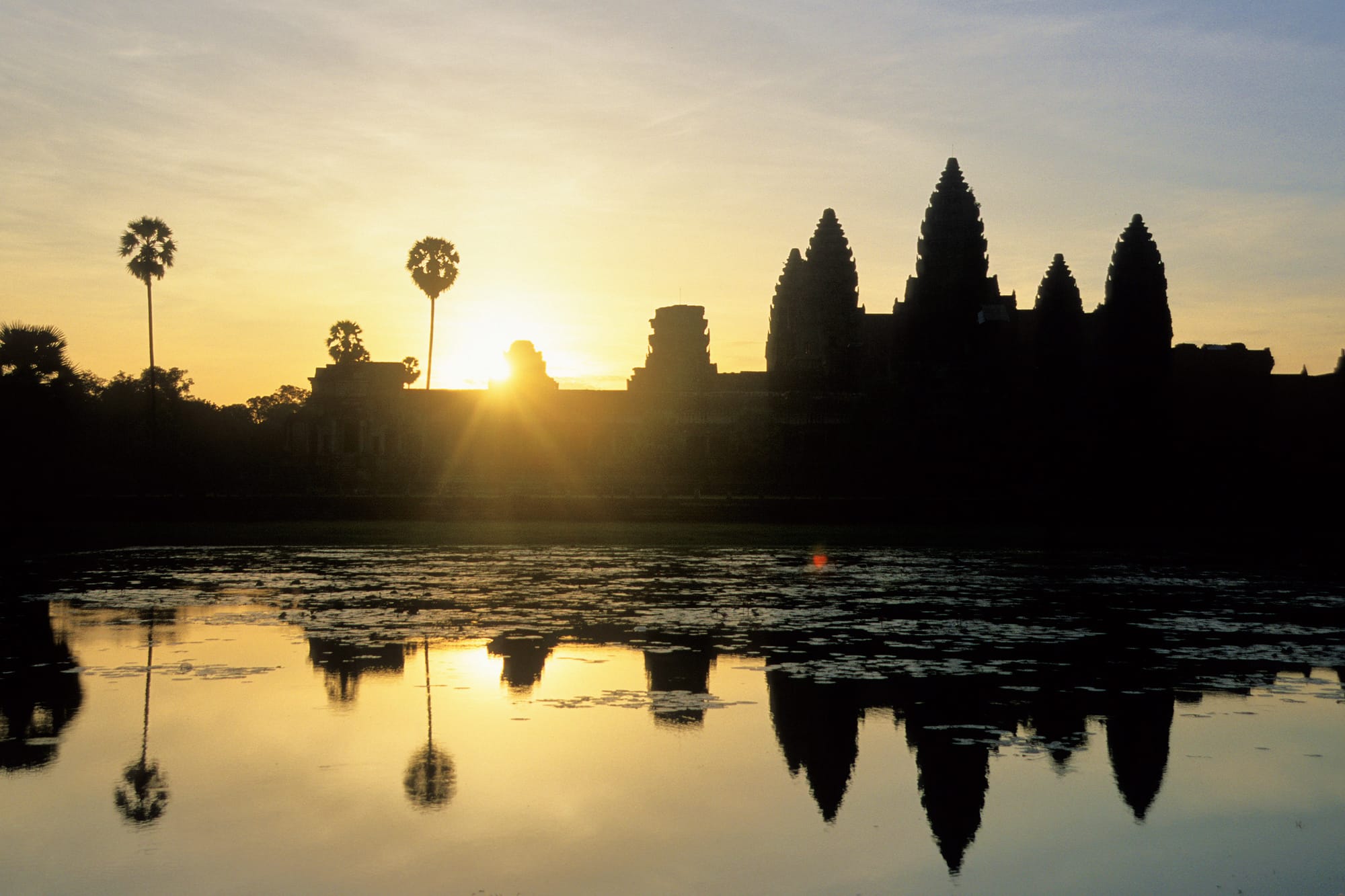
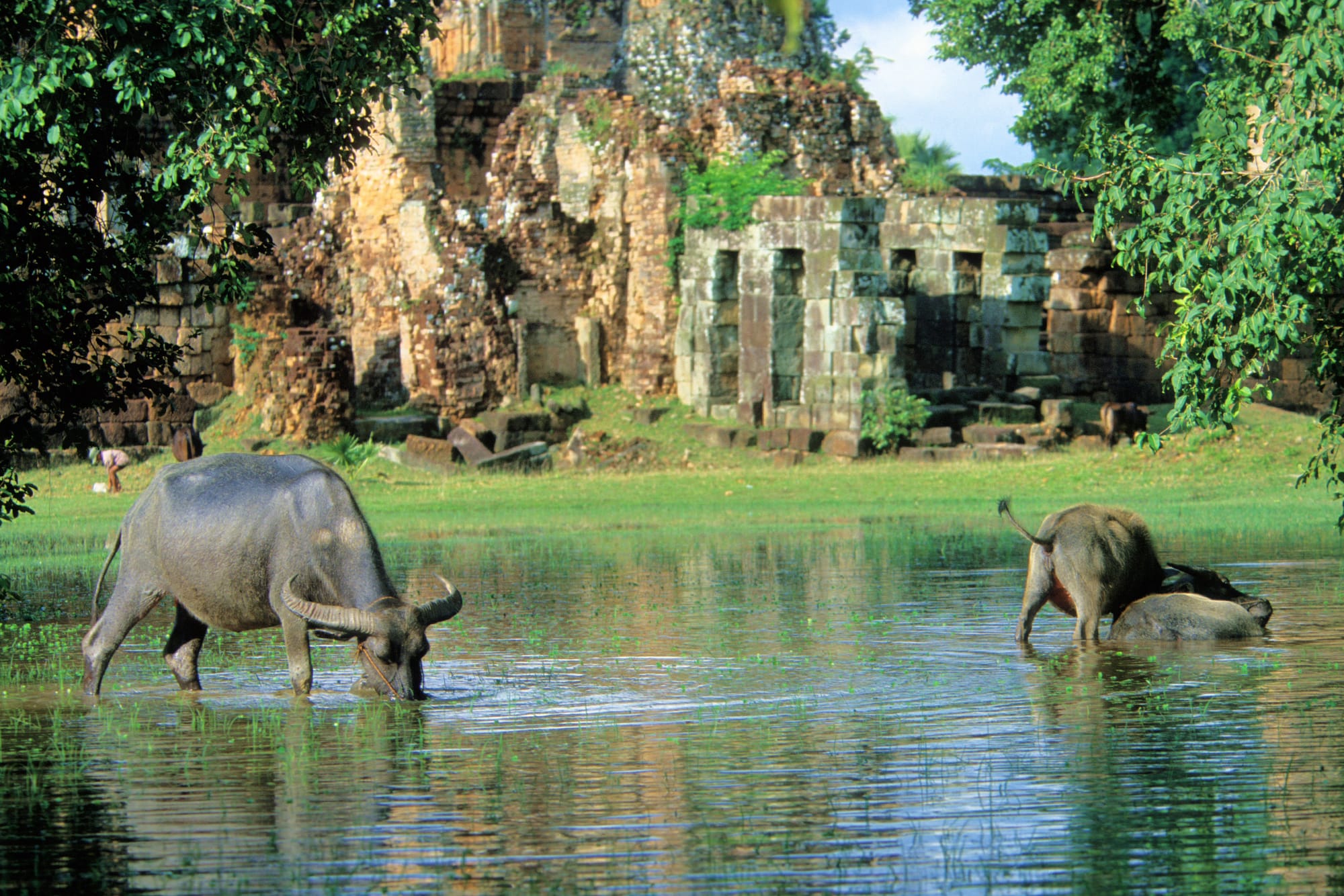
Returning to Angkor in the monsoon season of 2002.
On that monsoon season visit in 2002, we got up one morning at 4AM and went to Srah Srang, "the royal bath," to wait for sunrise. Srah Srang is a pool roughly 1000 feet wide and 2000 feet long, where the king would bathe in the morning with his 400 concubines. While we were waiting in the darkness, I saw some motion on the water and thought it was an animal, but as the light got better we saw that it was a young boy trying to catch a fish. He eventually succeeded, and ran home with his breakfast.
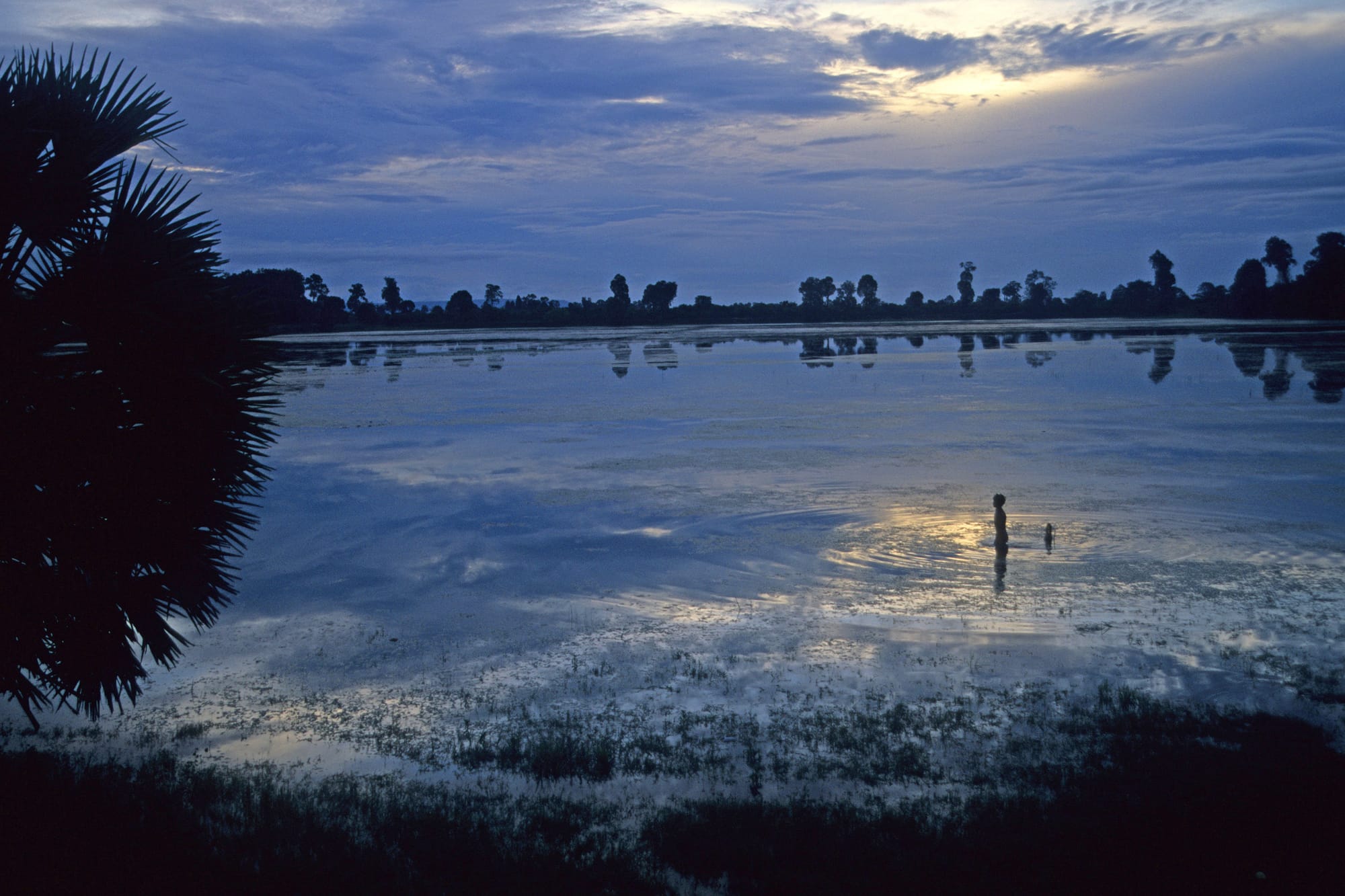
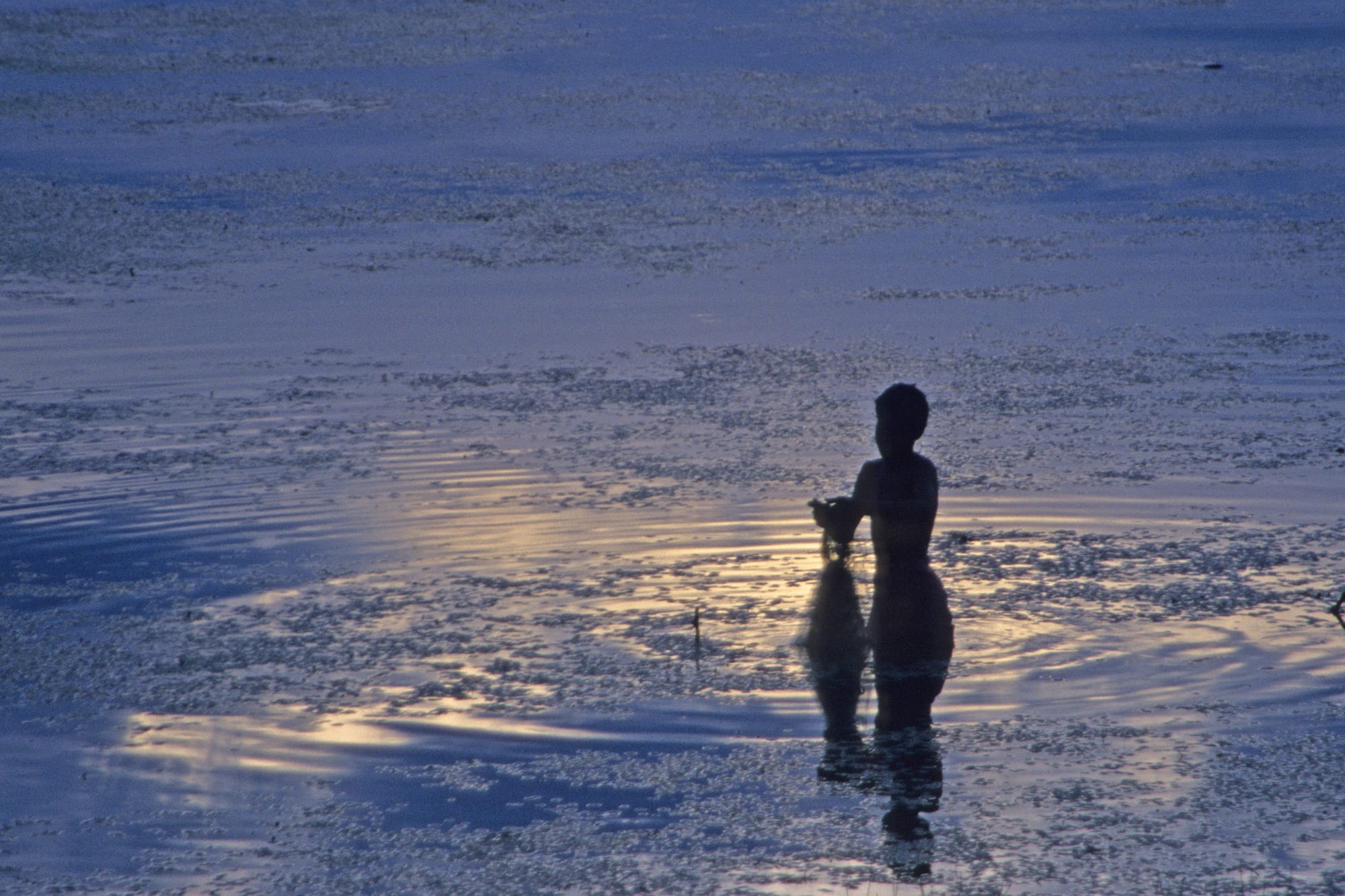
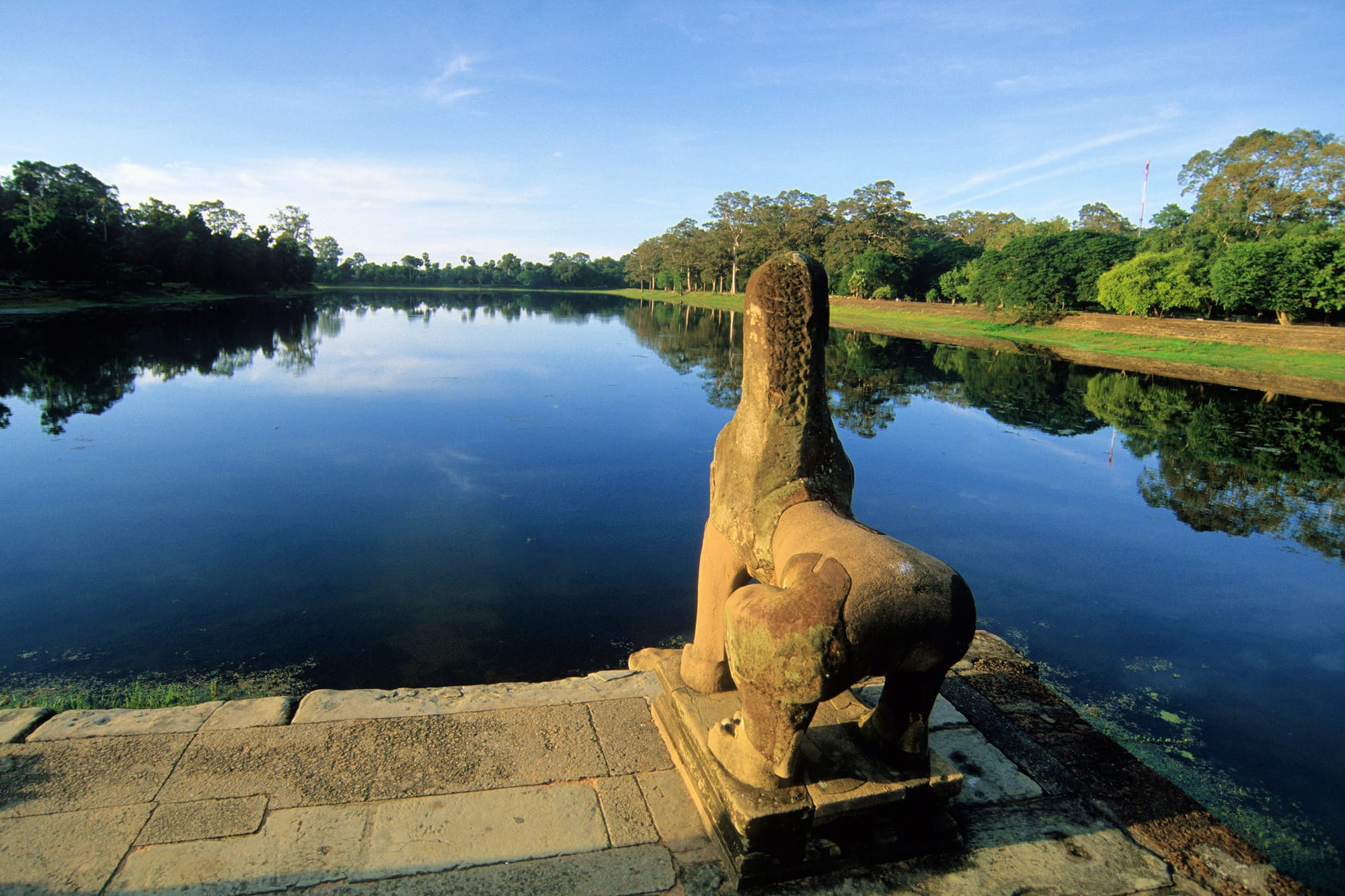
Waiting for sunrise at Srah Srang.
|
|
|