Kathmandu - 3/7/1999
 |
 |
 |
This is probably the last e-mail for a few days, since we'll be at Royal Chitwan National Park on Monday through Wednesday. From what I know of that place, we won't be able to send e-mail from our tent, nor from the elephants we'll ride around the jungle during the day.
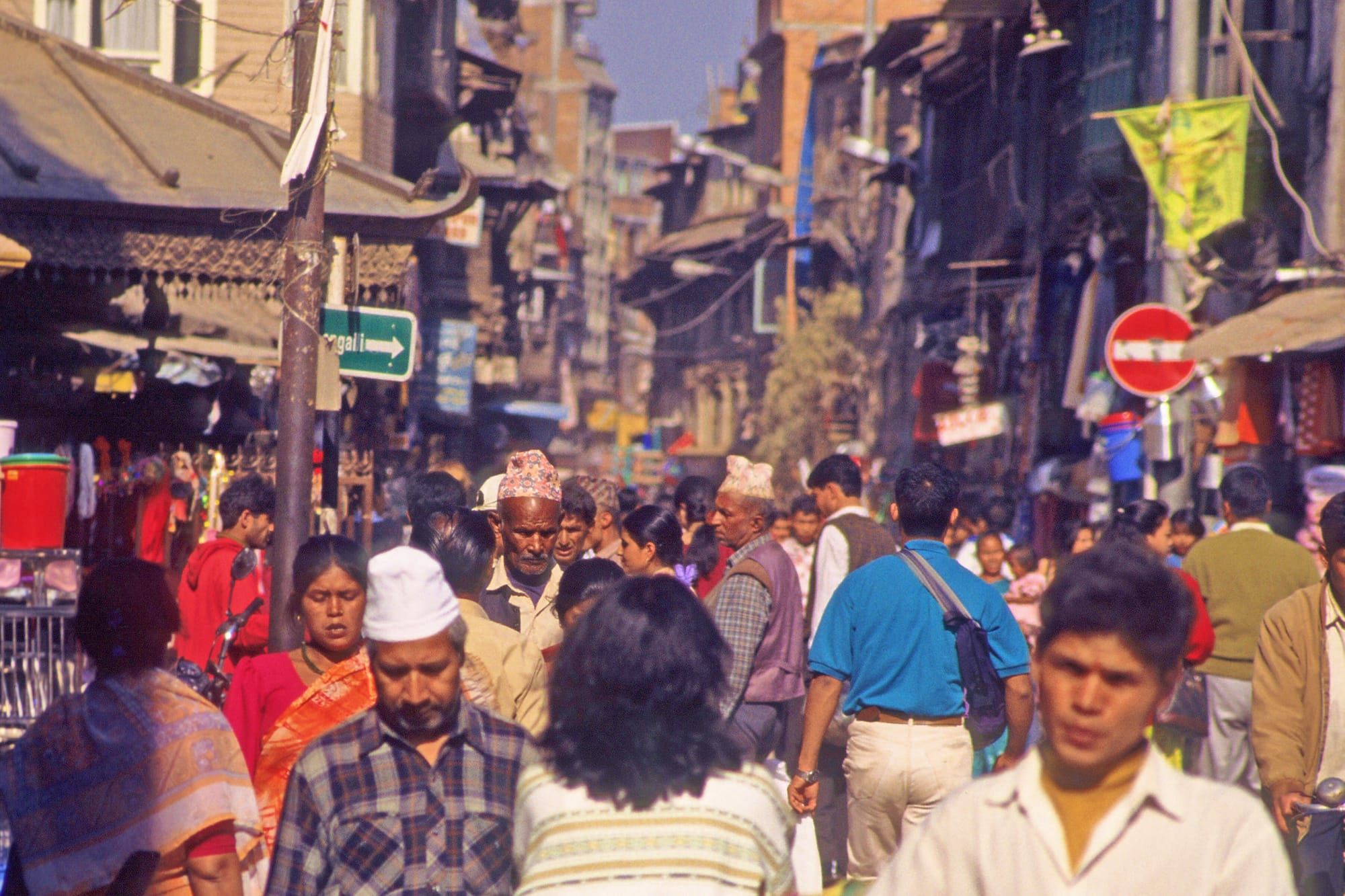
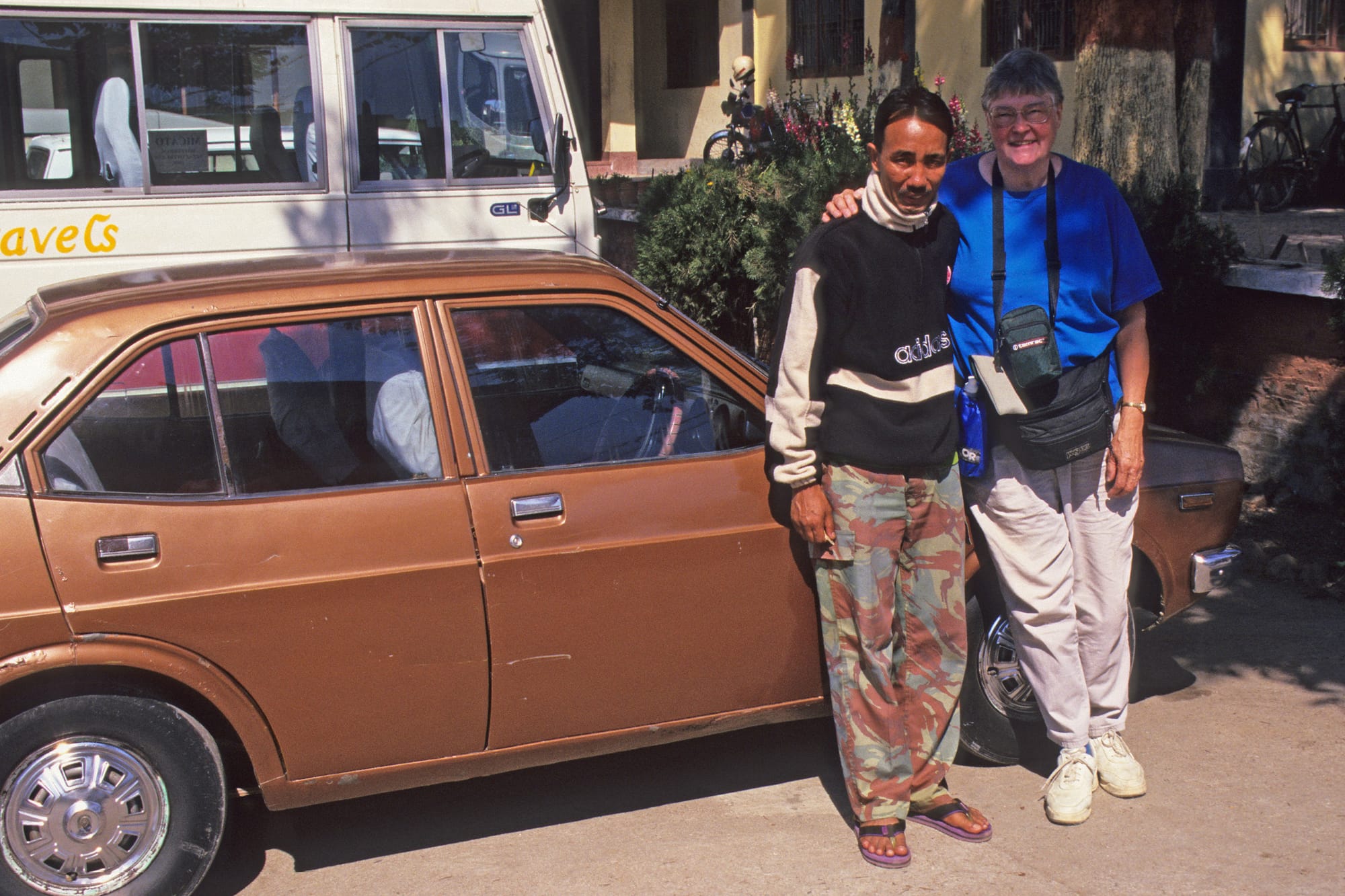
We've done some sightseeing in Kathmandu with a driver we met at Kathmandu Guest House, and he's been pretty helpful. His name is Lama, I think, but it's hard to tell with his accent. I said "oh, like the Dalai Lama" and he quickly said "no, no, no, Hindu not Buddha, not like Dalai Lama," so who knows. He has a car called a Starlet (at least that's the logo on the dashboard), with the standard Kathmandu taxi look -- dents, scrapes, missing parts replaced with parts from other types of cars, and the side mirrors surgically removed and re-attached on top of the front fenders, so they don't get broken off every time he squeezes between cars in the narrow crowded streets. We've taken several taxi rides here with others as well, and he's the best I've seen, as in most talented and consistent with the crazy moves necessary to get around, but it's still pretty crazy. And the conditioning of the taxis is typical Asia, from what I hear. For example, when he picked us up this morning he opened the trunk, took out a bottle of water, poured it into the radiator and took off.
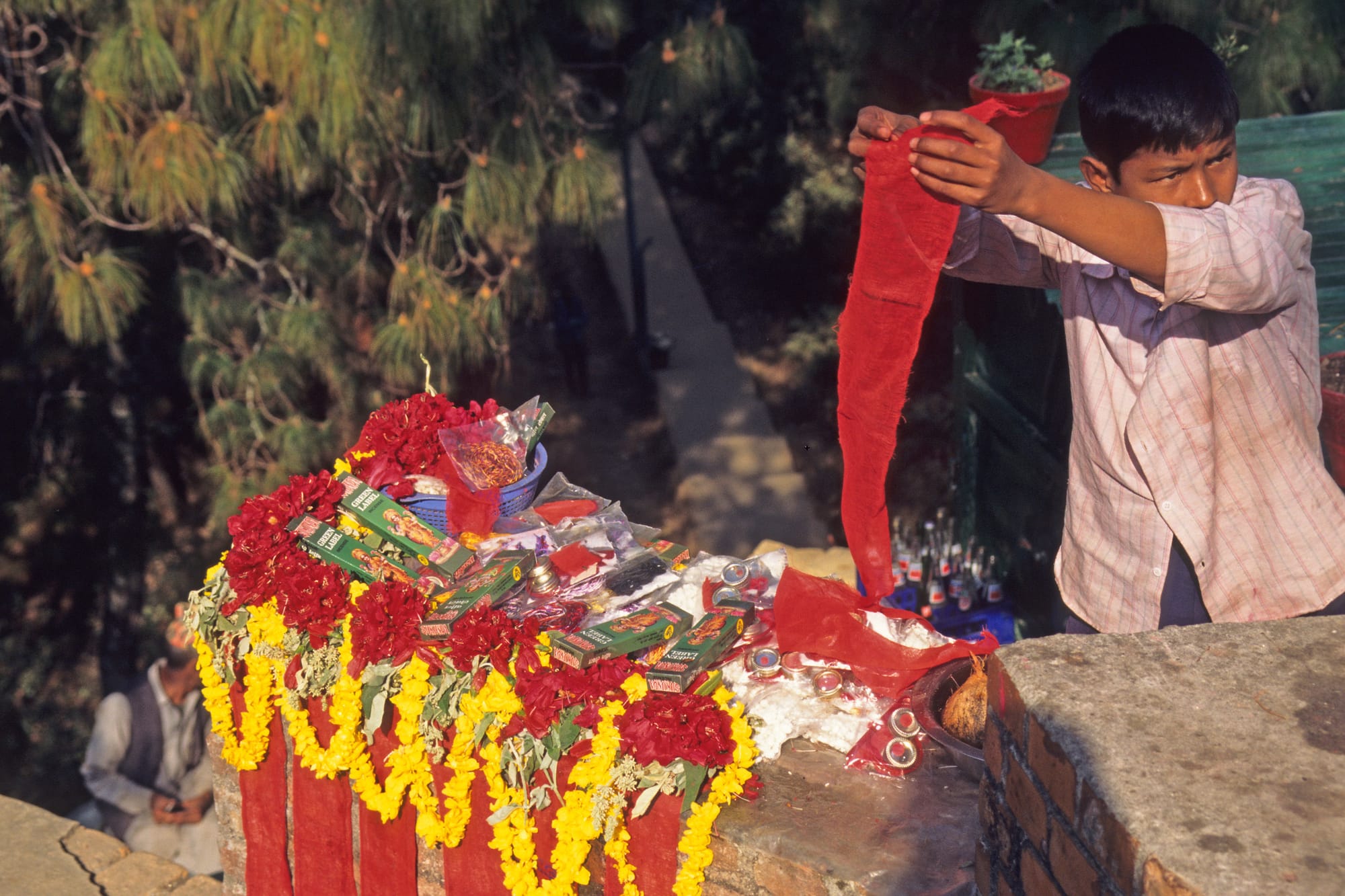
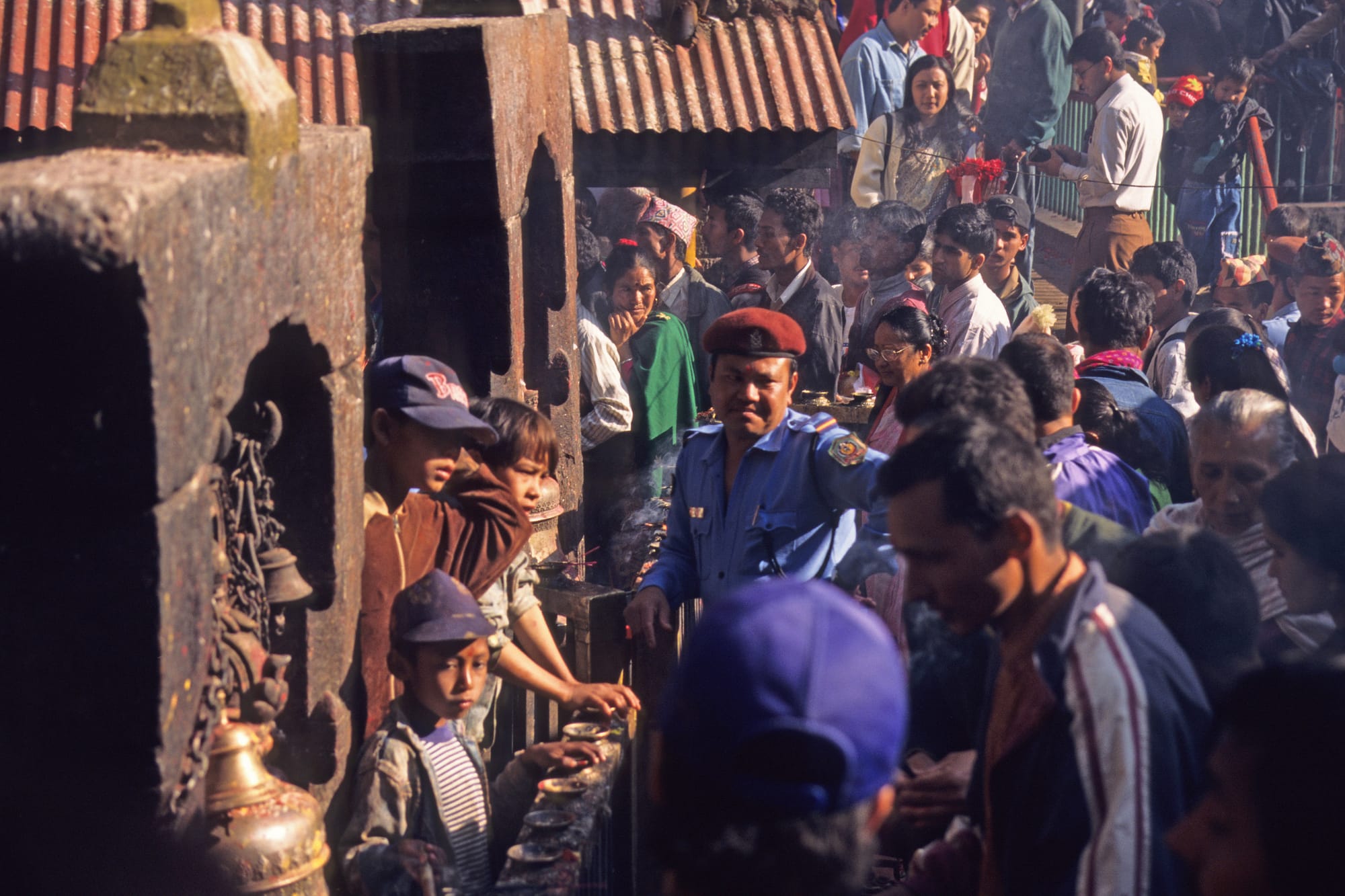
We went to Dakshinkali Saturday morning to see the Hindu temple there. There are two temples, actually: the Kali temple down in the valley, where they sacrifice goats and chickens all day on Saturday, and a smaller temple on top of a ridge above, which is dedicated to the mother of the goddess Kali (I didn't catch her name and couldn't read Urdu, Sanskrit, Deravangati, or whatever it was written in).
Here's the deal on Dakshinkali ... there was a bad cholera epidemic in this area in the 1300's, and people were dying in large numbers. So the local Hindus decided to make a sacrifice to appease Kali, the goddess of death and destruction. They built a temple over the stream in a deep little valley south of Kathmandu and called it Dakshinkali (dakshin=south in the local language). They then sacrificed a large number of water buffaloes there, letting the blood flow down into the stream, and lo and behold the cholera epidemic stopped. Thereby seeing the cause and effect, they decided to keep on sacrificing animals at this place to keep everyone healthy.
These days, every Saturday people line up in several long lines and patiently wait to sacrifice the goats or chickens they have brought there for this purpose. Each animal is splattered with water, and when it shrugs that's the sign that it's ready to be re-born as a human (all animals sacrificed at Dakshinkali are reincarnated as humans), and then off with its head with a big sharp knife. Afterward, the families take their decpatitated animals up the hill to a picnic area and cook them for lunch.
It was pretty interesting to watch, and I took lots of pictures and taped some of the sounds of the bells ringing, music playing, and people talking. I had read that non-Hindus had to stand on a "raised platform nearby," but it was much closer than I expected -- we were about 20 feet from the action, and the platform was raised only about a foot above ground level.
Afterward, we toured some Buddhist temples in the nearby town of Pharphing. We had a local boy (Dakshinkali native) who works at our hotel as a guide for this, and he negotiated with various monks and others to get me into some places. After several tries he got me into the big Buddhist temple, and when I left a good-sized offering then the restriction on photographs was suddenly lifted next door and I went back and took some pictures. We also got to watch some kids chanting, monks doing their devotions, and so on.
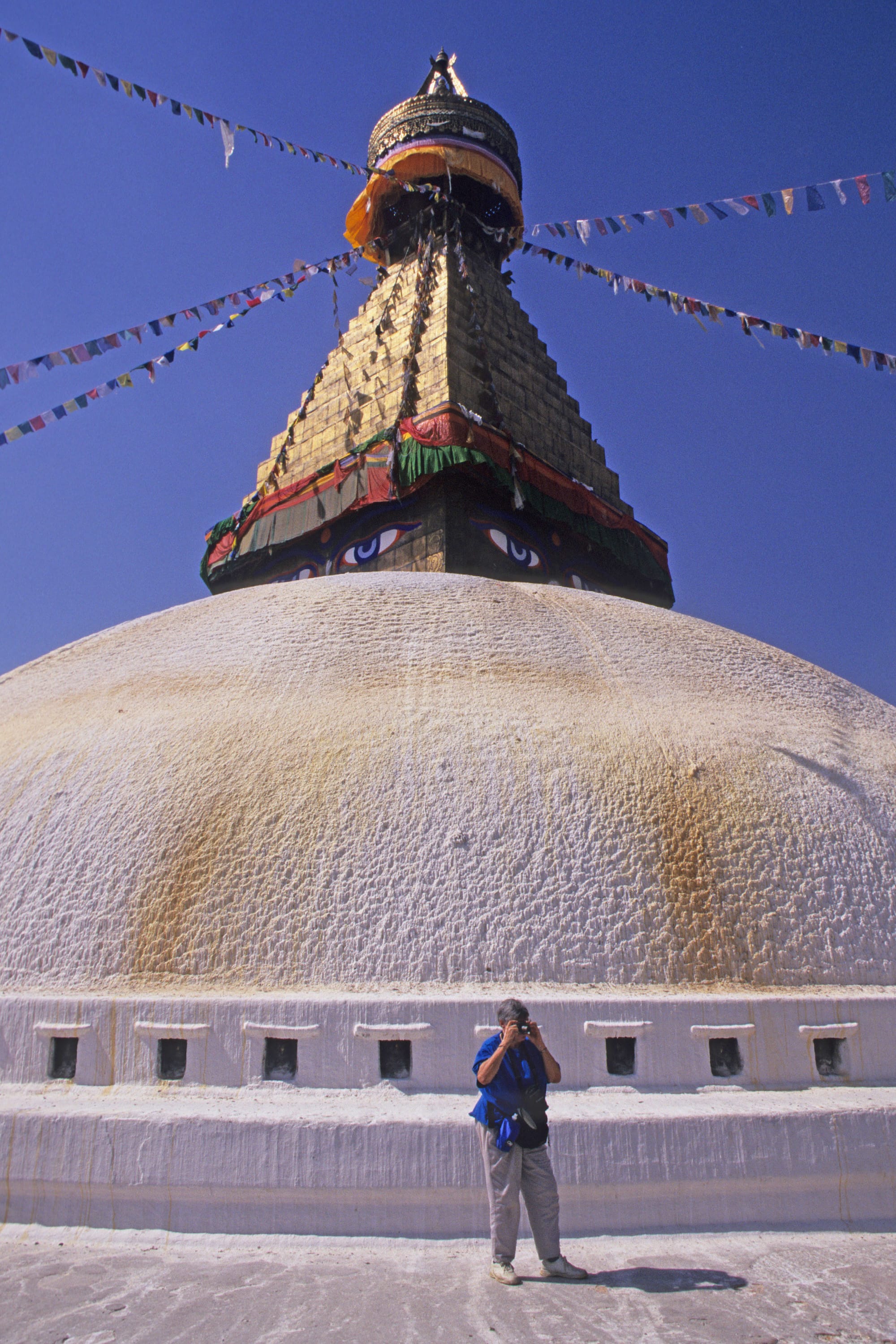
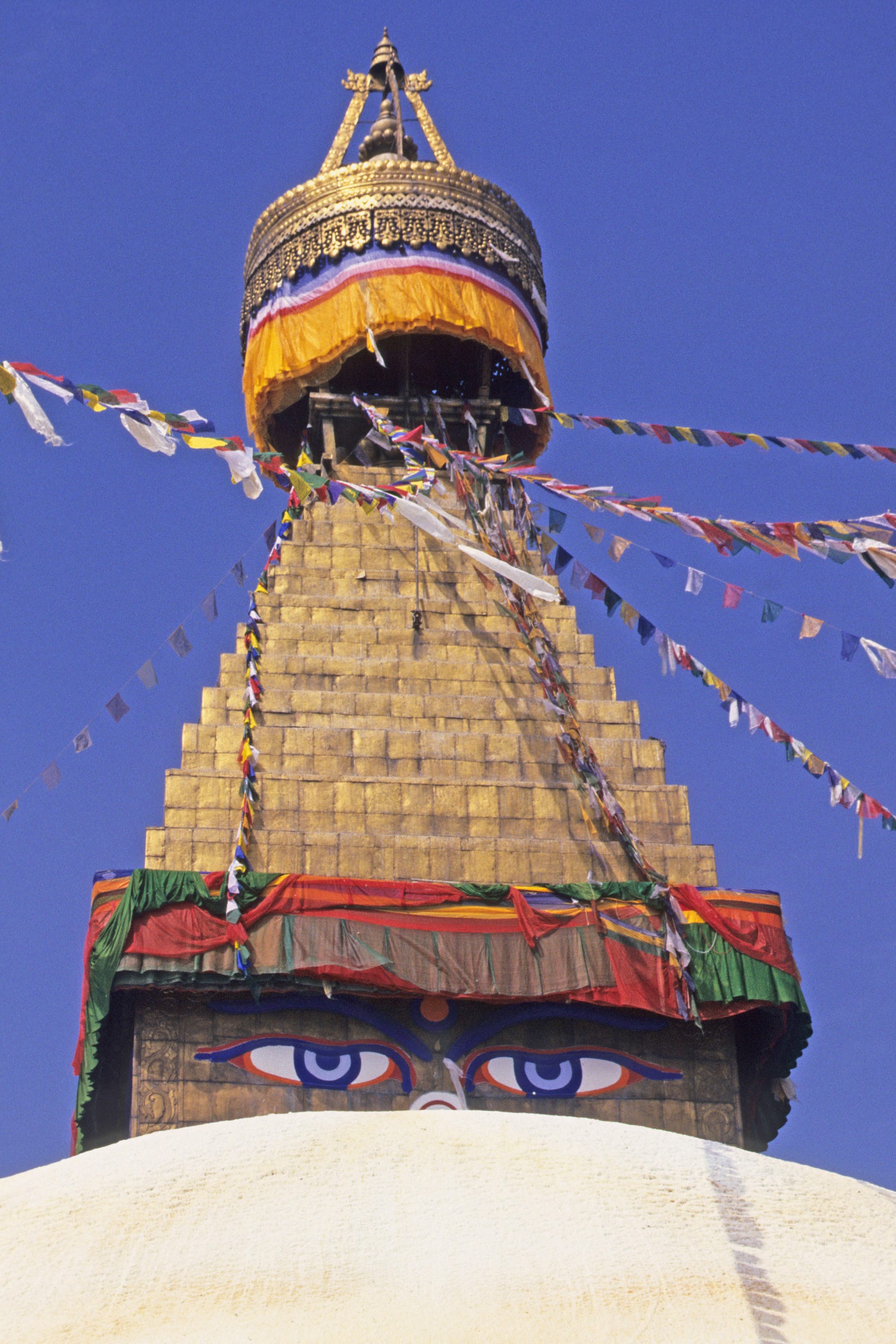
Last night we went to the giant "monkey temple" on the hill above the Kathmandu Valley, called Swayambunath. It was much less hectic than the others we went to, and my favorite one so far. There's a great view of Kathmandu from there, and many people and dogs and monkeys hanging around.
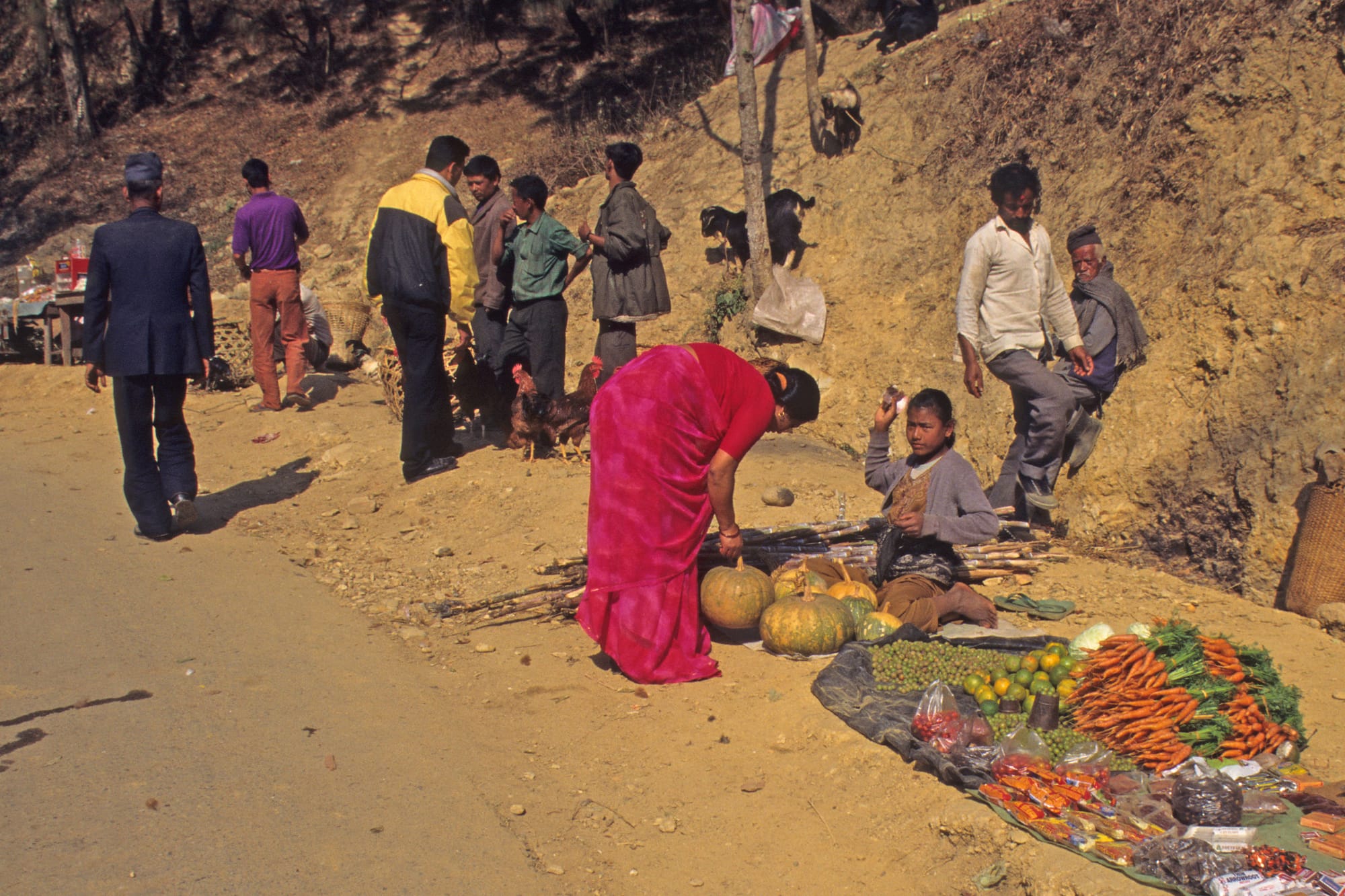
This morning we took a taxi at 4:00am up to Nagarkot to see Mount Everest at sunrise. It was a pretty exciting drive, winding through the mountains in the dark with fog so thick you couldn't see more than 20 feet. It took us over an hour to cover 20 miles, and then when the sun came up it was so foggy that we couldn't see more than a few hundred yards.
While we stood at the top of Nagarkot waiting for the sun to rise, another tourist car pulled up. It was the two young women who sat in front of us on the Royal Nepal flight from Bangkok, when we all had a brief glimpse of Everest out the windows on the opposite side of the plane. But none of us saw Mount Everest today.
Oh well, we had tea and traditional Nepali breakfast at a little place and came back down to Kathmandu.
That's all for now, and I'll post again near the end of the week after our three days in the jungles of Royal Chitwan.
- ### -
After I sent the above email, we learned that the rental computer I was using at Kathmandu Guest House was infected with the notorious HAPPY99 virus, the first virus to propagate by email. Because of the virus, recipients of my email received two messages: the one shown above, and a second message with an attached program that showed some simple fireworks and displayed "Happy New Year 1999." Running that program to see the fireworks would infect the recipient's computer with the virus.
Photos at Dakshinkali
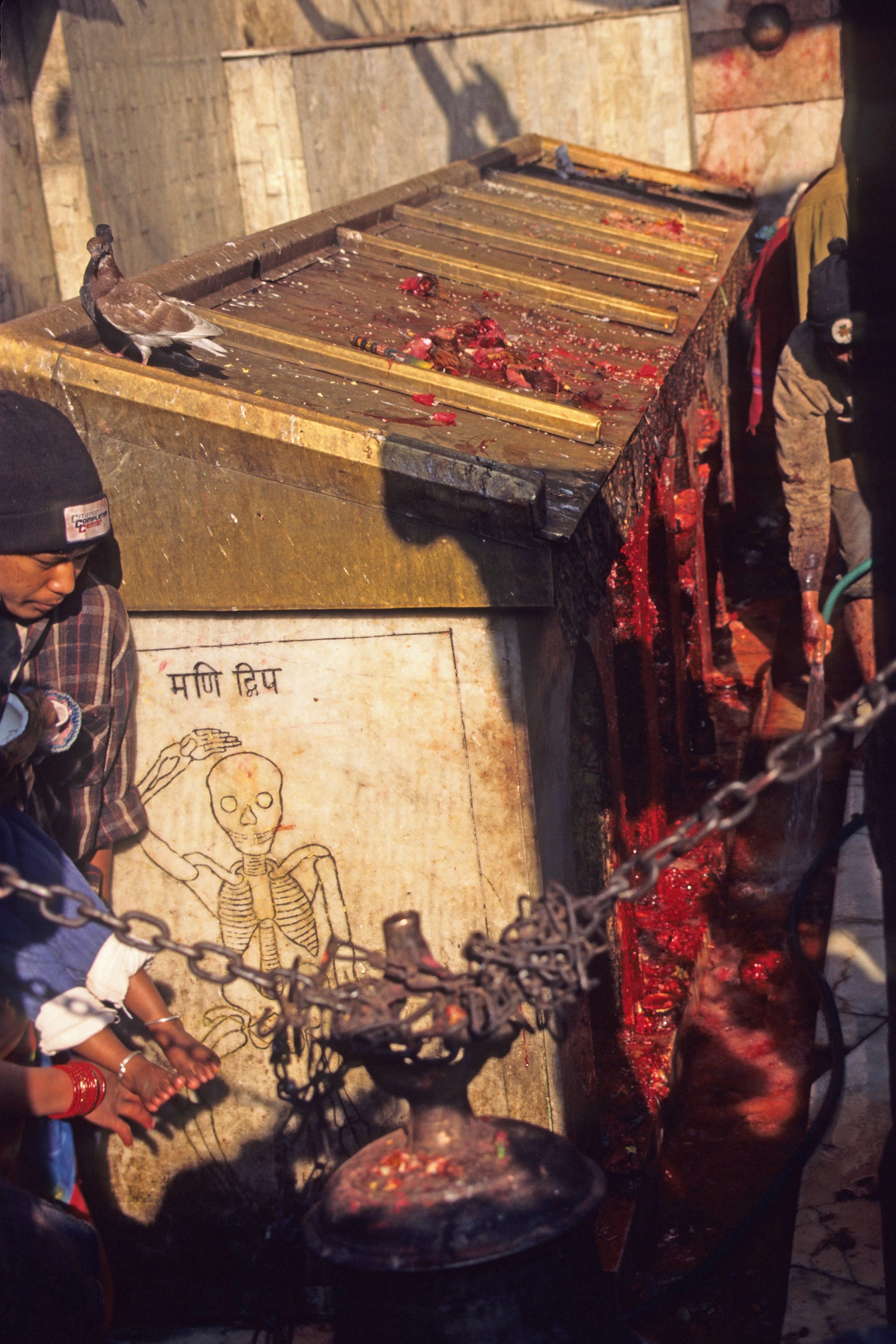
The photo below shows the spot where roosters and goats were being beheaded at Dakshinkali. We weren't able to get close to this spot while the sacrifices were happening, but I got this photo during a lull in the action while a man (barely visible on the right) used a garden hose to rinse off the platform before the sacrifices started up again. On the left side of this photo, you can see a young man and his wife (note the red braceleted hand) holding their child's bare feet close to the blood of the sacrificed animals. Our guide told us that they were doing this in the belief that it will protect their child from diseases.
Swayambunath temple
The night before we sent this email, I decided to take a walk after Mom went to bed. One thing led to another, and that walk became an experience that is etched into my mind, which I later wrote up in detail and gave to Mom as a memento of our trip. If you want to read about it, and aren't offended by recreational drug use, here it is: Kathmandu butcher shop.
|
|
|