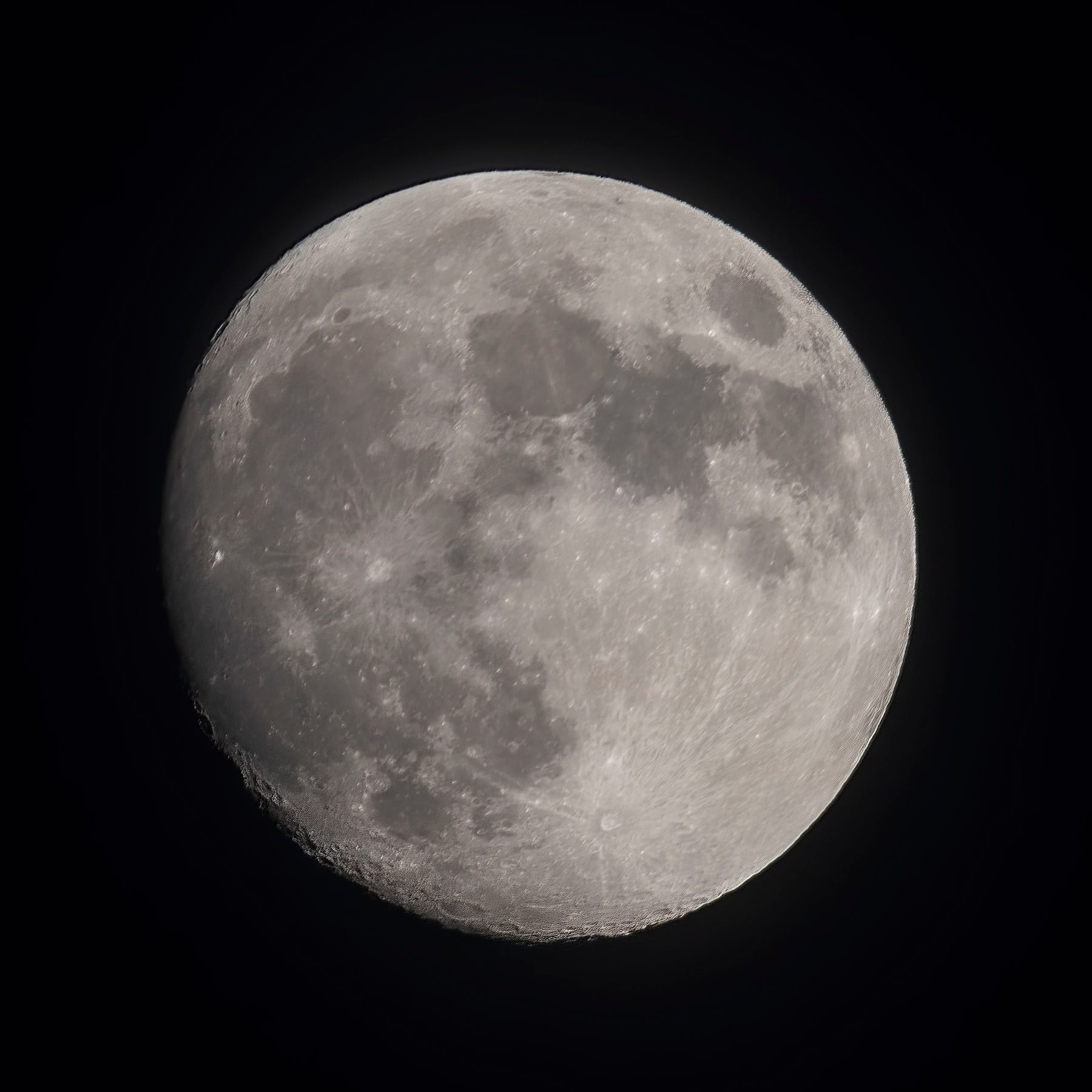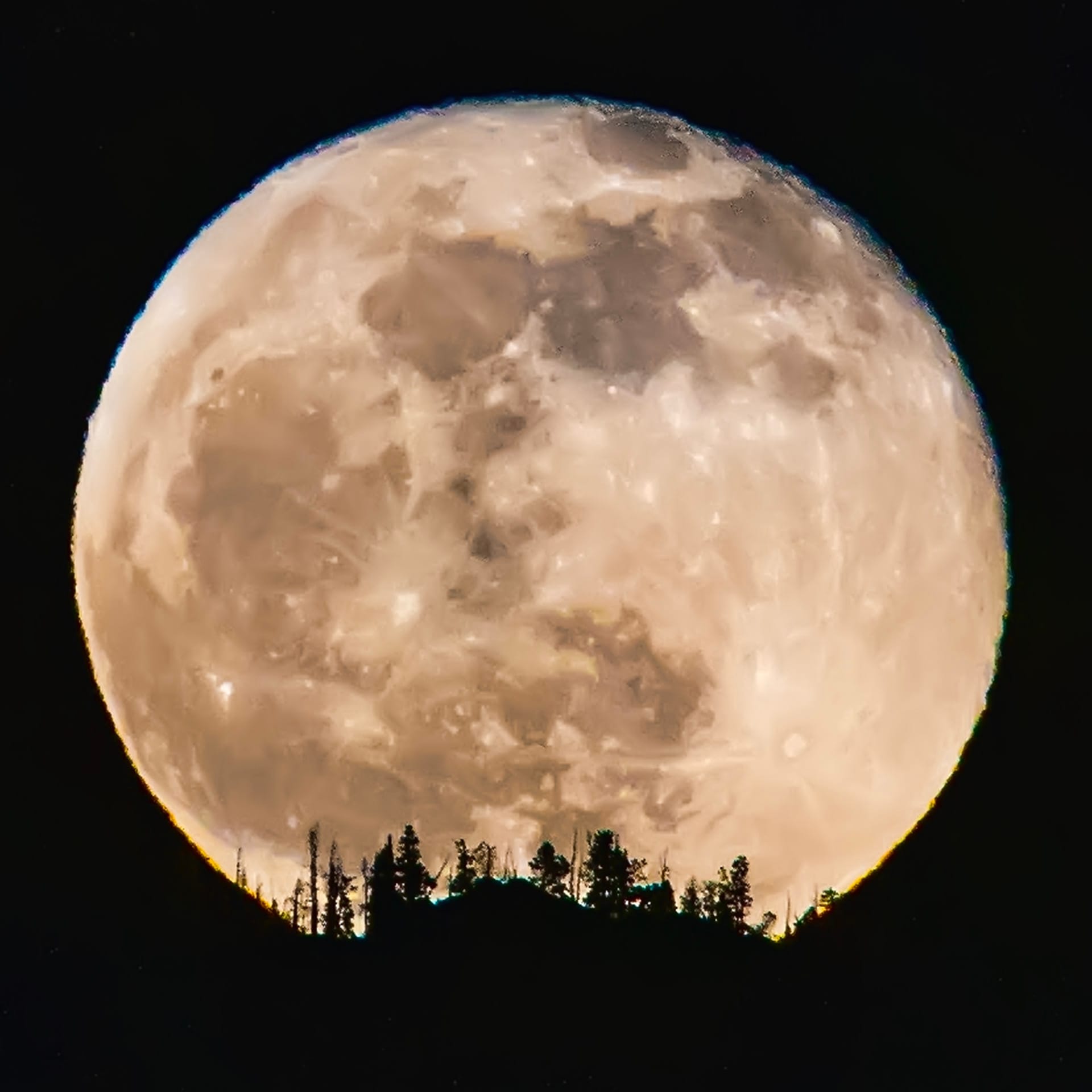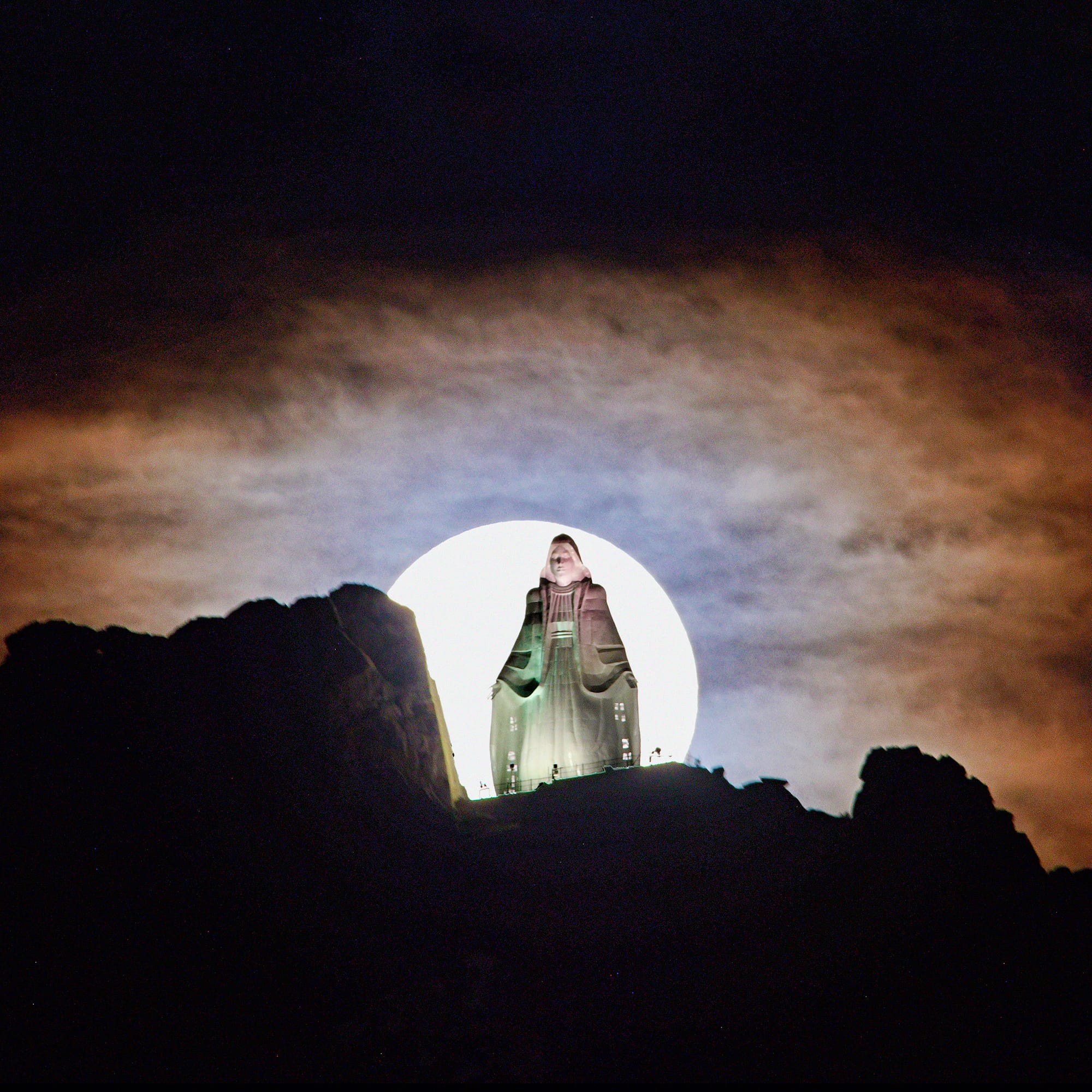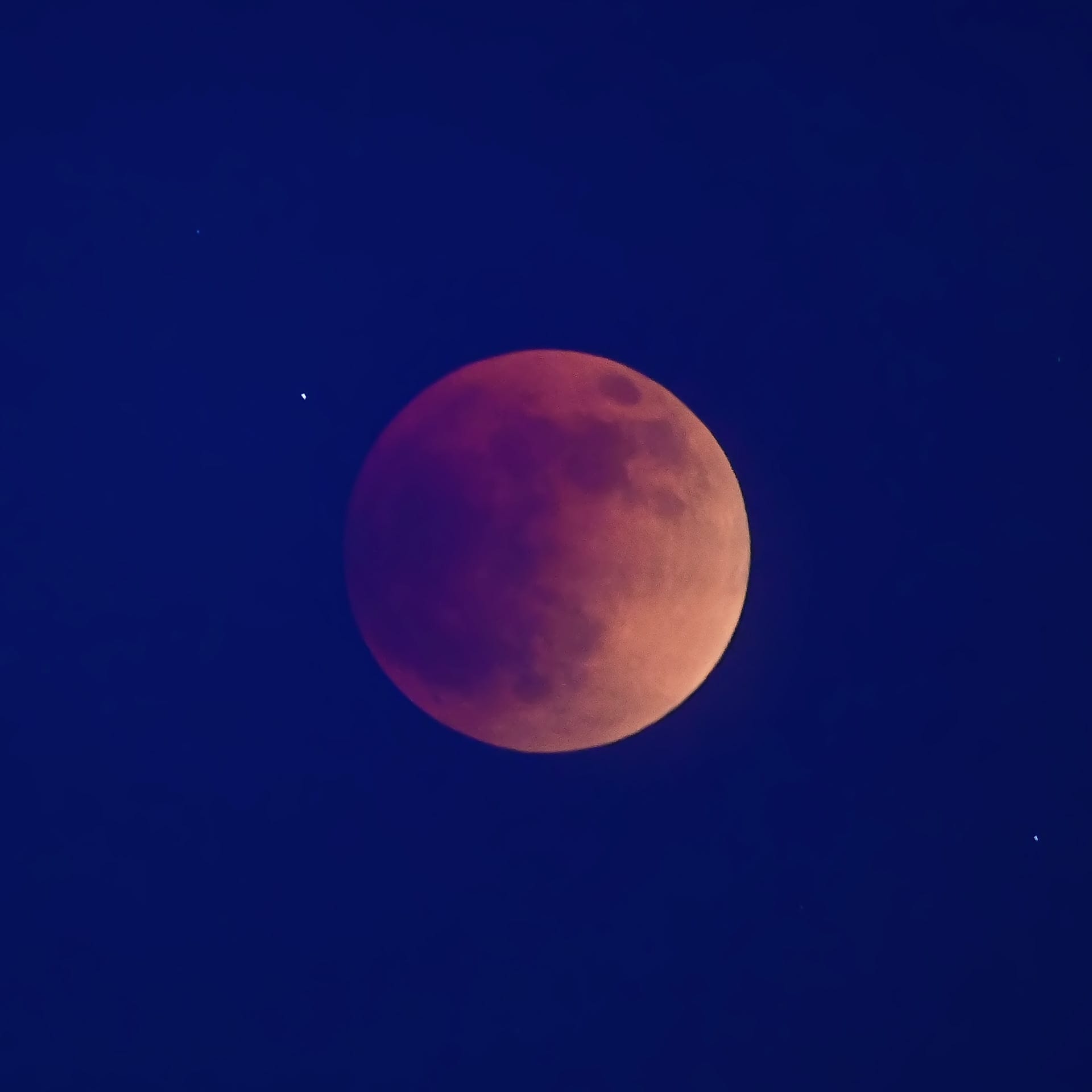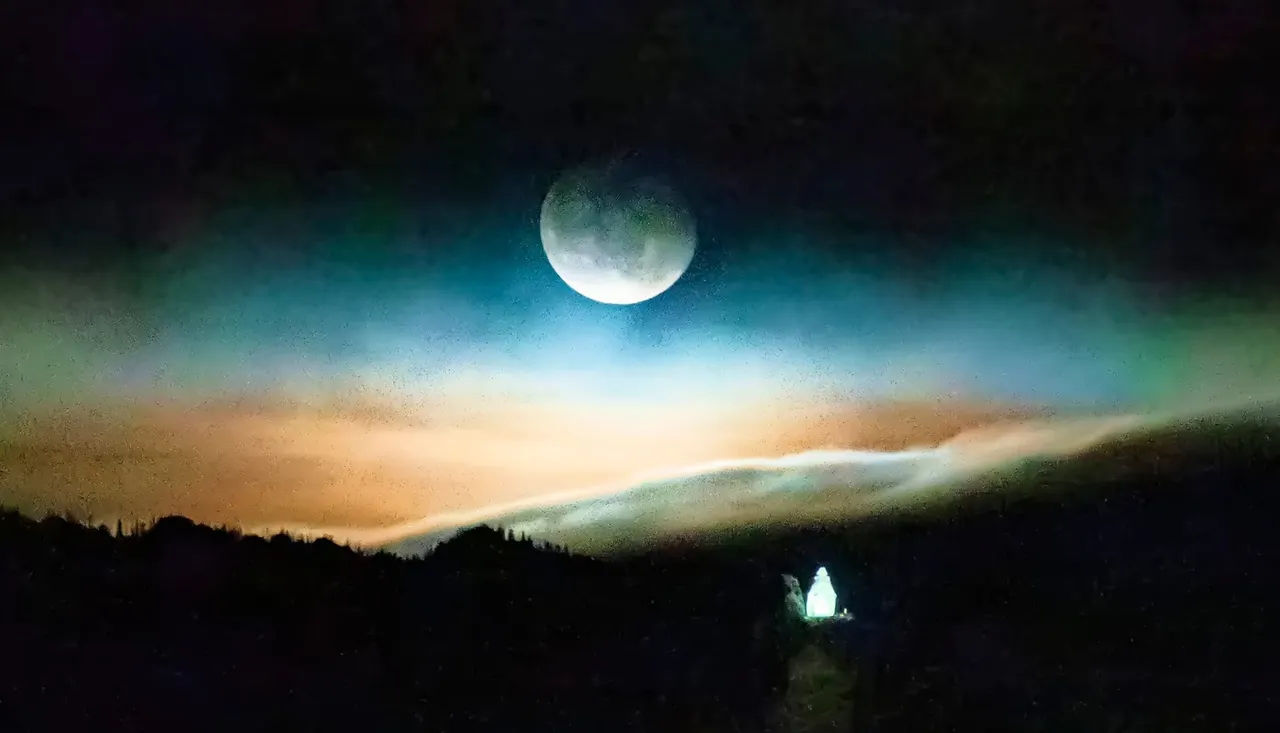
This post is a few favorite photos of full moons over Butte.
One complicated little game I like to play is to try to anticipate where I need to be to get a photo of the full moon rising above the Continental Divide ridge directly behind Our Lady of the Rockies. The trajectory of the moon varies throughout the year, so the line you need to be standing on to get that shot is a little different every time. And in Butte, the moon has to rise high enough to be visible above the Boulder Mountains, which are about 3000 feet above us and a few miles away. This makes the theoretical moonrise time for our latitude and longitude meaningless, because that's when the moon rises above a theoretical flat horizon that doesn't exist. The real "moonrise" time for Butte is usually 30-40 minutes after the time shown in lunar activity charts.
Another factor is that the rate at which the moon is rising relative to the mountains is surprisingly quick when you're zoomed in, so you only have about 30 seconds to get the shot. If you're a few minutes away from the ideal spot when the moon peaks over the ridge, you can't get there in time.
Due to these factors, I've found that the best approach is to get all the gear set up – camera on tripod, exposure set roughly correct, and so on – and then put the camera and tripod next to me in the truck while I drive around to try to figure out where I'll need to be. I usually drive up high on the hill (toward Walkerville) first, because from up there you get a better sense of where the faint glow is starting to appear above the moon's location. I take a rough bearing on that angle, and then I drive down to the flats, looking for a spot that's a bit south of that line, because the moon is moving south and east as it rises over the ridge.
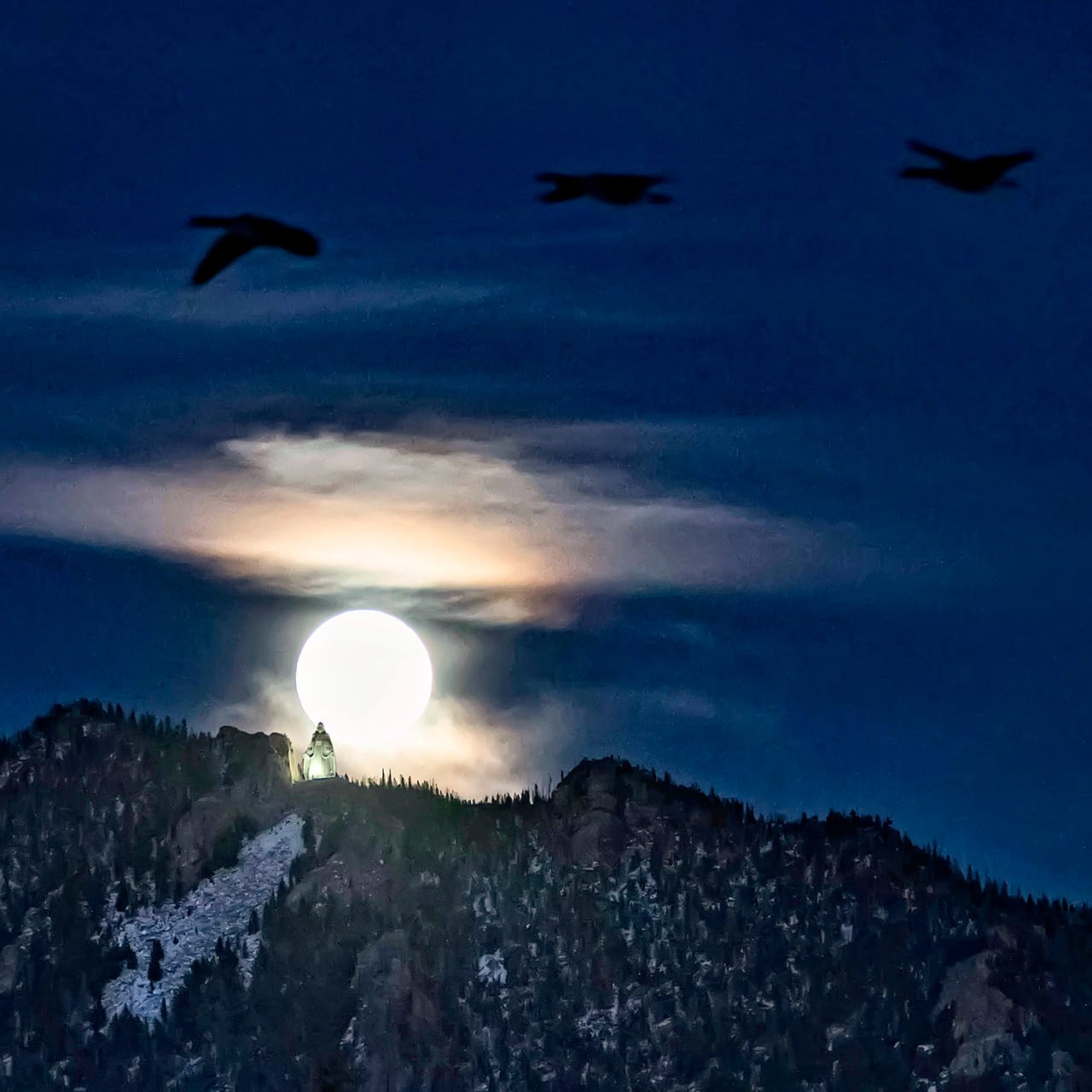
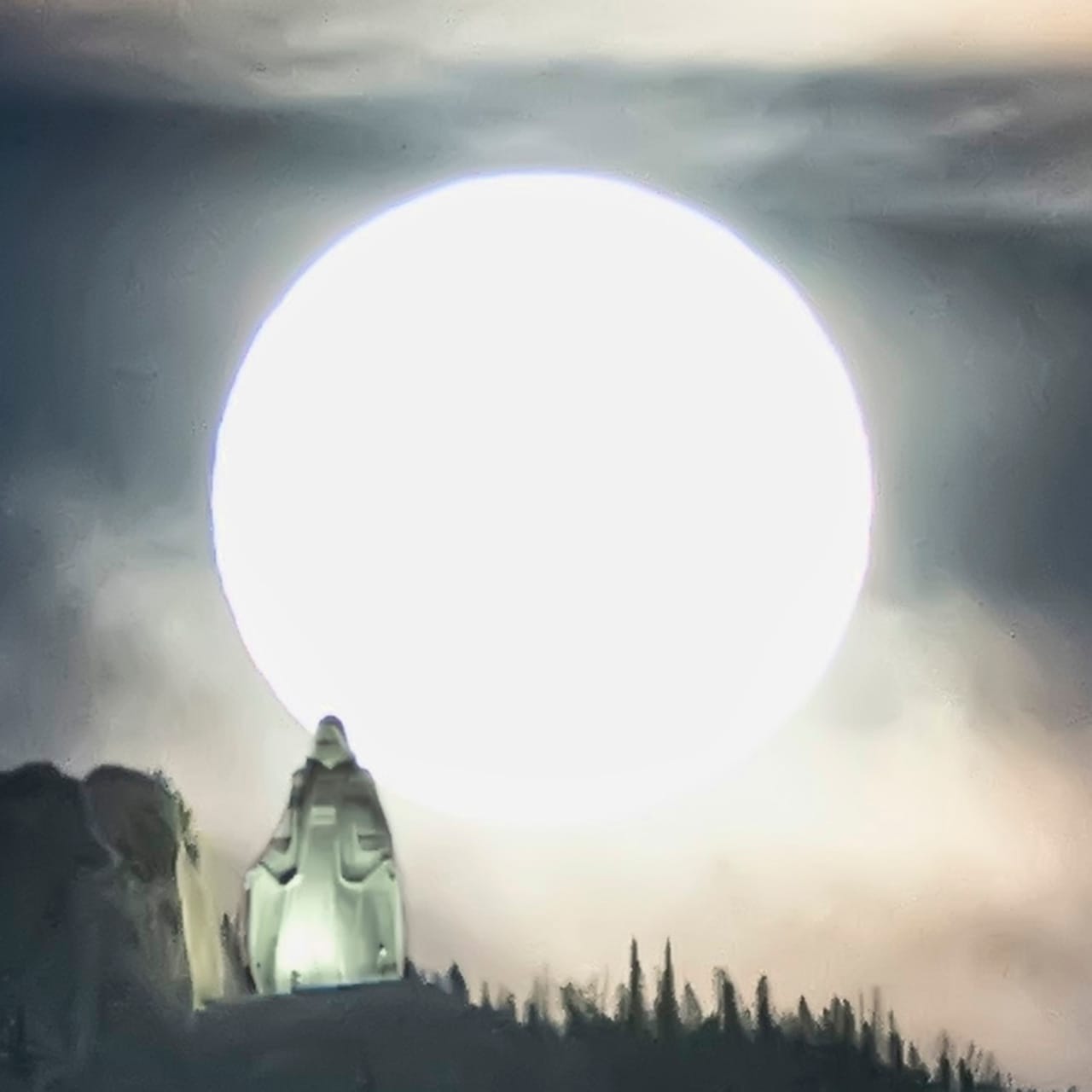
For the Beaver Moon in November 2021, I picked a spot in the ditch across the street from the Stodden Park golf course, next to the railroad tracks. I lucked out when a few geese flew past in the darkness while I was getting the shot.